
Investigating DNA Repair in Extremophiles
Category: Research Poster
Author(s): Charlotte Wagner
Presenter(s): Charlotte Wagner
Mentors(s): Thomas Santangelo
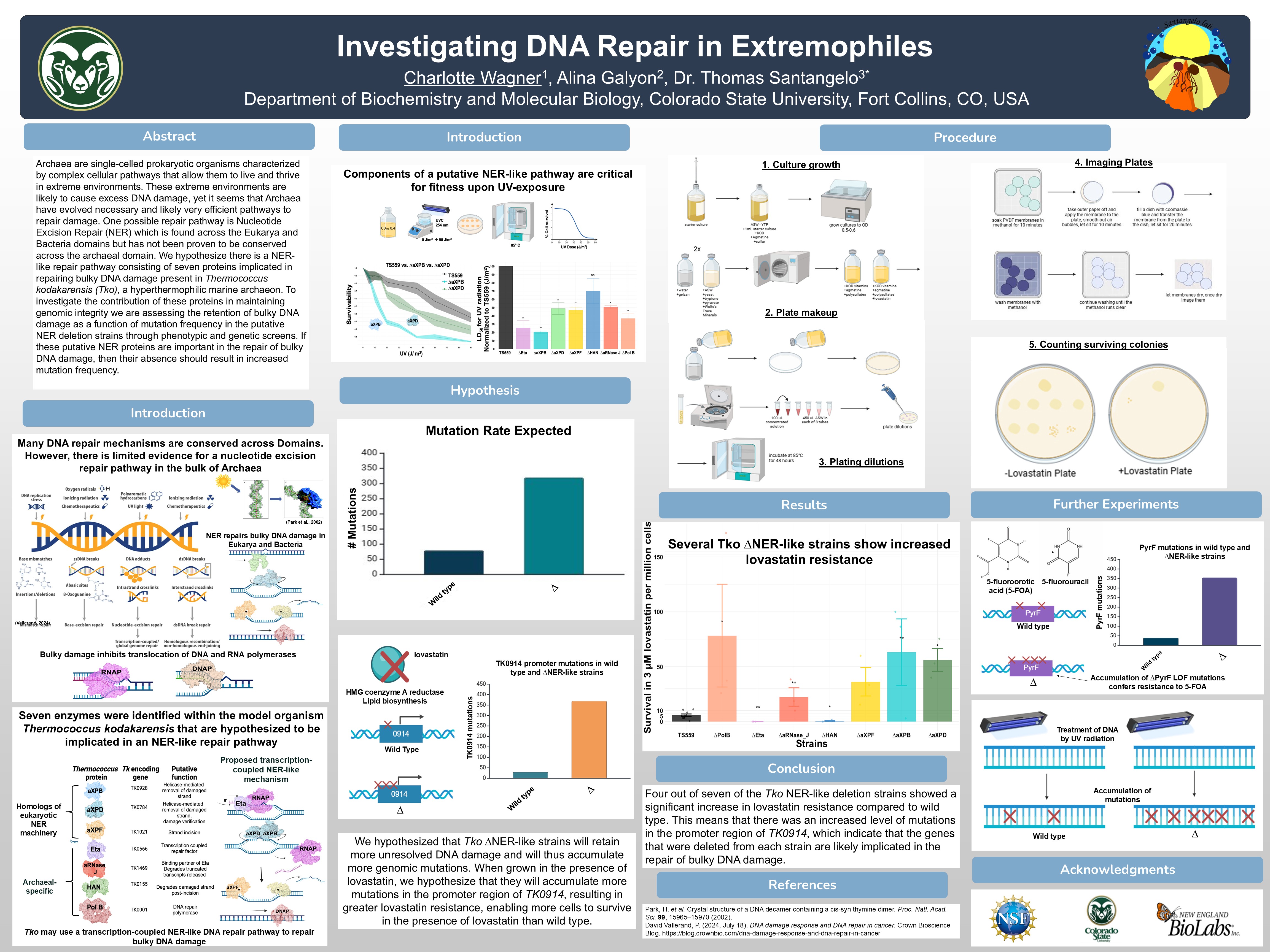
Archaea are single celled prokaryotic organisms characterized by complex cellular pathways that allow them to live and thrive in extreme environments. These extreme environments are likely to cause excess DNA damage, yet it seems that Archaea have evolved necessary and likely very efficient pathways to repair damage. One possible repair pathway is Nucleotide Excision Repair (NER) which is found across the Eukarya and Bacteria domains but has not been proven to be conserved across the archaeal domain. We hypothesize there is a NER like repair pathway consisting of seven proteins implicated in repairing bulky DNA damage present in Thermoccocus kodakarensis (Tko), a hyper thermophilic marine archaeon. To investigate the contribution of these proteins in maintaining genomic integrity we are assessing the retention of bulky DNA damage as a function of mutation frequency in the putative NER deletion strains through phenotypic and genetic screens. If these putative NER proteins are important in the repair of bulky DNA damage, then their absence should result in increased mutation frequency.