
Diet and Gut Microbiome of Ugandan Insectivorous Bats Carrying Coronaviruses
Category: Research Poster
Author(s): Emerald Cordova, Kalani Williams, Natalie Wickenkamp, Emma Harris
Presenter(s): Emerald Cordova
Mentors(s): Rebekah Kading, Kalani Williams
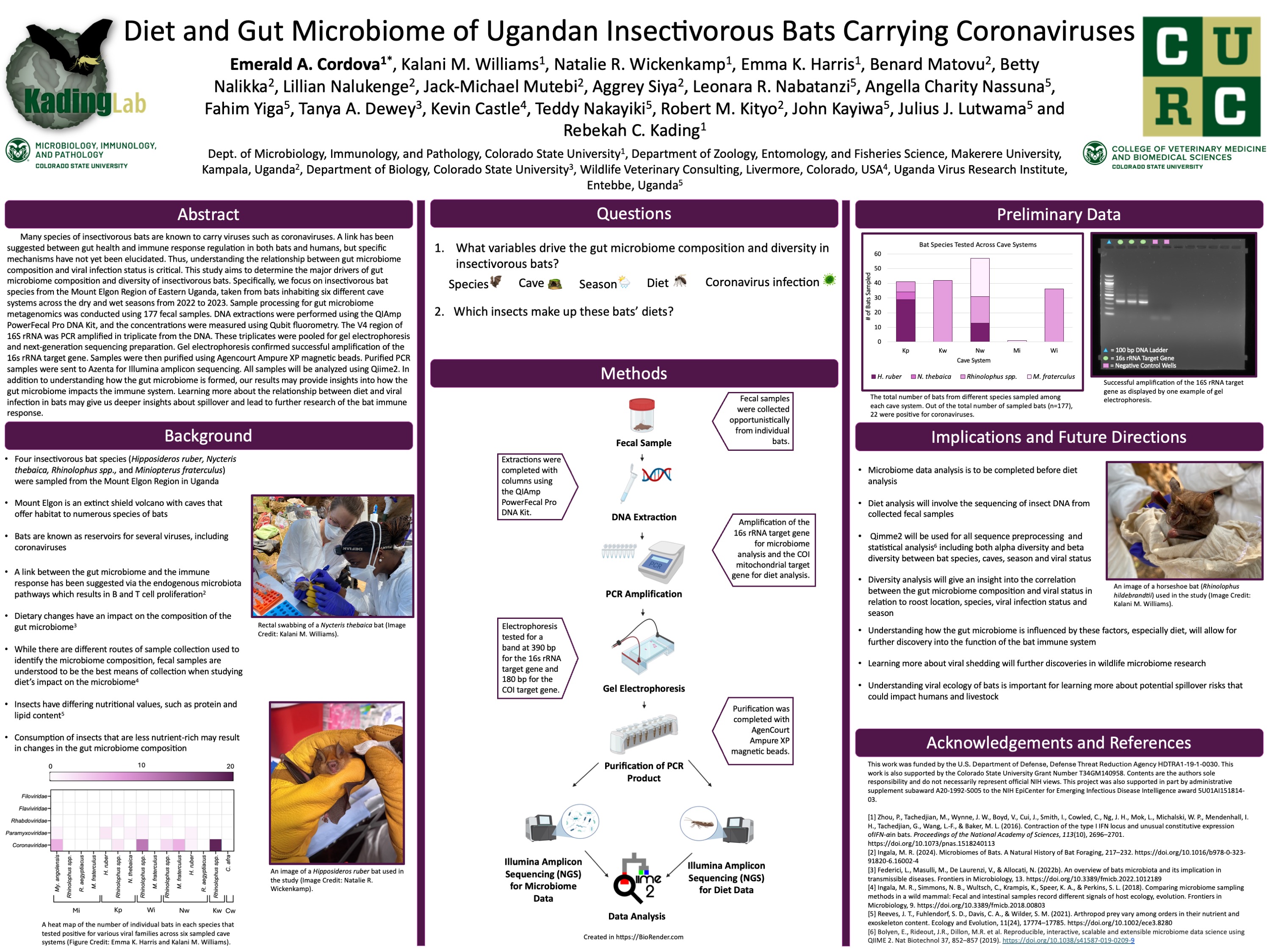
Many species of insectivorous bats are known to carry viruses, such as coronaviruses. A link has been suggested between gut health and immune response regulation in both bats and humans, but specific mechanisms have not yet been elucidated. Thus, understanding the relationship between gut microbiome composition and viral infection status is critical. This study aims to determine the major drivers of gut microbiome composition and diversity of insectivorous bats. Specifically, we focus on insectivorous bat species from the Mount Elgon Region of Eastern Uganda, taken from six different cave systems across the dry and wet seasons from 2022 to 2023. Sample processing for gut microbiome metagenomics was conducted using 178 fecal samples. DNA extractions were performed using the QIAmp PowerFecal Pro DNA Kit, and the concentrations were measured using Qubit fluorometry. The V4 region of 16S rRNA was PCR amplified in triplicate from the DNA. These triplicates were pooled for gel electrophoresis and next-generation sequencing preparation. Gel electrophoresis confirmed successful amplification of the 16s rRNA target gene. Samples were then purified using Agencourt Ampure XP magnetic beads. Purified PCR samples were sent to Azenta for Illumina amplicon sequencing. All samples will be analyzed using Qiime2. In addition to understanding how the gut microbiome is formed, our results may provide insights into how the gut microbiome impacts the immune system. Learning more about the relationship between diet and viral infection in bats may give us deeper insights about spillover and lead to further research of the bat immune response.