
Urinary Tract Infections by Escherichia coli infections Results in Neuroinflammation in an Aging Guinea Pig Model
Category: Research Poster
Author(s): Genova Mumford
Presenter(s): Genova Mumford
Mentors(s): Julie Moreno
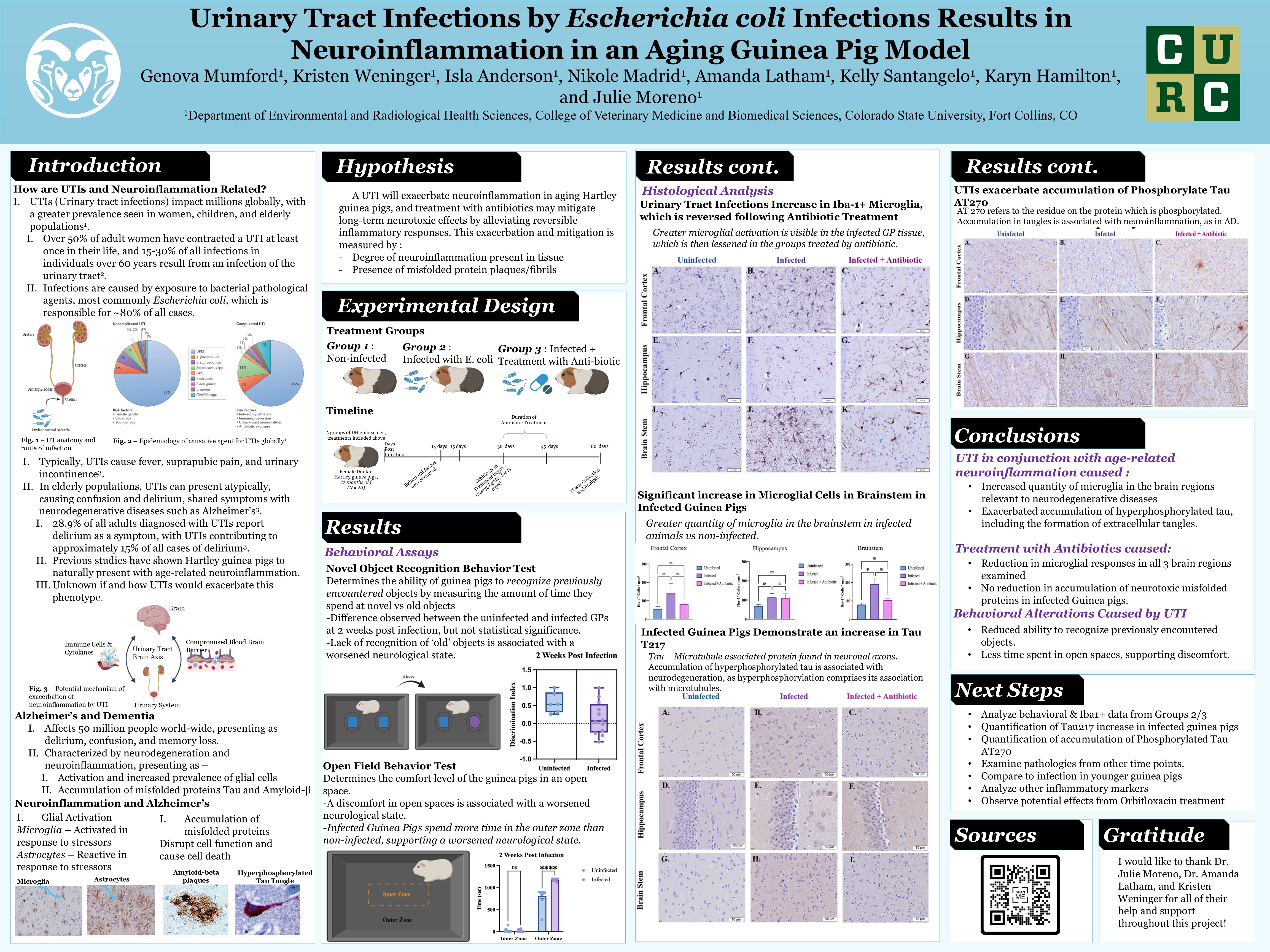
Urinary tract infections (UTIs) impact millions globally, with a greater prevalence seen in elderly populations1, with 15-30% of all infections in individuals over 60 years old resulting from an infection of the urinary tract2. In these elderly populations patients present atypically, causing confusion and delirium3. Our previous studies had shown that Hartley guinea pigs naturally presented with age-related neuroinflammation and are less likely to recall previously encountered objects and to explore exposed areas, supporting a worsening neurological state, however it was unknown if the UTI would exacerbate this phenotype. We hypothesize that a UTI will exacerbate neuroinflammation in aging Hartley guinea pigs, and treatment with antibiotics may mitigate long-term neurotoxic effects by alleviating inflammation. To address this, we used 3 groups, 1) uninfected, 2.) infected with E. coli, and 3.) infected with E. coli and with antibiotic treatment. Neurological tissues were stained to assess the neuroinflammation and misfolded proteins present, finding that UTIs result in increased neuroinflammation and misfolded proteins present. Antibiotic treatment decreased neuroinflammation, but it did not arrest the accumulation of misfolded proteins. Data collection is still ongoing, and current areas of focus include examining pathologies at different timepoints and examining the impacts of the antibiotic administered.