
Optimization of trans-Cinnamic Acid Production in Cyanobacteria sp. PCC 6803
Category: Research Poster
Author(s): Marion Moore
Presenter(s): Marion Moore
Mentors(s): Christie Peebles
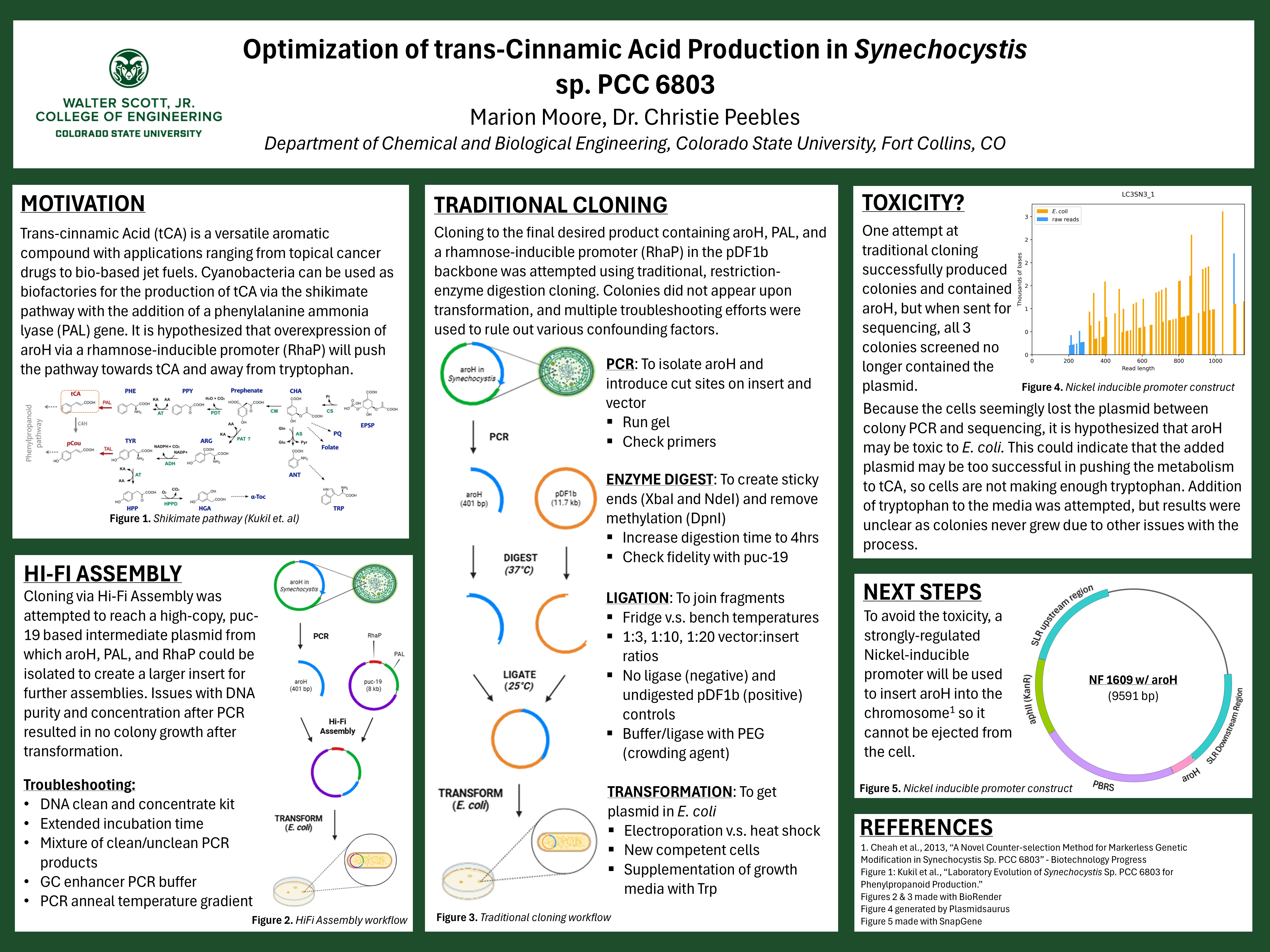
Trans-Cinnamic Acid (tCA) is an important chemical in the pharmaceutical, food, and energy industries, with applications ranging from biofuel to anti-cancer drugs. Cyanobacteria, a photosynthetic species with similarities to algae, have shown promise as biofactories for tCA and other products of the Shikimate pathway, and can produce tCA in limited quantities after addition of the phenylalanine ammonia-lyase (PAL) gene into their plasmids. It is hypothesized that the overexpression of aroH, a gene at the branch point towards tCA, could be used to enhance tCA production in cyanobacteria with the help of a rhamnose-inducible promoter. Assembly of the target plasmid has proven difficult after multiple attempts at Hi-Fi assembly and restriction enzyme cloning, introducing the potential for toxicity of aroH to the cell. Troubleshooting methods currently include optimization of ligation and transformation processes, and supplementation of growth media with tryptophan. Once the plasmid has been assembled, genetically engineered colonies will be assessed for tCA production using high-performance liquid chromatography.