
Grizzlies & Black Bears: Rivals or Roommates in Southwestern Montana?
Category: Oral Presentation
Author(s): James Wiske, Emma Burdick
Presenter(s): James Wiske
Mentors(s): Cassandre Venumiere-Lefebvre
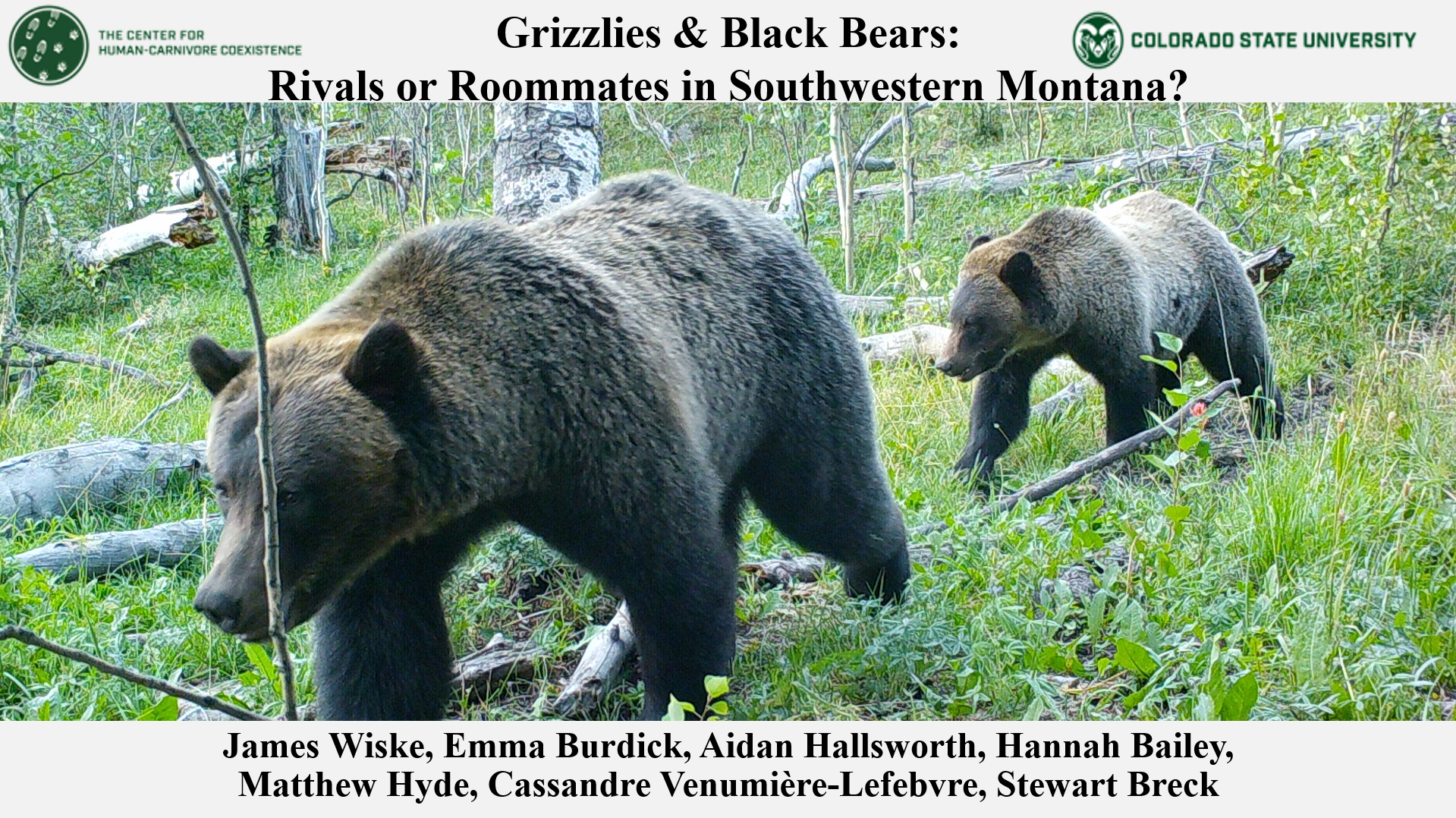
In ecosystems where carnivore species coexist, interspecies interactions are influenced by a variety of ecological factors (e.g., time of day and habitat type). This study focuses on the interactions between grizzly bears (Ursus arctos horribilis) and black bears (Ursus americanus) and the factors that impact interactions. The findings from our research are important to inform livestock producers in the area of bear behavior and distribution, as well as to fill gaps in knowledge regarding the two species. We expect to see grizzly bears displace black bears where the two species traditionally overlap in habitat types. Our study occurred in the Ruby River and Madison River sub-basins in Southwestern Montana, roughly 60 miles west of Yellowstone National Park. We placed sixty-five camera traps in a study grid with each grid encompassing 2.5km squared. Our study area is grazed by cows and sheep from mid-June through mid-October. Based on the results of single-species occupancy models on both individual bear species to determine covariates influencing their presence, we seek to identify predictors of interactions between the two bear species. Possible covariates affecting the presence of these two species include tree canopy cover, distance to human development, distance to water, and time of day.