
Plasticity and Relapse: Our labs Approach to Addiction Research
Category: Research Poster
Author(s): Samantha Skurnick, Samuel Hyken
Presenter(s): Samantha Skurnick
Mentors(s): Ana Clara Bobadilla
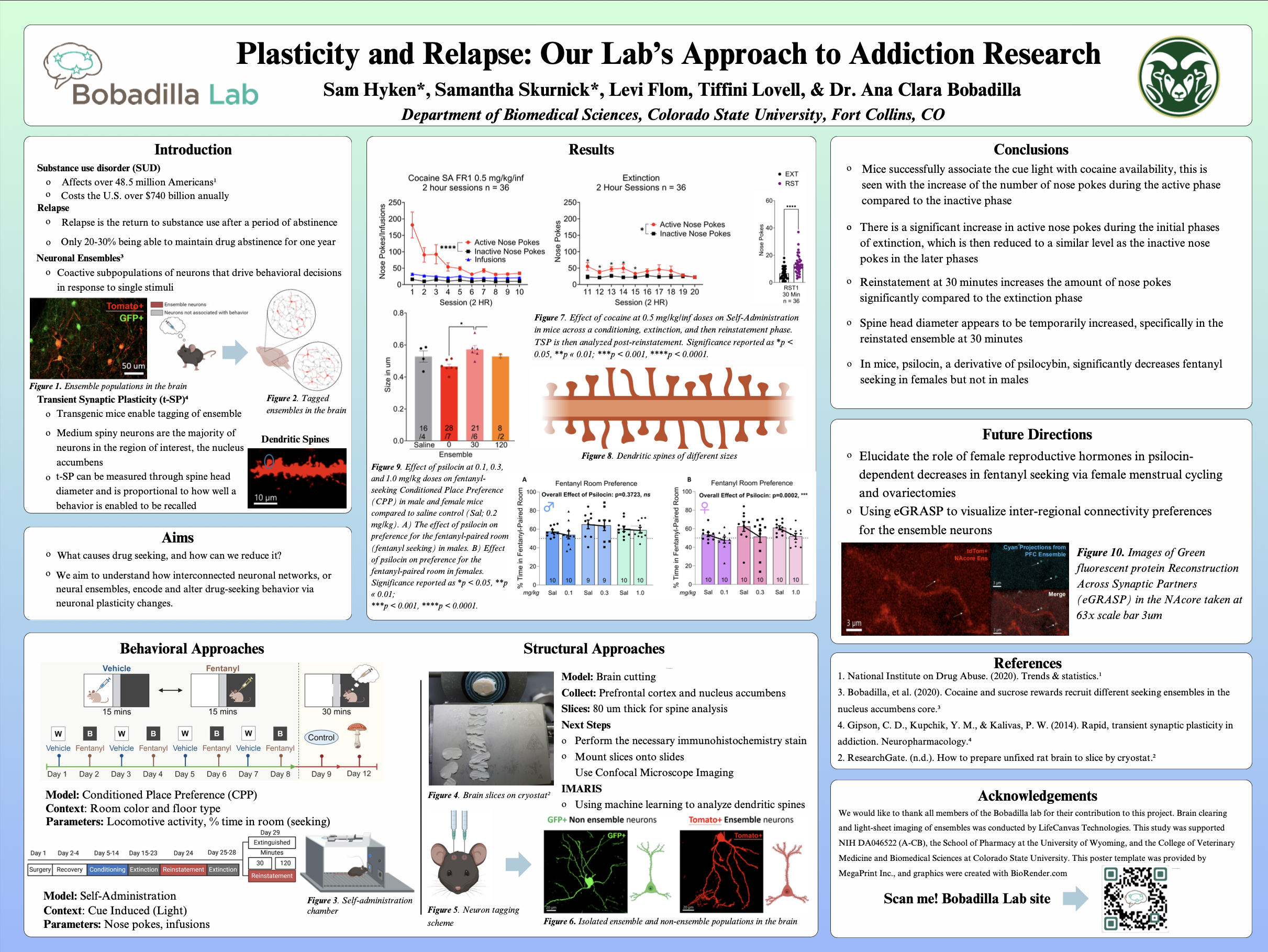
Substance use disorders (SUD) affect over 48.5 million Americans, costing the U.S. over $740 billion annually. Relapse is the return to substance use after a period of abstinence. Relapse is common among individuals with SUD, with only 20-30% being able to maintain drug abstinence for one year. Given these high relapse rates, understanding the underlying causes of drug-seeking behavior is crucial. Using mice, we are able to observe this drug-seeking behavior post-abstinence, mimicking relapse behavior in humans. Our lab utilizes multiple preclinical behavior paradigms that model SUD and relapse in mice to answer two critical questions: what causes drug seeking, and how can we reduce it? We aim to understand how interconnected neuronal networks, or neural ensembles, encode and alter drug-seeking behavior via neuronal plasticity changes. We have shown that ensemble neurons increase in synaptic strength during drug-seeking. Synaptic strength is how effective two neurons are at passing a signal between each other, which is proportional to how well learned/reinforced a behavior is. Additionally, our lab has investigated potential therapeutics for reducing drug-seeking and has found that the psychedelic compound psilocin may reduce drug-seeking in female mice. These findings may culminate in the development of therapies targeting drug-seeking behavior at the neurobiological and pharmacological levels. Future directions include examining hormone-related differences to explain the reduced seeking in female mice and identifying gene targets for manipulation to curb drug-seeking. We believe this research is vital to treating addiction and understanding the neurobiological mechanisms that underlie relapse.