
Ecosystem Responses to Extreme Drought in a Semi-arid Grassland.
Category: Community Engagement Poster
Author(s): Neva Morgan
Presenter(s): Neva Morgan
Mentors(s): Jordan Siggers
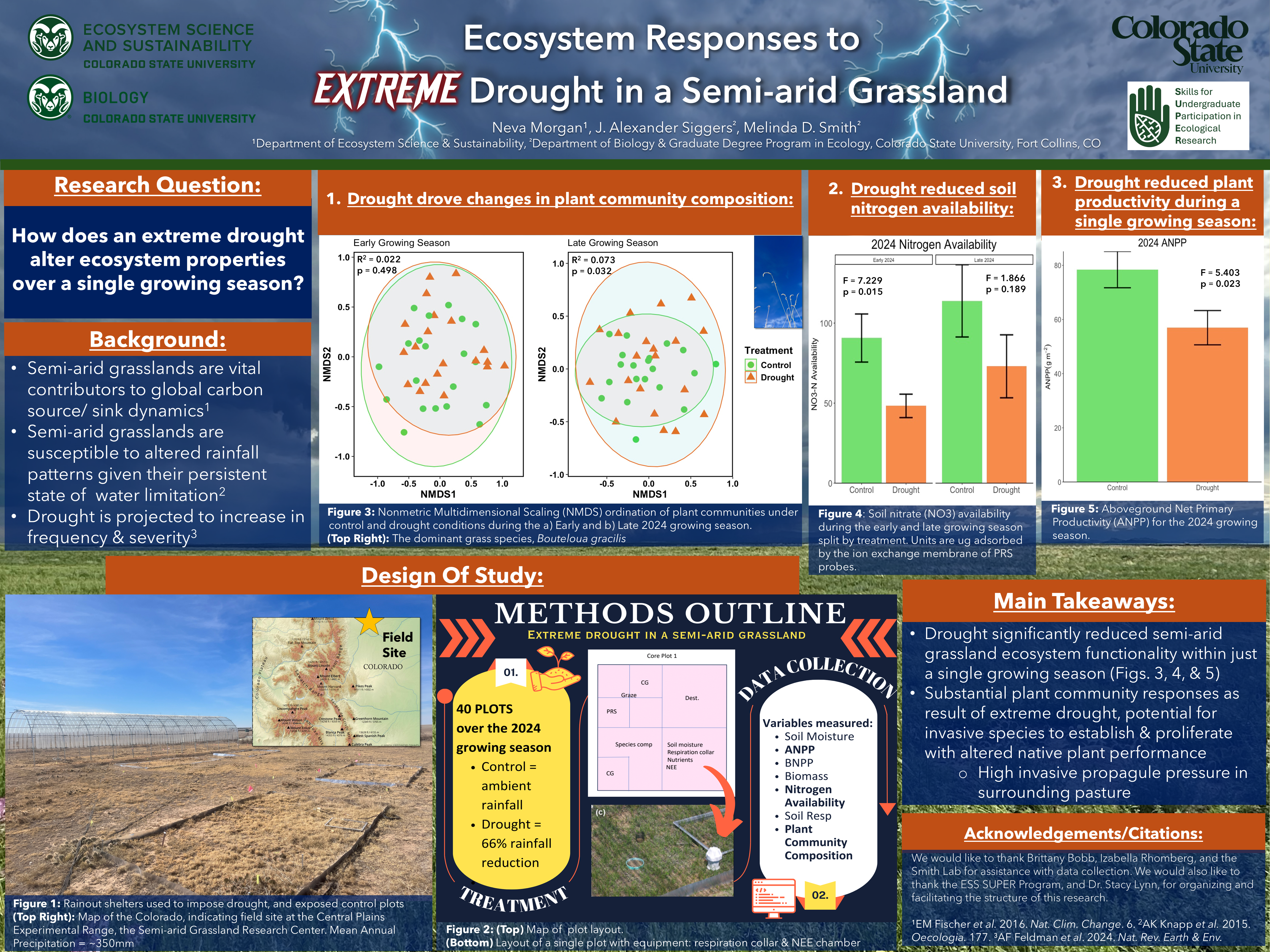
Semi-arid grasslands are projected to be impacted by more frequent and severe climatic extremes, such as drought. These ecosystems are major contributors to global carbon storage and are highly responsive to variable precipitation regimes given their persistent water limitation. Extreme drought has proven to drastically alter ecosystem properties, such as nutrient availability and soil moisture, with potential consequences for ecosystem functionality. Further, native plant species facing intense water stress are likely to shift in abundance, creating opportunities for advantageous invasive species to establish and facilitating changes in plant community composition. Our study was initiated in a Northern Colorado semi-arid grassland, where experimental extreme drought conditions were imposed during the 2024 growing season. Preliminary results from a single year of experimental drought show substantial decreases in soil moisture and plant productivity, along with altered nutrient availability. Shifts in droughted plant communities are subtle relative to controls, however, differences are expected to be magnified by a second year of drought given increasing invasive propagule pressure in the surrounding pasture. Hence, this study will continue across two more growing seasons, with an extreme rainfall event added during the second growing season to assess interactions with drought. Understanding semi-arid grassland responses to altered precipitation regimes can inform farmers, ranchers, and land managers of how to prepare for and mitigate the detrimental effects of an increasingly unpredictable climate.