
Diet Composition of Feral Horses and Mule Deer
Category: Community Engagement Poster
Author(s): Kelly Kramer
Presenter(s): Kelly Kramer
Mentors(s): Saeideh Esmaeili
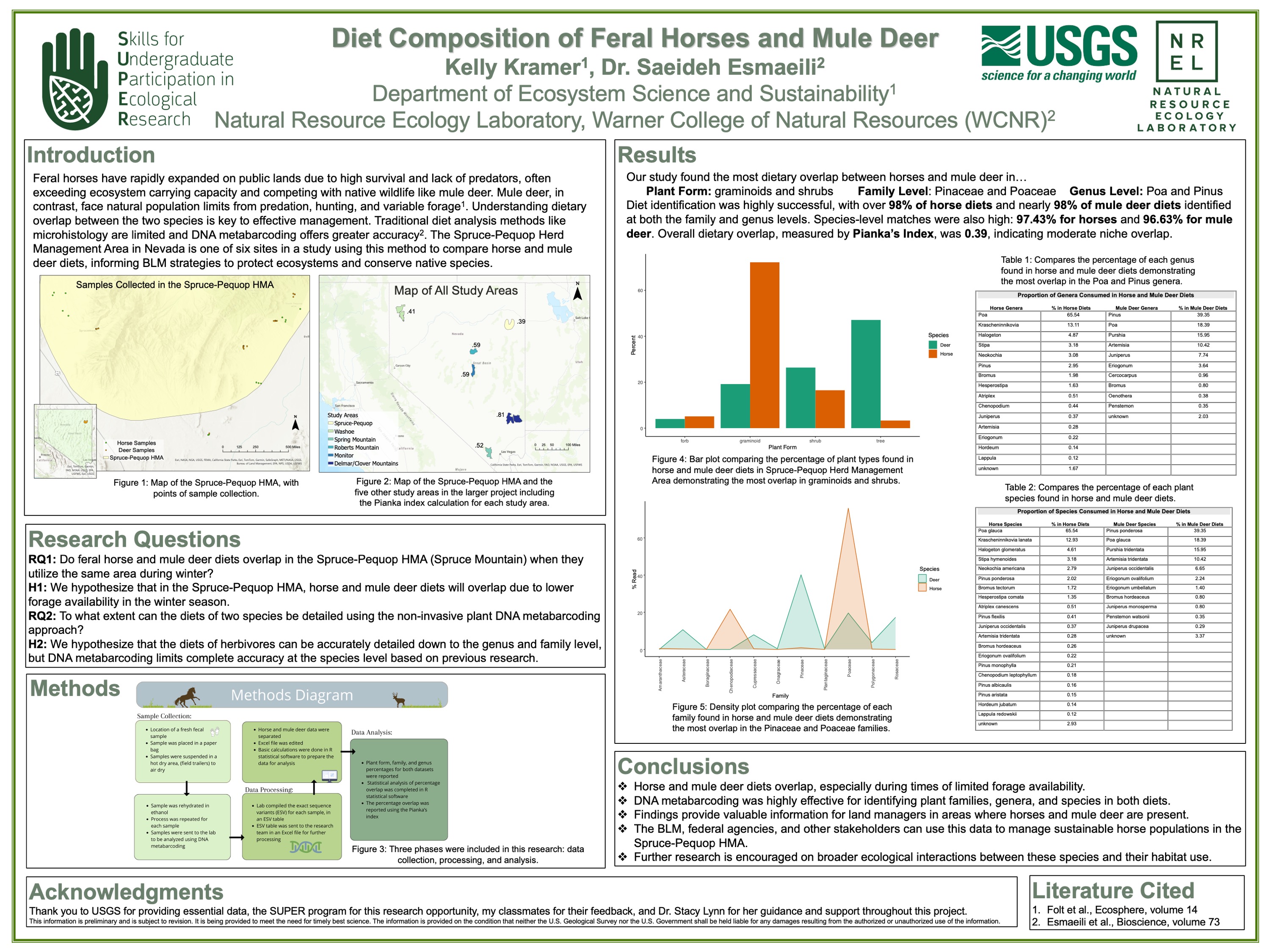
This research investigates the diet composition of feral horses and mule deer in the Spruce-Pequop Herd Management Area (HMA). Our goal is to inform management groups on how to best manage lands inhabited by both species to prevent the decline of mule deer. We examined the diet overlap between feral horses and mule deer to determine if they compete for the same resources and whether this competition negatively impacts mule deer populations. Horses and mule deer have different digestive systems that influence their foraging behavior. Horses use hindgut fermentation, which extracts fewer nutrients from forage, requiring them to consume large amounts of vegetation to meet their nutritional needs. Mule deer are ruminants and can extract more nutrients from high-quality forage, allowing them to consume less overall. Horses may outcompete mule deer by consuming large quantities of forage, depleting resources that mule deer rely on. We analyzed 40 fecal samples using DNA metabarcoding to examine the diet composition of both species. Our results indicate that their diets overlap, especially during periods of low forage availability, which negatively affects mule deer survival and persistence. The results of our study convey the need for increased management of areas inhabited by both species.