
Livestock Disease, Livelihoods and Ecology in Tanzania
Category: Research Poster
Author(s): Alexa Luna-Turner
Presenter(s): Alexa Luna-Turner
Mentors(s): Stacy Lynn
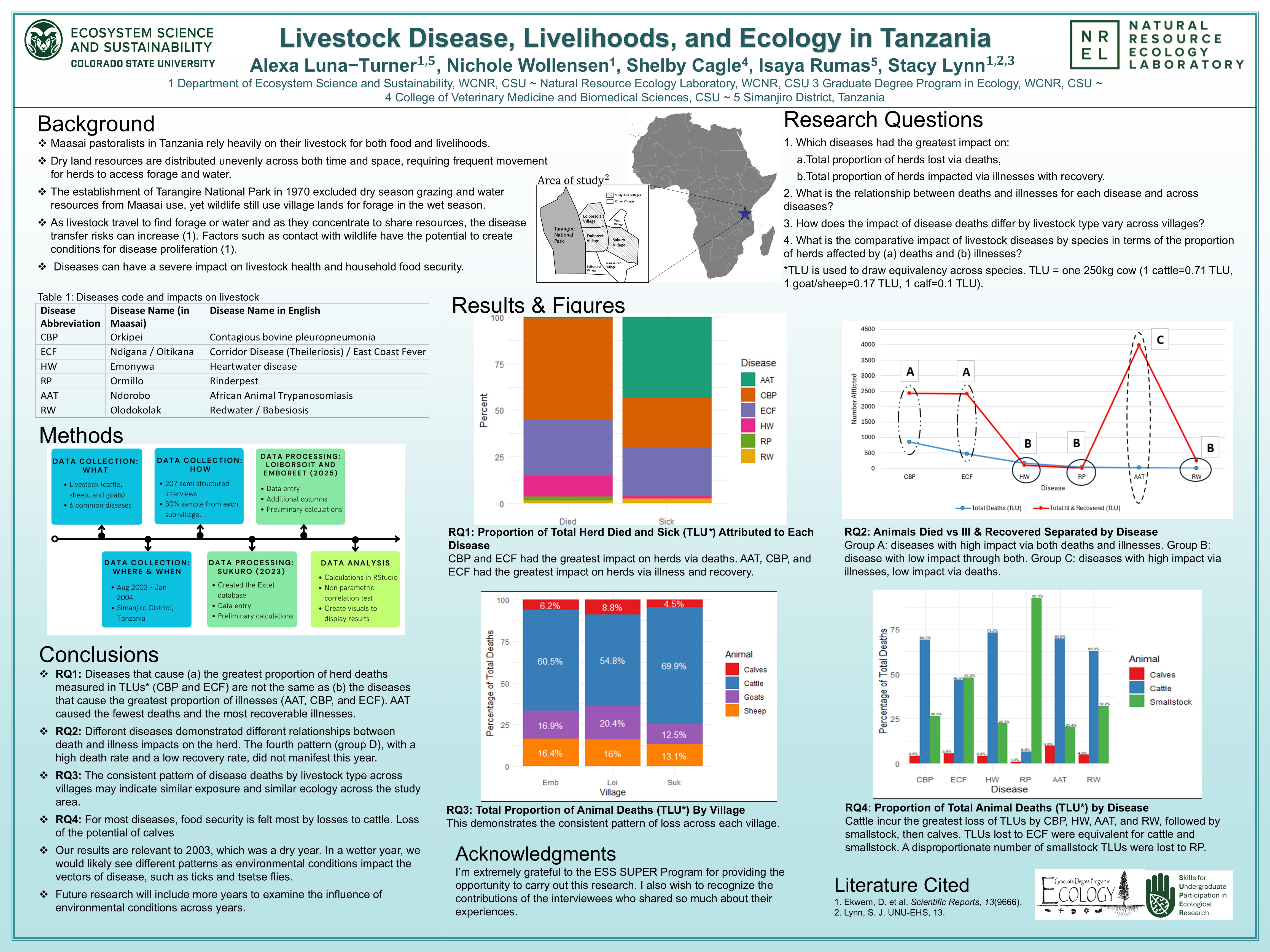
Can you imagine if every grocery store suddenly had no food? What would you do if you also lost your job and could not pay for anything? In the Simanjiro District of Tanzania, livestock are extremely important, especially for Maasai pastoralists, who rely on livestock as a major source of both food and income. One of the great risks to Maasai livestock is disease. These herds are composed mainly of cattle, goats, and sheep in order to act as a buffer against disease risks and forage shortages that may impact each species disproportionately. We examine how ecology, disease, environment, and people overlap. Specifically, we aim to investigate how impacts on livestock vary by disease and if the impacts vary by village location or livestock species. The interviews were converted into an Excel database, cleaned, and analyzed through RStudio. Most animals afflicted with “African Animal Trypanosomiasis,” generally transmitted by the tsetse fly, recovered. In contrast, “Bovine pleuropneumonia,” a highly contagious bacteria, resulted in the highest percentage of deaths, with cattle being the most impacted animal across all 3 villages.