
Developing Sentinel Plants: Using a Ribozyme System for Early Viral Detection
Category: Community Engagement Poster
Author(s): Josh Conlin
Presenter(s): Josh Conlin
Mentors(s): Arjun Khakhar
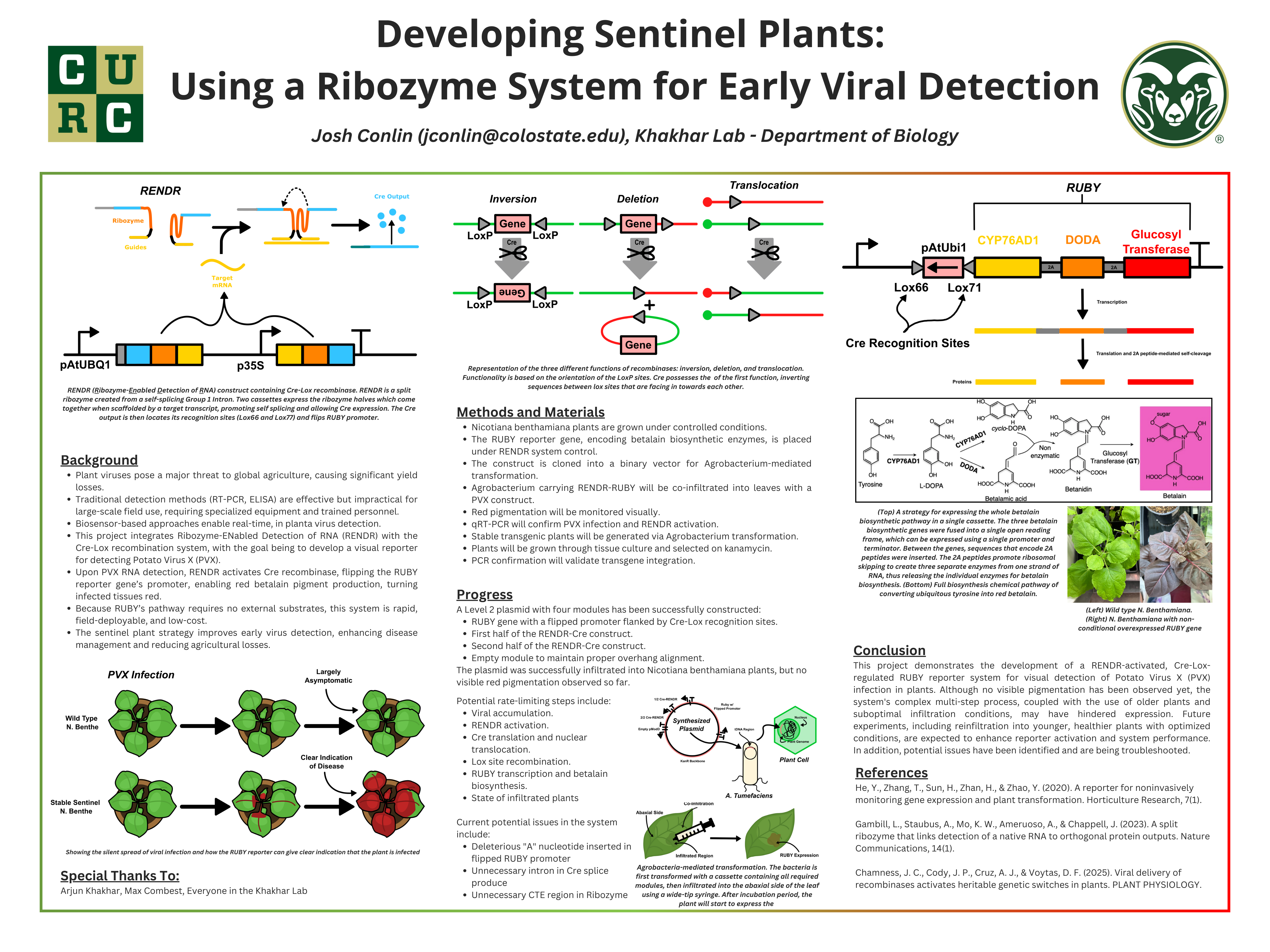
Early detection of plant viral infections is crucial for effective disease management and crop protection. This study presents a plant-based visual reporter system that produces red pigmentation upon detecting Potato Virus X (PVX) infection. The system uses Ribozyme-ENabled Detection of RNA (RENDR) to sense PVX-specific RNA and, in response, splices together a functional Cre recombinase transcript. Cre then mediates recombination at loxP sites to flip the promoter controlling the RUBY reporter gene into an active orientation. The RUBY gene encodes three enzymes—CYP76AD1, DODA, and glucosyltransferase—linked by self-cleaving 2A peptides, allowing coordinated production of red betalain pigment from endogenous tyrosine. This visible signal enables non-invasive detection without external substrates or equipment. The PVX-responsive construct is being tested in transient expression assays, with plans to develop stable transgenic Nicotiana benthamiana lines. Upon PVX infection, RENDR detects viral RNA, activates Cre, and triggers red pigment production in infected tissues. This RENDR-Cre-Lox-RUBY system offers a rapid, low-cost, and field-deployable method for early virus detection, supporting improved disease management and reduced crop losses.