
Advancing Latent Tuberculosis Diagnosis: A Comparative Study of Exosome Enrichment Strategies
Category: Research Poster
Author(s): Pareese Jalal
Presenter(s): Pareese Jalal
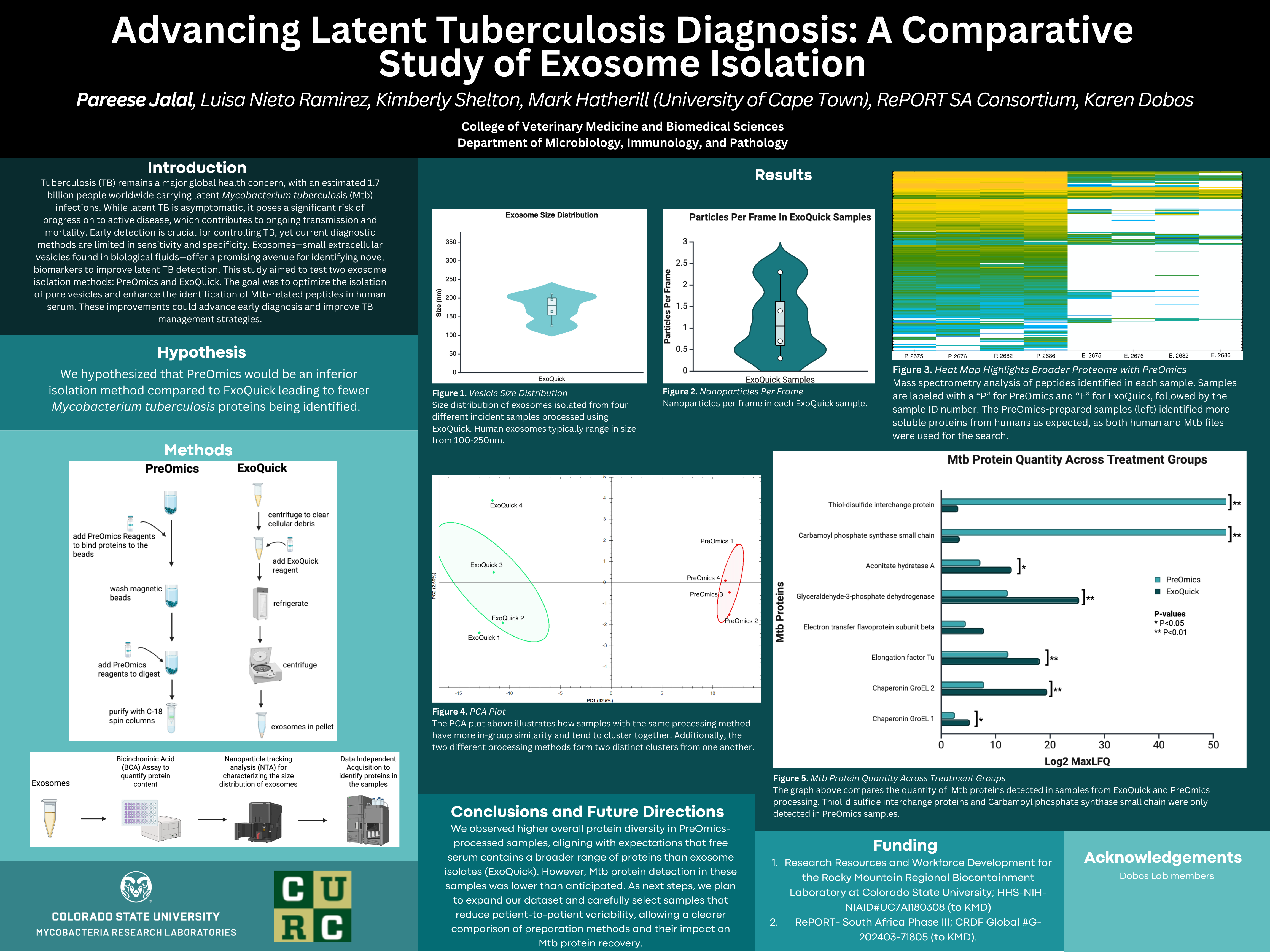
Exosome isolation from human serum is a critical step in identifying biomarkers for Mycobacterium tuberculosis (Mtb), particularly for early detection of asymptomatic infections. This study compares the PreOmics EV enrichment method to the lab’s standard protocol to evaluate their efficiency in isolating exosomes and identifying Mtb-related peptides. It was hypothesized that the PreOmics method would show inferior performance relative to the lab's established method, resulting in fewer identified peptides associated with Mtb. PreOmics claims that their magnetic bead-based approach enriches for less abundant proteins in the sample, which could influence the types and quantities of exosomal proteins recovered. To assess enrichment efficiency, bicinchoninic acid (BCA) assays were performed for protein quantification, and nanoparticle tracking analysis (NTA) was conducted to determine particle concentration and size distribution in both sample sets. Although mass spectrometry results are being analyzed, preliminary data from the BCA and NTA assays suggest differences in protein content and particle characteristics between the two methods. This research is part of an ongoing study aimed at identifying novel biomarkers for Mtb infection in individuals without noticeable symptoms, with the potential to enhance early diagnosis and improve treatment outcomes for latent tuberculosis infections.