
Using Genetic Approaches to Identify Antibiotic Pathways in Paenibacillus apiarius JH21
Category: Research Poster
Author(s): Jacob Hall
Presenter(s): Jacob Hall
Mentors(s): Claudia Gentry-Weeks, James Henriksen
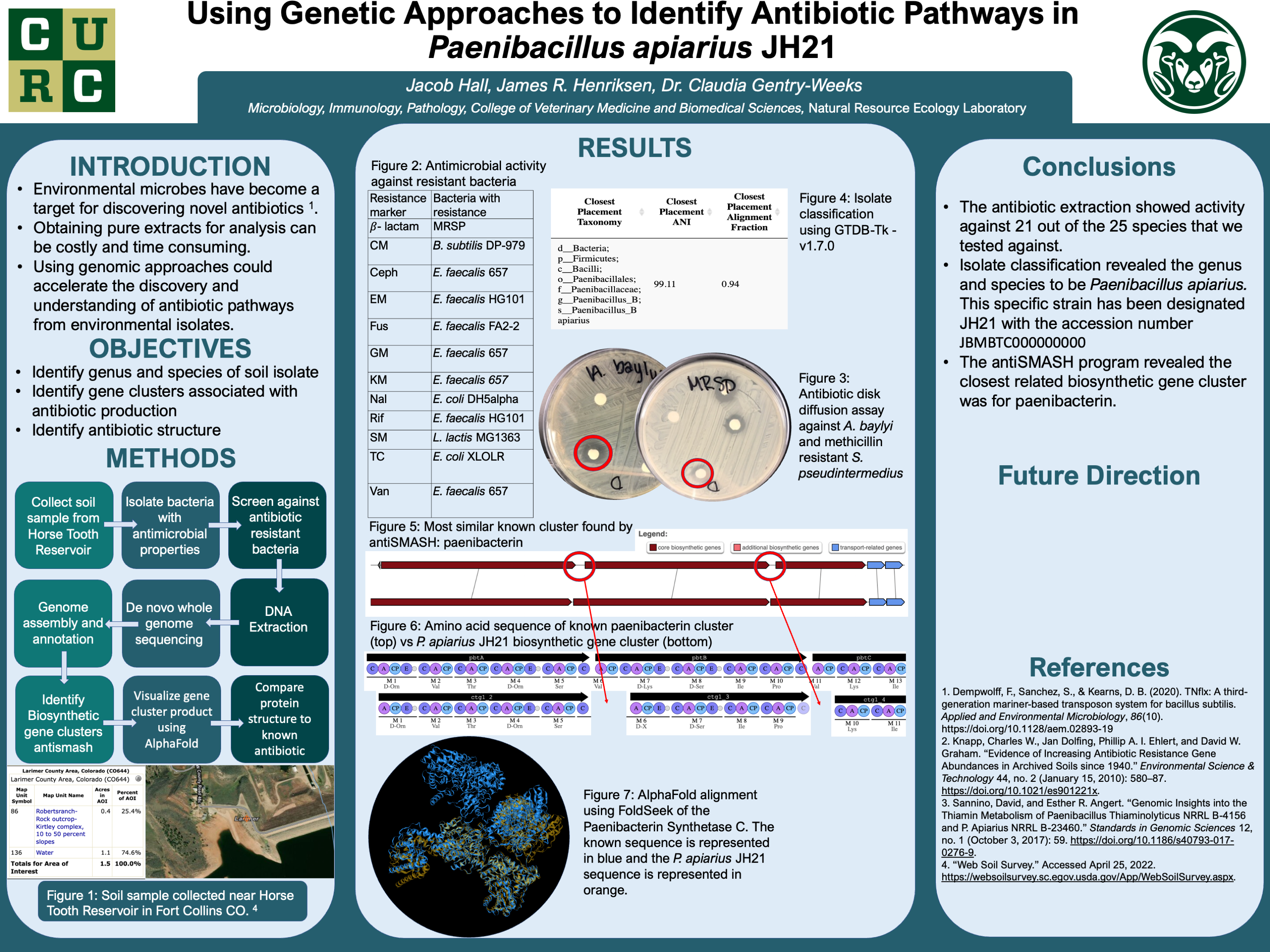
As instances of antibiotic resistance increase, the search for novel antibiotics and a better understanding of antibiotic production pathways in bacteria is more important than ever. A novel strain of Paenibacillus apiarius (designated JH21) was isolated from Horse Tooth Reservoir and tested for its ability to produce antimicrobial substances. An antibiotic extraction was completed, and a disk diffusion assay against multiple bacterial strains was performed to find the spectrum of antimicrobial activity. Whole genome sequencing was completed to identify the bacteria and pathways involved in antibiotic production. After assembly, the genome was run through a program called antiSMASH to identify biosynthetic gene clusters (BGCs) that could be responsible for the antimicrobial production. However, this program did not find any concrete matches for antimicrobial pathways. After this, attention was turned to an antibiotic called paenibacterin which had a very similar spectrum of targets to the one produced by P. apiarius JH21. A nucleotide BLAST was used to compare the paenibacterin gene cluster to the P. apiarius JH21 genome which revealed high similarity between the two. In an effort to conclude whether this strain is producing paenibacterin, chemical analysis of the antibiotic extract will be performed. An electroporation protocol for P. apiarius JH21 is also being developed so that foreign DNA can be used to disrupt the antibiotic synthesis pathway, to see if there is more than one antimicrobial substance being produced.