
Discovering the circulating milieu in microglia of men with hypogonadism
Category: Research Poster
Author(s): Lucas Guerrero
Presenter(s): Lucas Guerrero
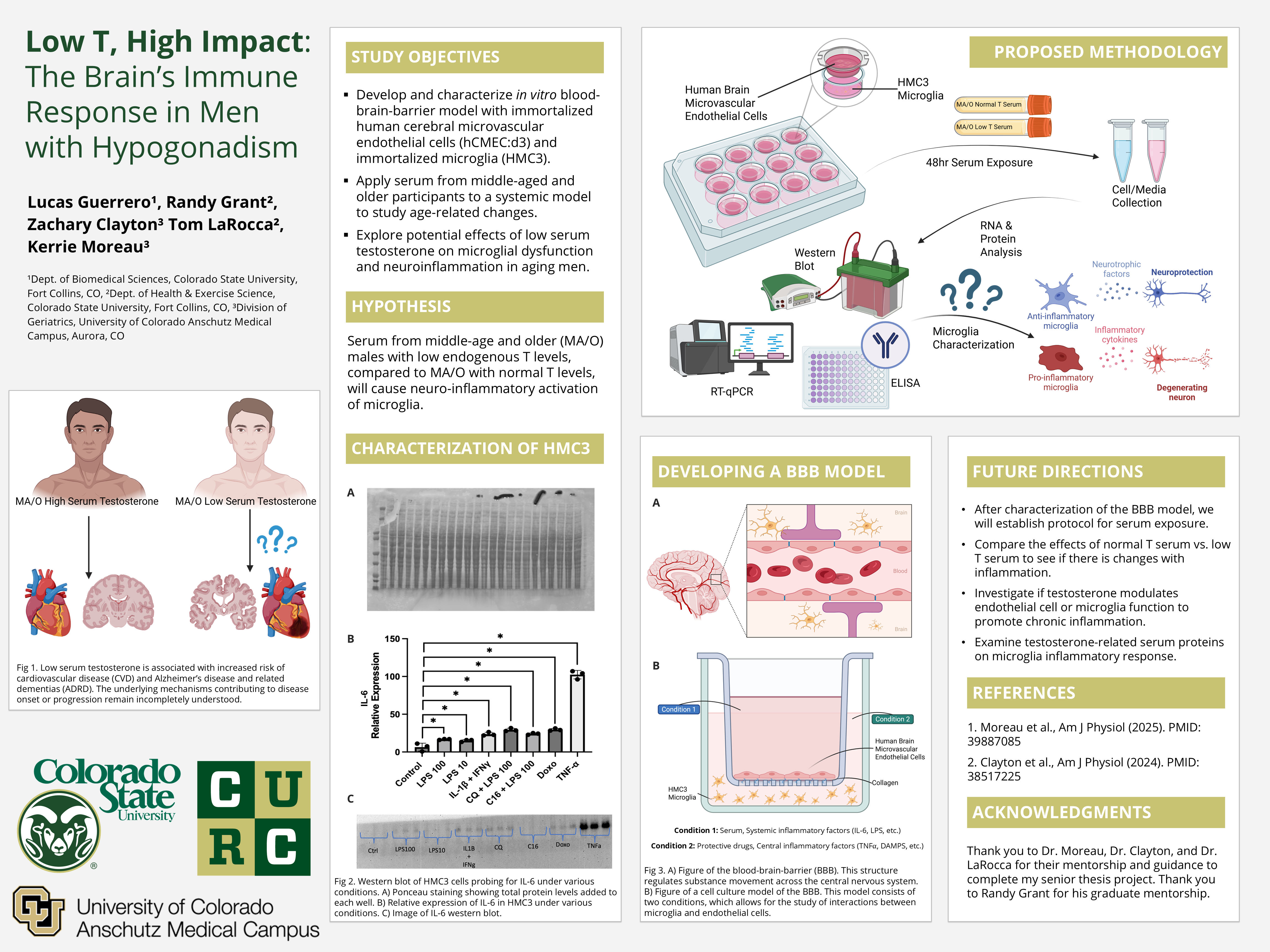
Testosterone (T) plays a crucial role in regulating physical health during aging and disease states across all physiological systems. Evidence suggests that low serum testosterone increases the risk of cardiovascular diseases (CVD), Alzheimer’s disease, and related dementias (ADRD). However, the mechanisms by which low T contributes to the development and/or progression of CVD and ADRD are not fully understood. Thus, in this present study, we plan to evaluate the effects of varying circulating T levels on neuroinflammation (a key characteristic of ADRD). We hypothesize that serum from middle-age and older (MA/O) males with low endogenous T levels, compared to MA/O with normal T levels, will cause neuro-inflammatory activation of microglia. To test this hypothesis, we will use human microglia and brain microvascular endothelial cell lines cultured in a 12-well plate + a transwell insert format, which will mimic the blood-brain-barrier (BBB). By treating cells in this model with serum from human research participants (with low or normal T), we will be able to evaluate T-related effects on neuroinflammatory activation of microglia. Cells will be exposed to patient serum for a 48-hour incubation period, after which they will be lysed and collected for analysis. The proposed experiments will increase our understanding of the underlying effects of circulating T and/or circulating proteins associated with T levels on microglia, which are key cell types involved in neuroinflammation and ADRD. These proof-of-concept experiments will provide critical insights into how low T and influence microglia, advancing our understanding of neuroinflammation and guiding potential therapeutic strategies.