
Mosquitoes and Temperature: A Heated Relationship
Category: Oral Presentation
Author(s): Olivia Martinez
Presenter(s): Olivia Martinez
Mentors(s): Rebekah Kading, Emma Harris, Shelby Cagle
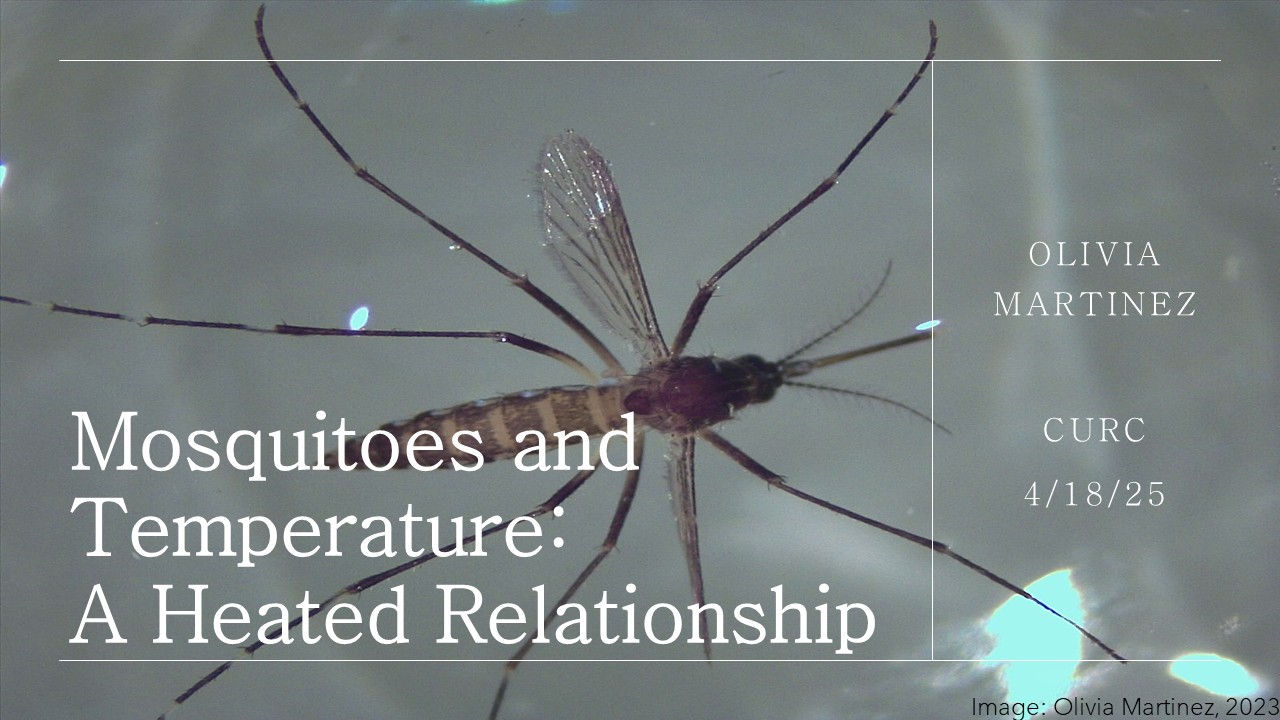
Temperature change is known to affect transmission efficiency of mosquito-borne viruses, particularly those spread by Aedes aegypti and Culex tarsalis mosquitoes. Previous work showed patterns of decreased oviposition when virally infected adult Ae. aegypti mosquitoes were exposed to temperatures varying from typical environmental conditions. It is unclear if this was caused by abnormal temperatures or viral presence. We hypothesized that temperature change negatively impacts oviposition in uninfected blood-fed Ae. aegypti and Cx. tarsalis mosquitoes due to transcriptional or translational errors in oogenesis. Key reproductive proteins such as vitellogenin may have been altered by temperature, with detrimental downstream effects in egg formation or deposition. We performed experimental trials using ~60 individually housed mosquitoes held at low (18°C), standard (28°C), or high (32°C) temperatures over a 5-day period. 18°C and 32°C data was compared to 28°C. Retained eggs were counted using ovarian dissection, deposited eggs were counted, and any hatching was recorded. Using tissues taken from experimental mosquitoes, we will characterize Vg production and function using qPCR and Western blots. After 5 days, no significant drops in survivorship were observed in either species at all temperatures. When held at 18°C, egg retention increased significantly in both Ae. aegypti and Cx. tarsalis, determined using a one-way ANOVA (p<0.0001). 32°C did not cause significantly increased egg retention in either species. Hatching rates were significantly lower at 18°C and 32°C (p<0.0001). qPCR and Western blot experiments are ongoing. Understanding how mosquitoes are affected by temperature will inform future vector control and disease mitigation strategies.