
Climate change adaptation in urban forestry: Cold hardiness tests for novel tree species in Colorado landscapes
Category: Research Poster
Author(s): Max Nikkari
Presenter(s): Max Nikkari
Mentors(s): Daniel Burcham
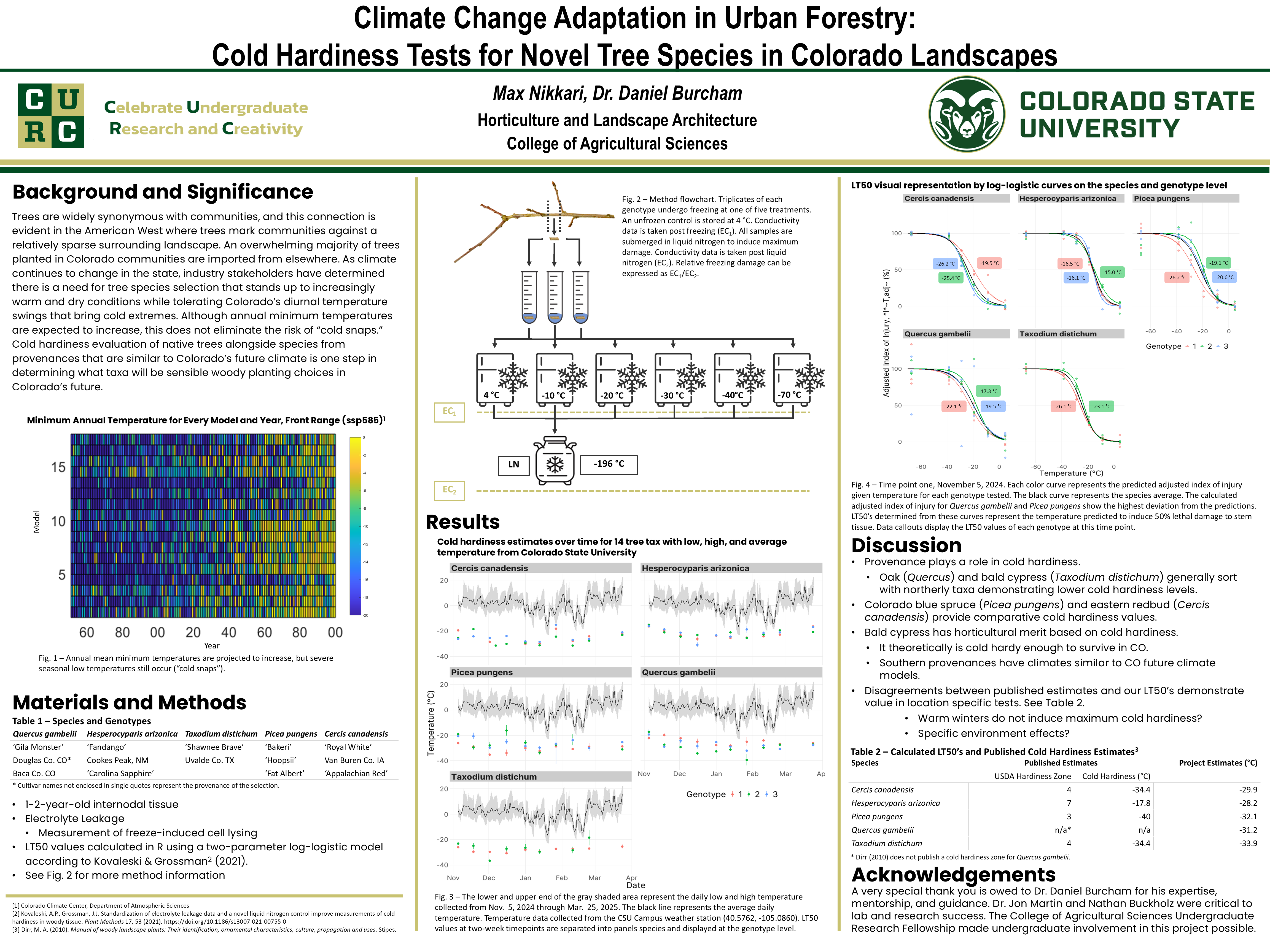
Towns in the American West are often marked by high tree density compared to the surrounding landscape. This difference is attributed to people's long and storied affinity for trees and a recognition of their ability to improve people's lives. Nearly all of the trees planted and growing in Colorado towns are not native to our state or the wider Intermountain West, and many share concerns about the fitness of existing trees for future conditions in a continuously changing climate. As the need for drought and heat tolerant trees increases, it remains important to consider the frequent temperature fluctuations Colorado experiences and the cold snaps they induce. Warming temperatures may moderate severe freezes, but they will continue, and cold hardiness will be an important characteristic in the evaluation of novel and hardy trees. From November 2024 through May 2025, fourteen genotypes of five tree species (Quercus gambelii, Hesperocyparis arizonica, Taxodium distichum, Picea pungens, and Cercis canadensis) were evaluated for cold hardiness using electrolyte leakage. One and two year tissue was harvested from each genotype and underwent a multi-step freezing protocol. Following the freezing sequence, samples were submerged in liquid nitrogen to induce maximum damage. Electrical conductivity (EC) data was collected post freezing and post liquid nitrogen to quantify freeze-induced cell leakage. EC data was processed to establish LT50 values that represent the theoretical cold hardiness for each genotype and may be used in evaluation and recommendation of novel trees for Colorado's future growing environment.