
Mosquito bloodmeal identification and West Nile virus prevalence throughout Northern Colorado in Summer 2023
Category: Research Poster
Author(s): Catalina Puska, Claire Stewart
Presenter(s): Catalina Puska
Mentors(s): Brian Foy, Michelle Savran
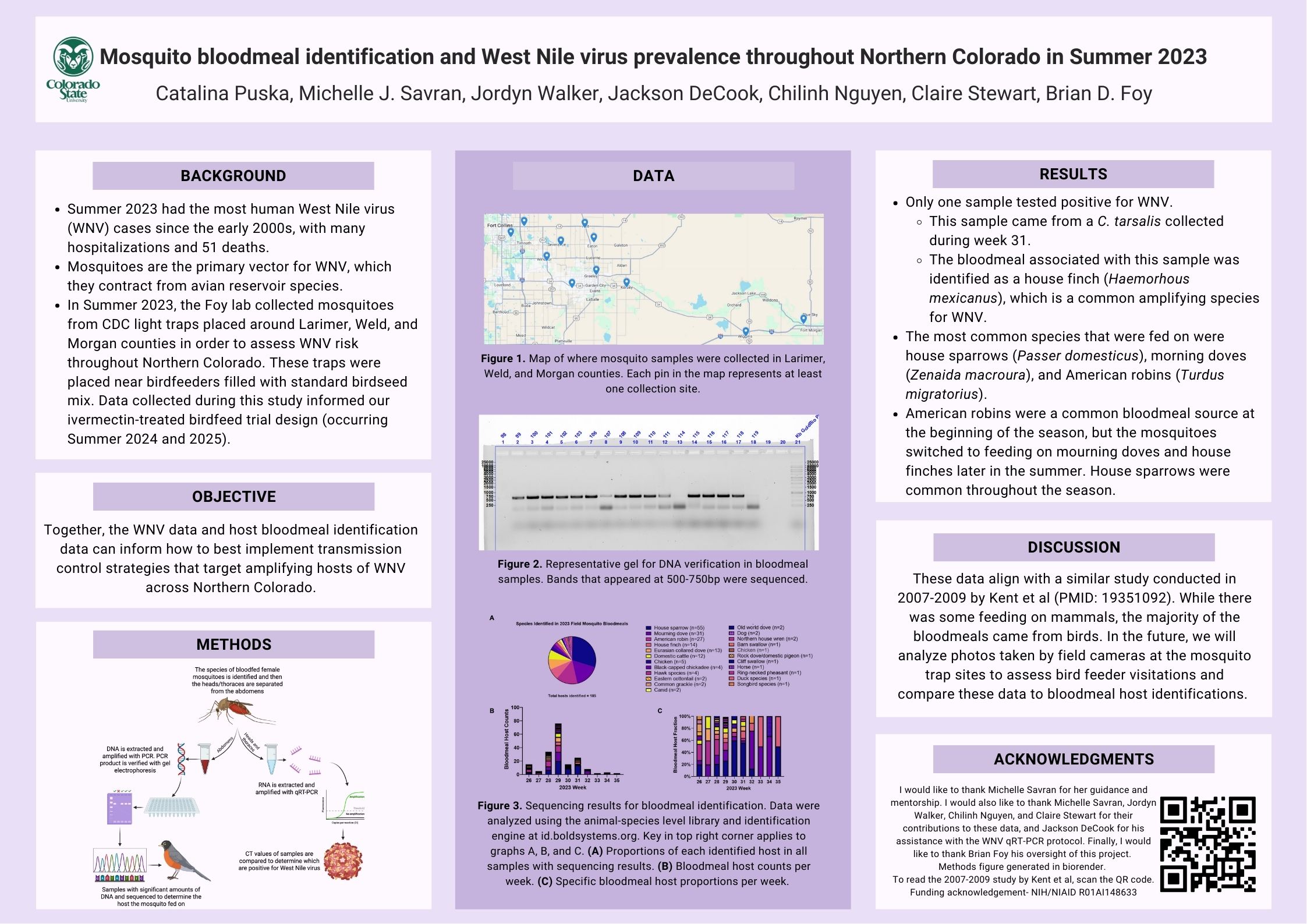
Since its introduction to Northern Colorado roughly 25 years ago, West Nile virus (WNV) has remained a concerning infectious disease. Summer 2023 had the most human WNV infections since the early 2000s, with many hospitalizations and 51 deaths. Mosquitoes are the primary vector of WNV, which they contract from avian reservoir species. We are studying oral vaccine and endectocide-based methods to reduce WNV prevalence in birds to prevent transmission to mosquitoes, and consequently to humans and livestock. Mosquito bloodmeal identification is important to these efforts as it can give us a more complete understanding of which vertebrate species mosquitoes are feeding on to gauge where WNV prevention methods should be targeted. In summer 2023, we collected Culex pipiens and Culex tarsalis mosquitoes from traps throughout Larimer and neighboring counties. We identified and speciated blood fed females, then separated abdomens for bloodmeal host DNA extraction. Heads and thoraces were retained for WNV testing. To determine the host from which the bloodmeal came, mosquito abdomens are homogenized, DNA is extracted, and the cytochrome oxidase I gene is amplified via PCR and sequenced. The heads and thoraces undergo homogenization, RNA extraction, and quantitative real-time PCR to detect WNV. We will compare the mosquito species to the host bloodmeal species and to WNV positivity rates to determine any possible patterns. While these data are still being explored, they could possibly reveal patterns in WNV transmission between vertebrates and mosquitoes that could direct our control efforts and help reduce WNV in humans and livestock.