
Overexpression of wildtype synaptotagmin improves motor behavior in a Drosophila model of congenital myasthenic syndrome
Category: Research Poster
Author(s): Casey Martin, Maxwell Pliskin, Dawson Roberts
Presenter(s): Casey Martin
Mentors(s): Noreen Reist, Nathan Pettid
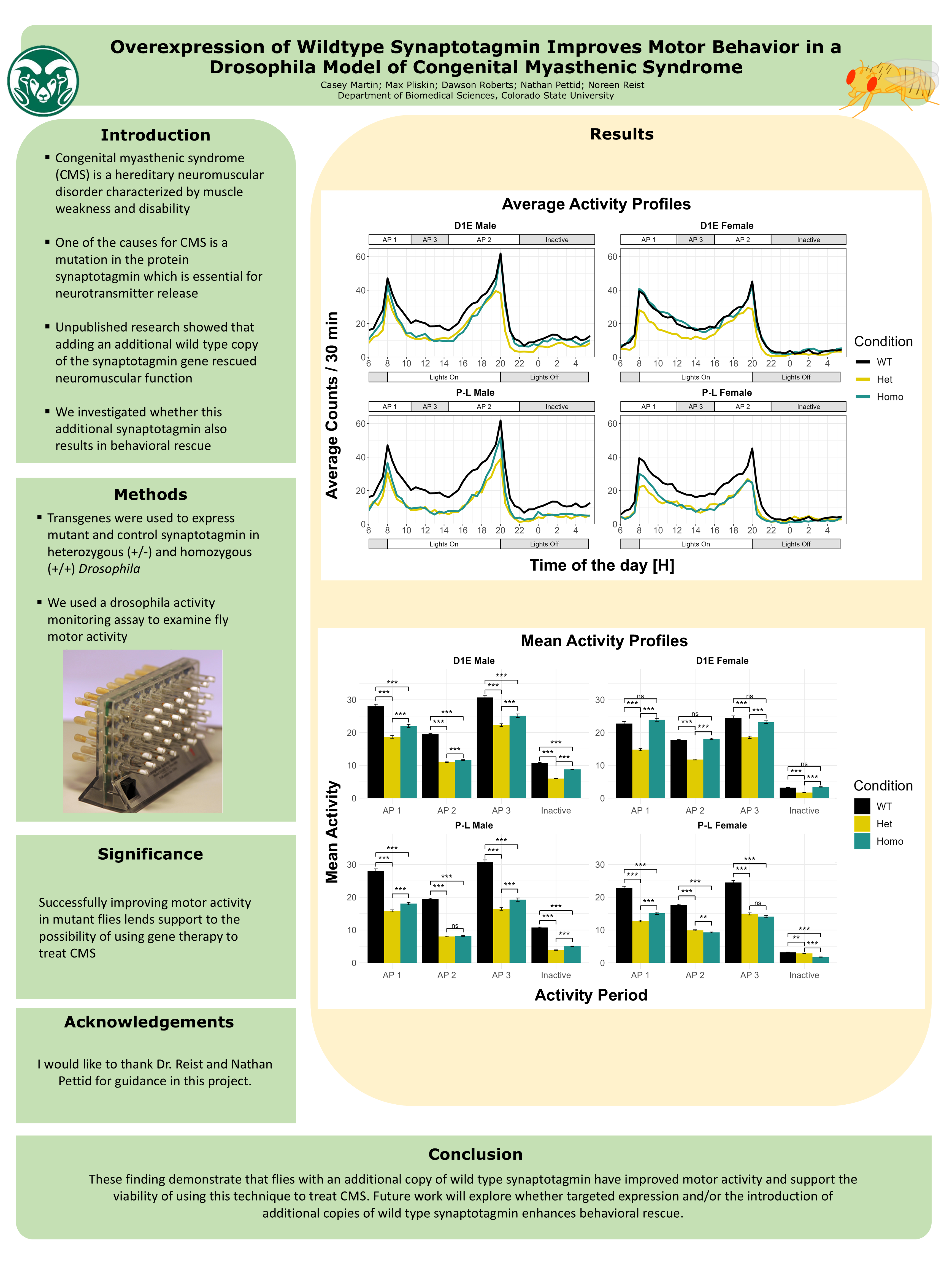
Congenital myasthenic syndrome is a hereditary neuromuscular disorder characterized by muscle weakness and disability. One cause is mutations in synaptotagmin, a protein essential for neurotransmitter release at neuromuscular junctions. This study utilized a Drosophila model of two synaptotagmin mutations found in humans, syt-D1E and syt-P-L. Unpublished research from the Reist lab demonstrated that introducing an additional wildtype copy of synaptotagmin rescued neuromuscular function; electrophysiological measurements of neurotransmitter release in larvae expressing additional synaptotagmin were not significantly different from wildtype controls. Additionally, unpublished communications suggest that electrophysiology is a highly sensitive predictor of motor behavior. To investigate whether the electrophysiological rescue results in a behavioral rescue, we assessed locomotor activity in flies with or without the additional copy of wildtype synaptotagmin using a Drosophila Activity Monitor assay. For flies with additional wildtype synaptotagmin, results revealed significant improvement in motor activity in both males and females of both mutant lines. These results clearly show some promise of this technique as a potential treatment, although the effect sizes are relatively small. Future work will explore whether introducing two additional copies of wildtype synaptotagmin enhances behavioral rescue.