
GBA1 and GBA2: The Final Pieces of Evidence
Category: Research Poster
Author(s): Ryan Thompson, Kaitlyn Dirks, Suad Elmegerhi, Rushika Perera, Samantha Pinto
Presenter(s): Ryan Thompson
Mentors(s): Rushika Perera
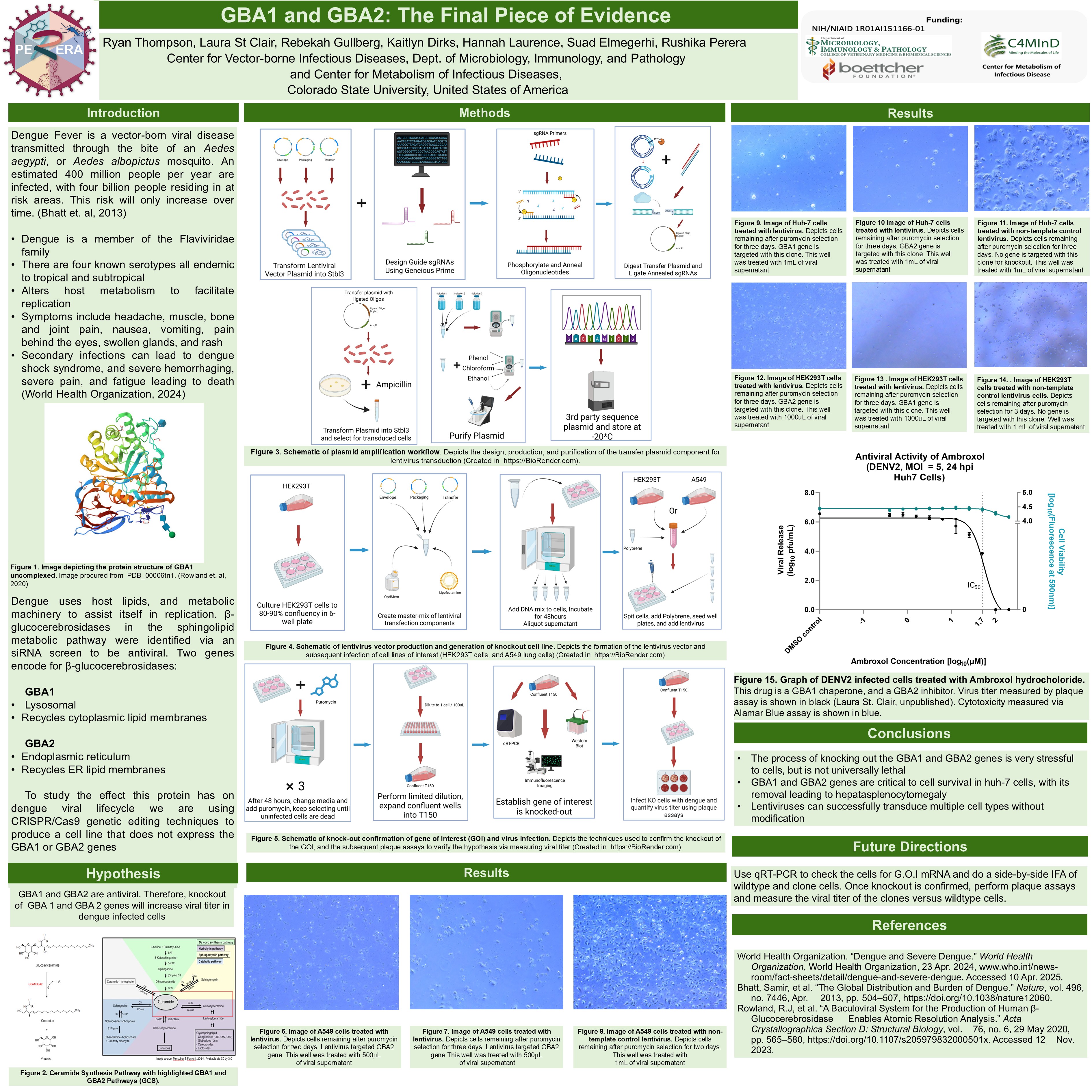
Mosquito borne illnesses present a global threat to all communities, and one of the most prolific and dangerous of these is dengue fever. With no effective vaccine or drug treatments currently available it is critical to develop countermeasures against dengue viruses. Flaviviruses have the insidious ability to harness normal metabolic functions at the great detriment of host cells, for the purpose of viral replication. Our research seeks to establish a link between dengue viral titer and the function of beta-glucocerebrosidases, GBA1 and GBA2. Preliminary results from siRNA screening showed that there is a significant link between enzyme function and viral titer. Drug testing has revealed that the agent Ambroxol Hydrochloride results in a seven-fold decrease in viral titer and continues to decrease viral titer even at high concentrations (12mM), without a deleterious effect on cell viability. This is critical because it strongly indicates that FDA approved drugs acting as GBA1 chaperones may be vital in suppressing viral load in infected patients, establishing the first antiviral drug treatment for dengue Fever. Using a CRISPR/Cas9 knockout technique with a lentiviral transfection vector we generated a transgenic cell-line of Human Adenocarcinoma Lung cells (A549), to study the role that the GBA1 and GBA2 genes play in the dengue viral life cycle. We believe that this knockout will result in an increased viral titer, proving that these genes are antiviral. These results will be presented.