
Growth Kinetics of Bat-Associated No-Known-Vector (NKV) Flaviviruses on Arthropod-derived Cell Lines
Category: Research Poster
Author(s): Anna Hartwick
Presenter(s): Anna Hartwick
Mentors(s): Anna Fagre
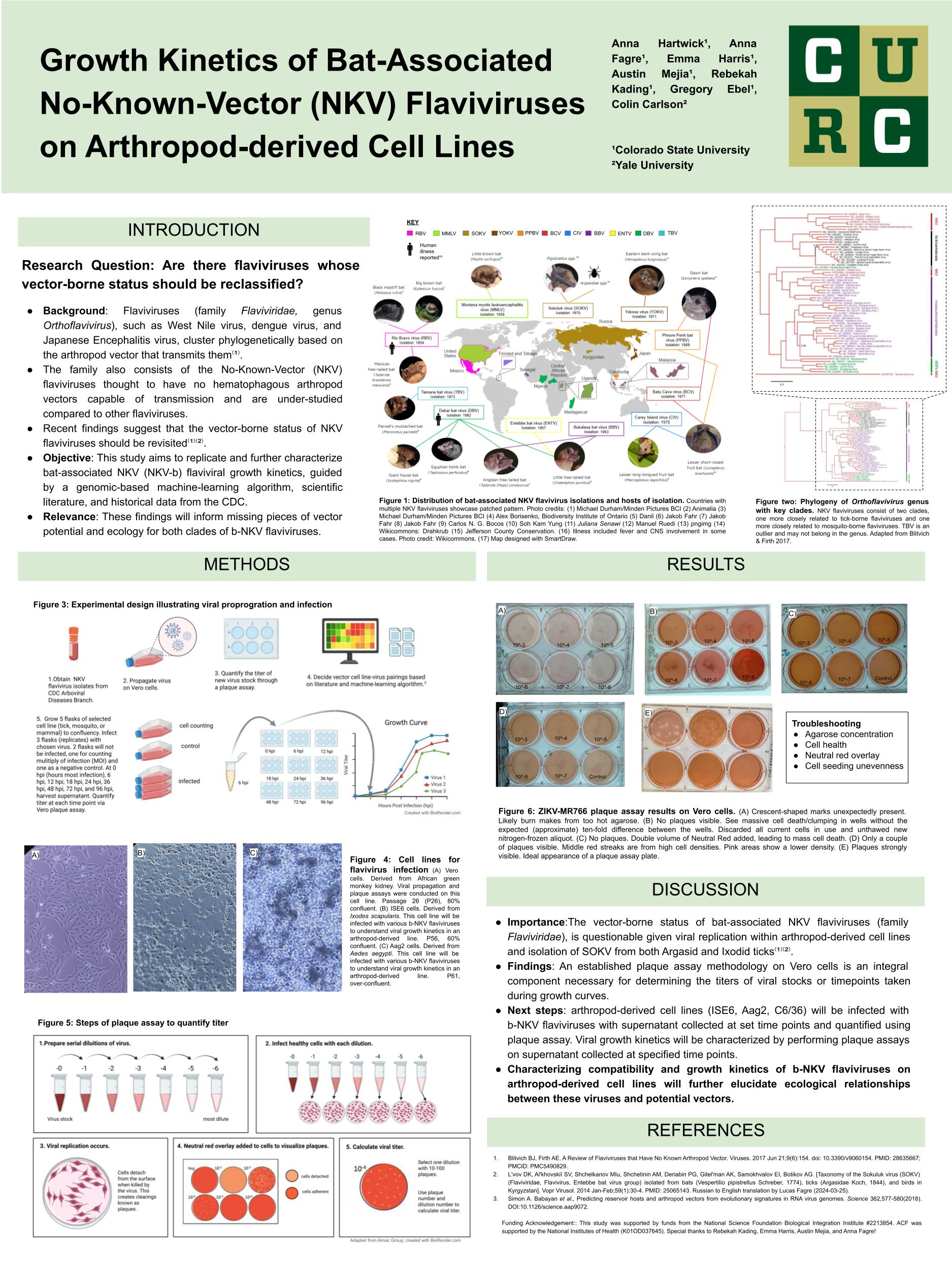
Flaviviruses (genus Orthoflavivirus, family Flaviviridae), representing public health threats like West Nile virus, dengue virus, and Japanese Encephalitis virus, cluster phylogenetically based on the arthropod vector that transmits them. Meanwhile, there are two clades within the genus—both termed No-Known-Vector (NKV) flaviviruses—thought to have no hematophagous arthropod vectors capable of transmitting them and lack the same degree of ecological characterization as other flaviviruses. However, some findings suggest that the vector-borne status of NKV flaviviruses should be reclassified. Viruses in one NKV flavivirus clade, closely related to the mosquito-borne Yellow Fever virus, replicate to low titers in mosquito-derived cell lines, and one of them was isolated from ticks in Kyrgyzstan. This study aims to replicate and further characterize viral growth kinetics with cell line-virus pairings guided by a genomic-based machine-learning algorithm, scientific literature, and historical data from the CDC. In this study, we obtained bat-associated NKV flaviviruses, propagated them on African green monkey kidney (Vero) cells, and conducted multi-step growth curves on representative vertebrate (primate, bat) and invertebrate (mosquito, tick) cell lines. Supernatant was collected at 0, 6, 12, 18, 24, 36, 48, 72, and 96 hours post infection and titered using plaque assays on Vero cells for growth curve formation. These findings will inform missing pieces of vector potential and ecology for both clades of NKV flaviviruses.