
A New Pathogen in the MTb Complex: Protein Characterization of Mycobacterium mungi
Category: Research Poster
Author(s): Kendall Goldmann
Presenter(s): Kendall Goldmann
Mentors(s): Karen Dobos
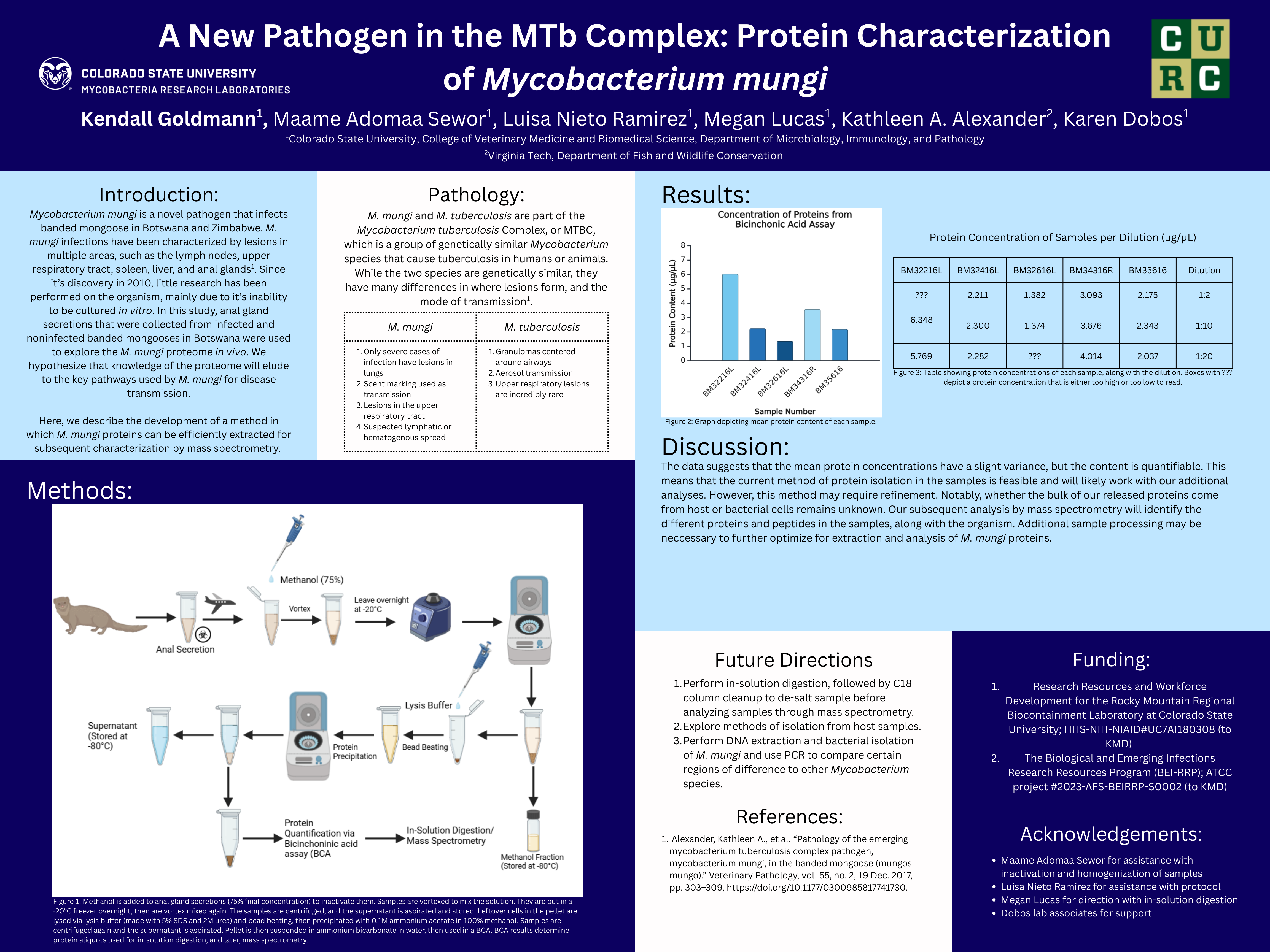
Originally reported as Mycobacterium tuberculosis (MTb) in 1999, Mycobacterium mungi is a novel MTb Complex pathogen which infects banded mongoose in Botswana and Zimbabwe. It causes lesions in multiple areas, including the upper respiratory tract, anal glands, spleen, liver, and lymph nodes. M. mungi is also unable to be cultured in vitro. Little research has been previously done on M. mungi since its official discovery in 2010. However, further research on this organism is incredibly important due to the pathogenic nature of M. mungi and possibility of spillover due to how close the banded mongoose resides to humans. This exploratory study looks at methods that M. mungi proteins can be characterized and identified. After analysis of the samples with mass spectrometry, the next steps in this study include optimizing identification of these proteins and improving the processes in which the results are derived from. Furthermore, identification of M. mungi proteins and peptides can help future studies create methods of isolation for this bacterium.