
Two Hits, One Fibrosis: IL-22 and IL-24 Mediated Repair in Agricultural Dust-Exacerbated Pulmonary Fibrosis
Category: Research Poster
Author(s): Ashley DeBie
Presenter(s): Ashley DeBie
Mentors(s): Melea Barahona, Tara Gries
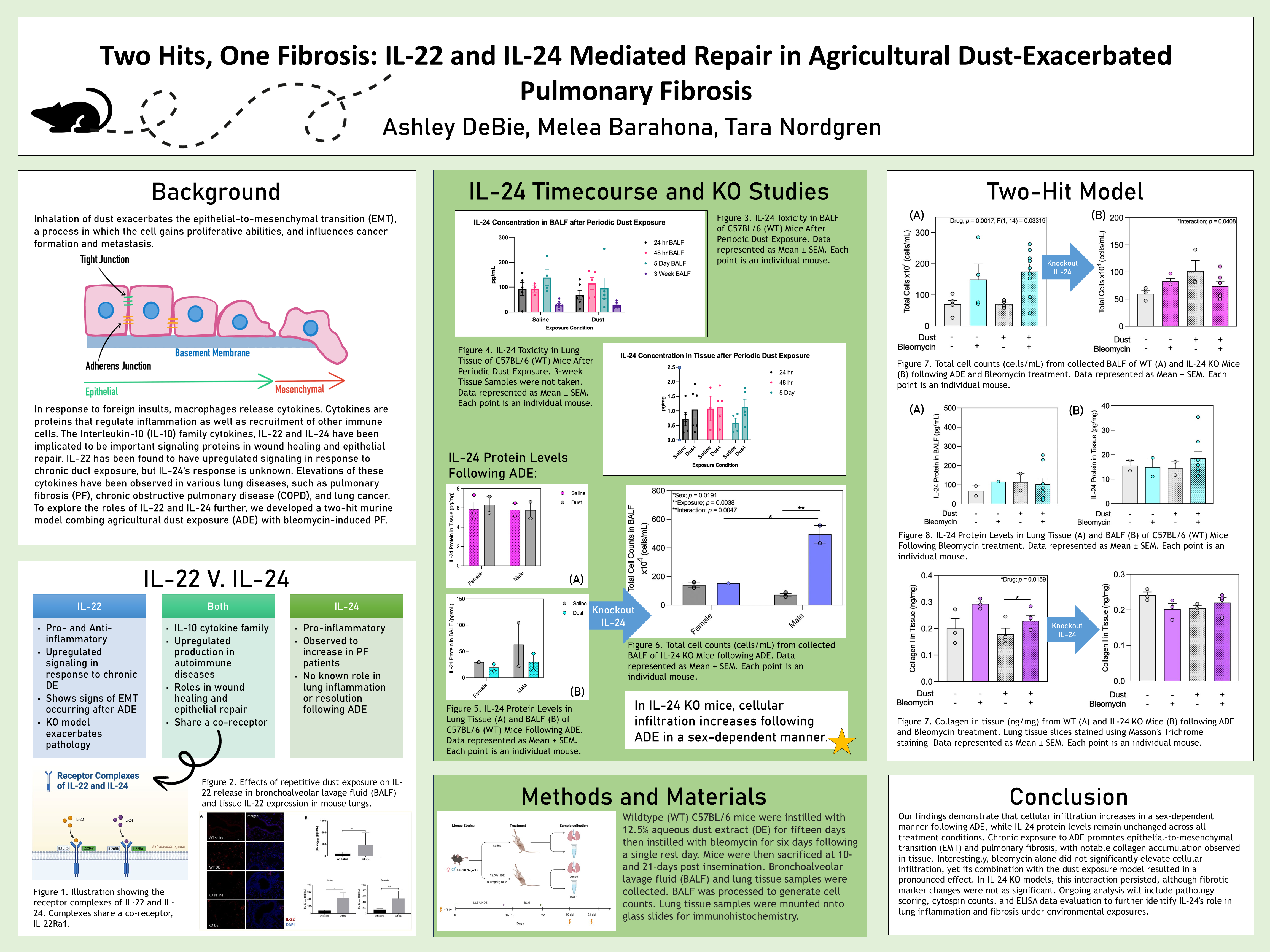
Inhaled toxicants are recognized as major contributors to lung inflammation and tissue damage. Repair mechanisms within the lung epithelial barrier help maintain tissue homeostasis and protect against injury. The epithelial-to-mesenchymal transition (EMT) enables cells to gain proliferative abilities, and influences cancer formation and metastasis. Inhalation of dust further exacerbates this process. Additionally, in cellular immunity, macrophages release cytokines to regulate inflammation and recruit other immune cells in response to foreign insults. While Interleukin-10 (IL-10) is well known for its role in anti-inflammatory responses, other multifunctional IL-10 family cytokines, IL-24 and IL-22 are less well studied, despite their involvement in mediating lung inflammation and the EMT-MET repair process. Elevations of these cytokines have been observed in various lung diseases, such as pulmonary fibrosis (PF), chronic obstructive pulmonary disease (COPD), and lung cancer. To explore the roles of IL-22 and IL-24 further, we developed a two-hit murine model combing agricultural dust exposure (ADE) with bleomycin-induced PF.