
Using C.elegans to assess the toxicity of occupationally relevant exposure to mixtures of agricultural dust and wildfire smoke
Category: Research Poster
Author(s): Rose Reiter, Jacob Smoot, Luke Montrose
Presenter(s): Rose Reiter
Mentors(s): Luke Montrose
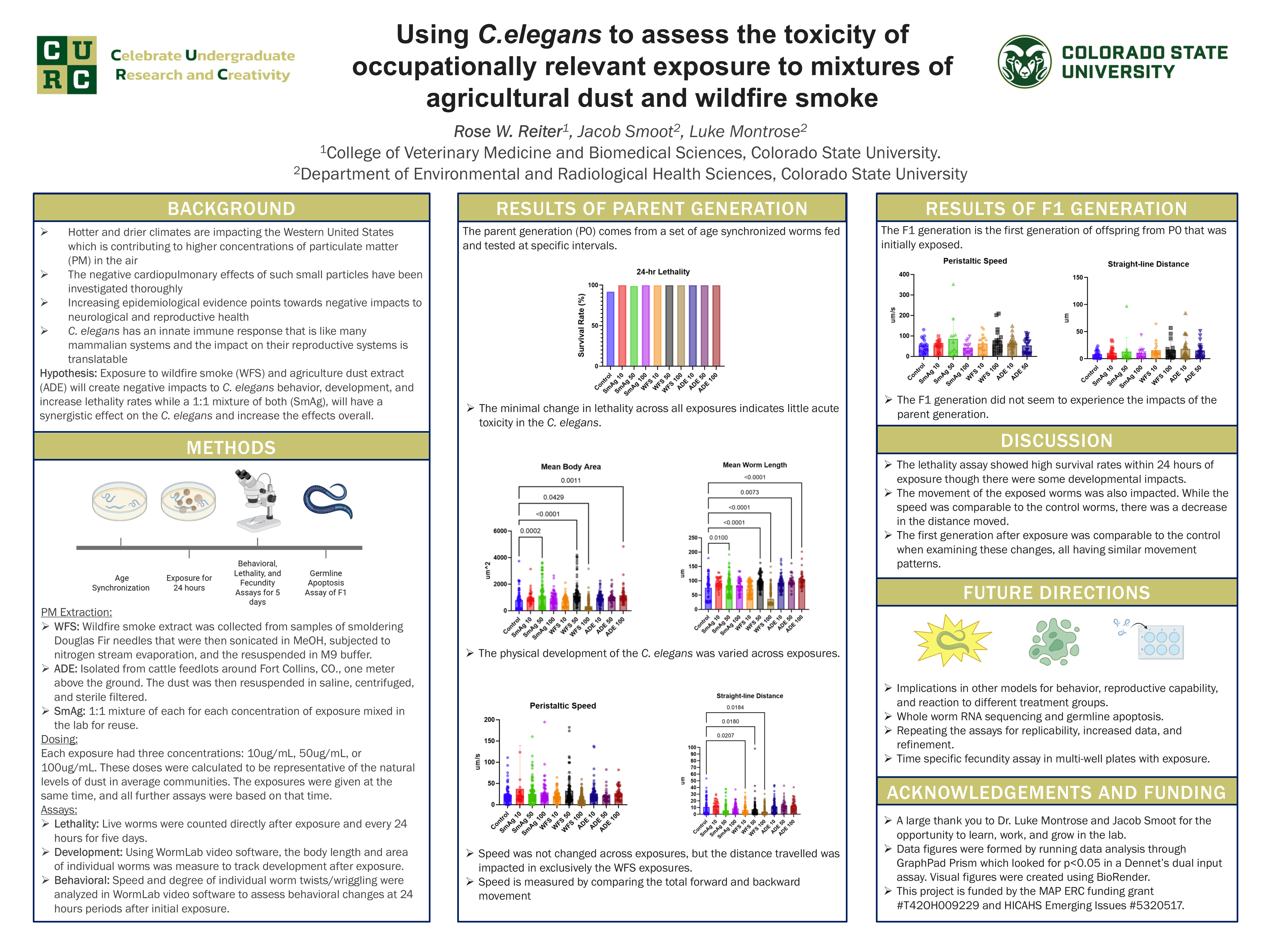
Hot and dry periods are becoming more commonplace for longer periods of time, increasing the prevalence of wildfires. Higher exposure to wildfire smoke (WFS) is important to consider alongside other air pollutants, particularly in occupational settings such as the agricultural industry. Current literature suggests that there is an important link between air pollution and the reproductive system needing deeper investigation. The C. elegans model is a high throughput, low-cost model that is used to assess air pollution toxicity. We used C. elegans to better understand potential health impacts of agricultural dust (ADE) and WFS mixtures. Lethality and behavioral assays using C. elegans will be used to demonstrate the toxicity of ADE, WFS, and a mixture. WFS from Douglas Fir needles was generated in a combustion chamber at smoldering temperatures and collected onto PTFE filters, then into a solution. ADE was prepared with HBSS and dust from Coloradan feed lots then filtered and measured for experiments. C. elegans were then age synchronized to L4, then transferred to NGM plates containing 100uM FuDR to halt egg hatching. C. elegans were treated with 10, 50, and 100 ug/mL of WFS, ADE, 1:1 mixture, or M9 buffer as a control. Lethality and behavioral assays were conducted after 24hrs then assessed every 24 hours. Behavioral data was collected and analyzed using videos imported to WormLab (MBF Biosciences) and was assessed for activity including speed and body bends. Research is ongoing but aims to provide insight to the brain & reproductive toxicity of WFS and ADE.