
Surgical Nerve Decompression and Lower Limb Motor Function in Peripheral Neuropathy
Category: Research Poster
Author(s): Jaden Diaz
Presenter(s): Jaden Diaz
Mentors(s): Brian Tracy
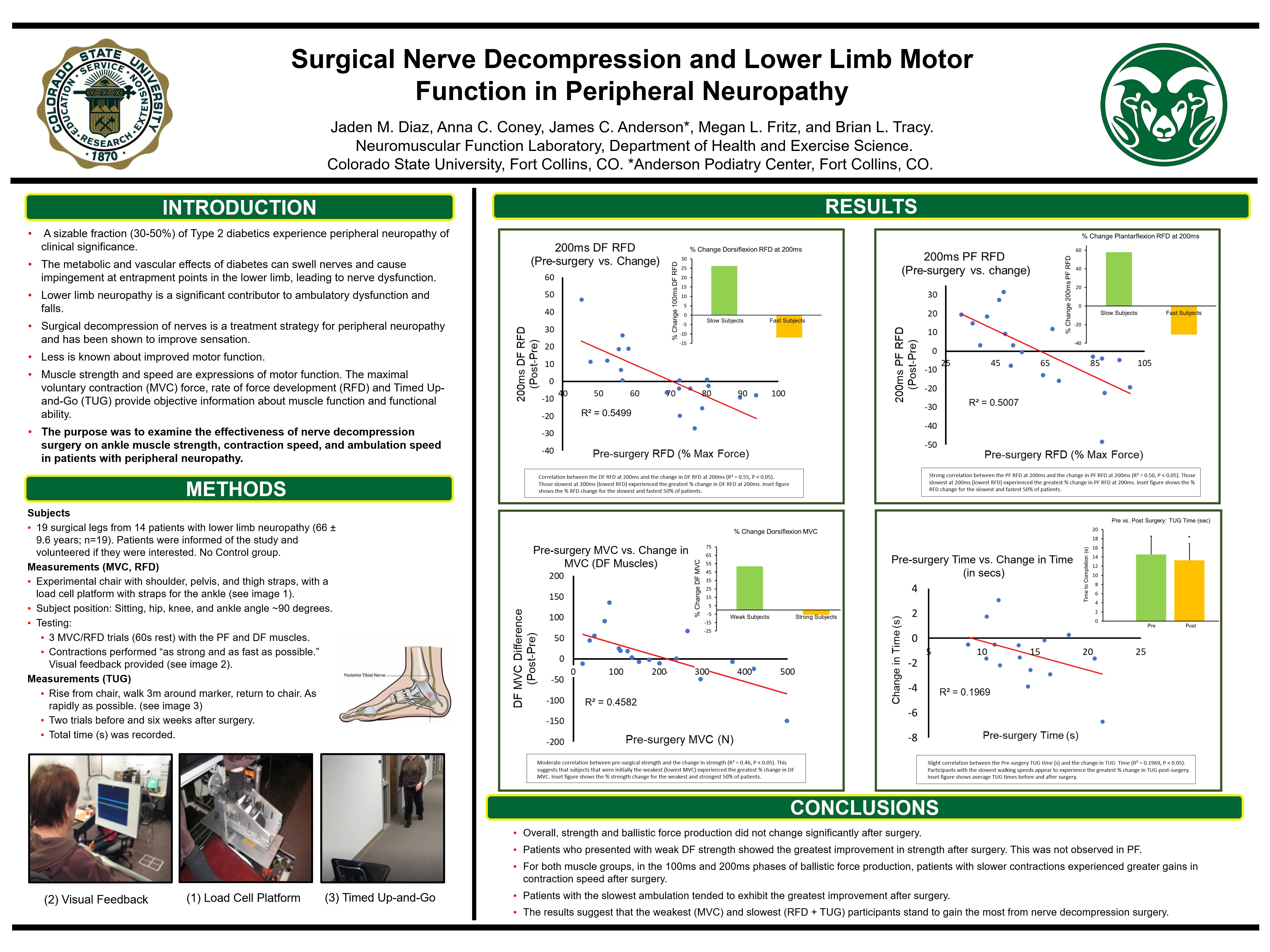
Lower limb motor function such as muscle strength, contraction speed, and ambulation is impaired in those with peripheral neuropathy. The purpose was to examine the effect of surgical nerve decompression surgery on ankle muscle function in peripheral neuropathy. Ankle muscle function tests (dorsiflexors, plantarflexors, DF, PF) were conducted on 14 patients (65.6 +/- 9.61 yrs) before and six weeks after surgery to release nerve pressure at entrapment points. Strength (max voluntary force, MVC), contraction speed (rate of force development, RFD), and ambulation speed (timed up and go, TUG) were measured. Overall, MVC force and RFD showed no significant changes in DF or PF. However, significant negative correlations (p<0.05) between pre-surgery MVC and the change in MVC after surgery for the DF (R2=0.46), but not for PF (R2=0.11). Similar negative correlations between the pre-surgery 100 ms RFD and change in RFD after surgery for DF (R2=0.41) and PF (R2=0.58), and between the pre-surgery 200ms RFD and the change in RFD after surgery for DF (R2=0.55) and PF (R2=0.50). TUG performance increased by 8.8% (p=0.016), with slightly greater improvement in those most impaired (R2=0.20, P=0.057). Lower limb nerve decompression surgery did not produce consistent increases in strength, speed, but slightly improved ambulation. However, the results suggest that those with lower function experienced greater improvement.