
Hum-2 Caenorhabditis elegans Mutants: A Model for Studying Myosin V in Neural and Behavioral Contexts
Category: Research Poster
Author(s): Meadow Zacher
Presenter(s): Meadow Zacher
Mentors(s): Leslie Stone-Roy
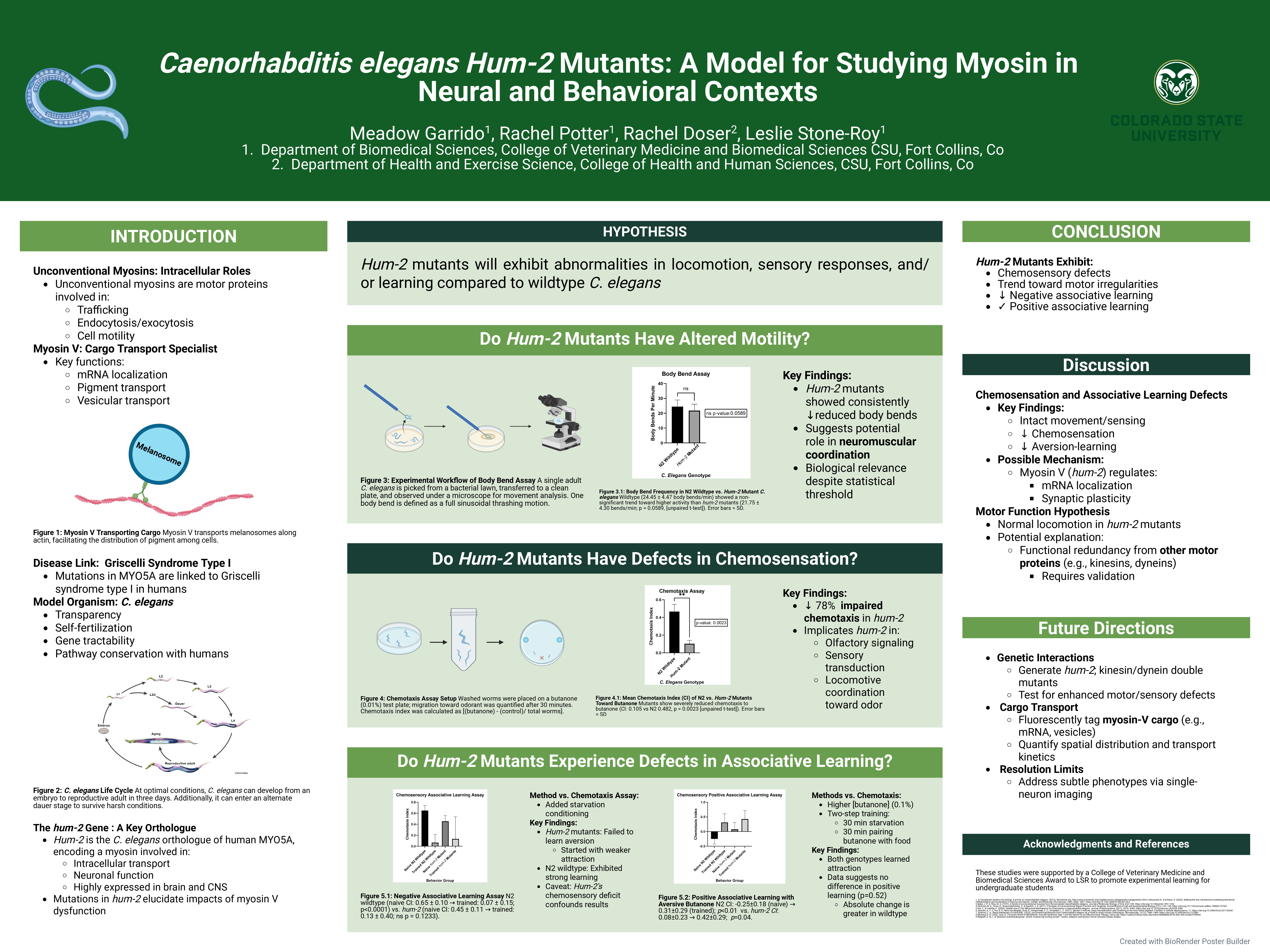
Caenorhabtidis elegans is a model organism for researchers due to its transparency, rapid life cycle, small size, and ease of genetic manipulation. This species shares 38% similarity in protein-encoding genes and 40% disease associated genes with humans. This genetic similarity allows researchers to study the effects of different mutations on C. elegans to draw conclusions and connections to human health and disease. Myosin V proteins are a class of unconventional myosins that are highly conserved among organisms. They are primarily expressed in the brain and PNS in humans and are involved in key processes necessary for proper neuronal signaling. Deficiencies in these proteins are linked to Griscelli Syndrome Type 1 (GS1), a disease with a current lack of treatment options. The hum-2 gene in C. elegans is an orthologue of the human MYO5A gene. The objective of this research was to study the effect of hum-2 mutations in C. elegans to elucidate possible similarities in humans with MYO5A mutations. Knockout hum-2 mutants were studied through a series of behavioral assays in comparison with N2 wild type animals to assess differences in neuronal health and behavior between the two. Sensory and motor differences between genotypes were minimal, however, the mutants exhibited defects in chemosensation and associative learning. The suspected reason for these impairments relates to myosin Vs role in mRNA localization and neuronal polarity. This research has potential to clarify effects of MYO5A mutations in humans and aid in creating better treatment options for those impacted by GS1.