
The importance of identifying individuals from video logs to describe underwater behavior in dolphins
Category: Research Poster
Author(s): Eden Vrondran, Jaelynn van Melle, Catalina Mazariegos Mejia
Presenter(s): Eden Vrondran
Mentors(s): Shane Kanatous
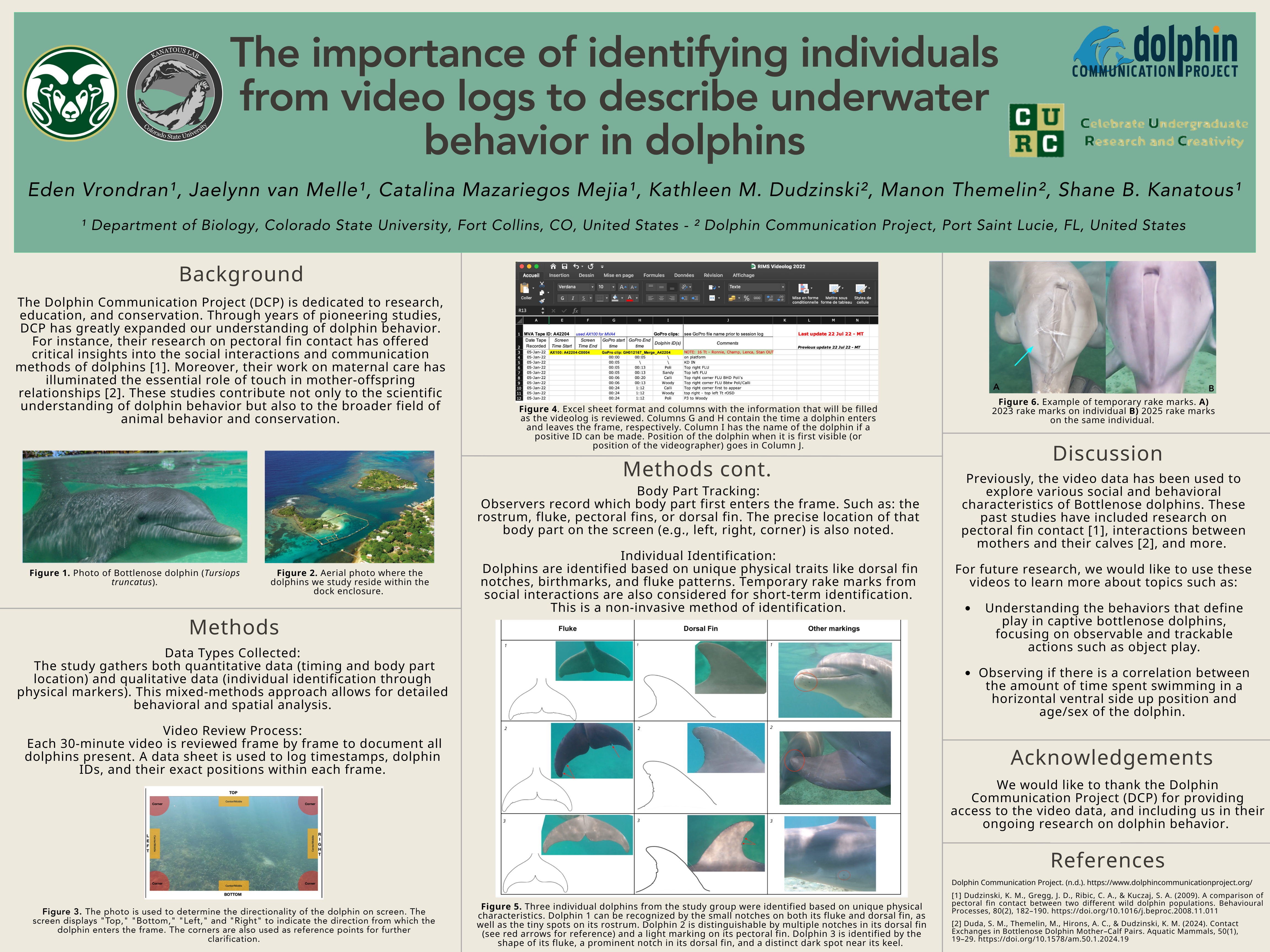
This presentation will introduce how we catalog information from videos of underwater dolphin behavior. Each videolog (GoPro video), is about 30 minutes long and follows up to 18 dolphins in a captive setting. In our analysis, we document the exact time a dolphin appears on screen, down to the very second. We record which body part enters the frame first (e.g. rostrum, fluke, left or right pectoral fins (according to the dolphin's view), dorsal fin) and the precise location on the screen (left, right, top, bottom, corner, or center). From there we track the dolphin(s) until they exit the frame and record that time. While a dolphin is in view, we try to identify individuals based on physical markers. We look at permanent features such as fin and fluke shapes, including notches or birthmarks, as well as temporary rake marks from social interactions. Since some marks fade over time, we take note of the most reliable identifiers. Knowing the dolphins’ family trees also helps confirm relationships and ages, which gives us additional insight and potential for interpretation of social relationships. These videos provide valuable insight into dolphin swimming patterns, both socially and positionally, two closely connected aspects of their behavior. They also serve as an important educational tool, introducing students to different methods of scientific research.