
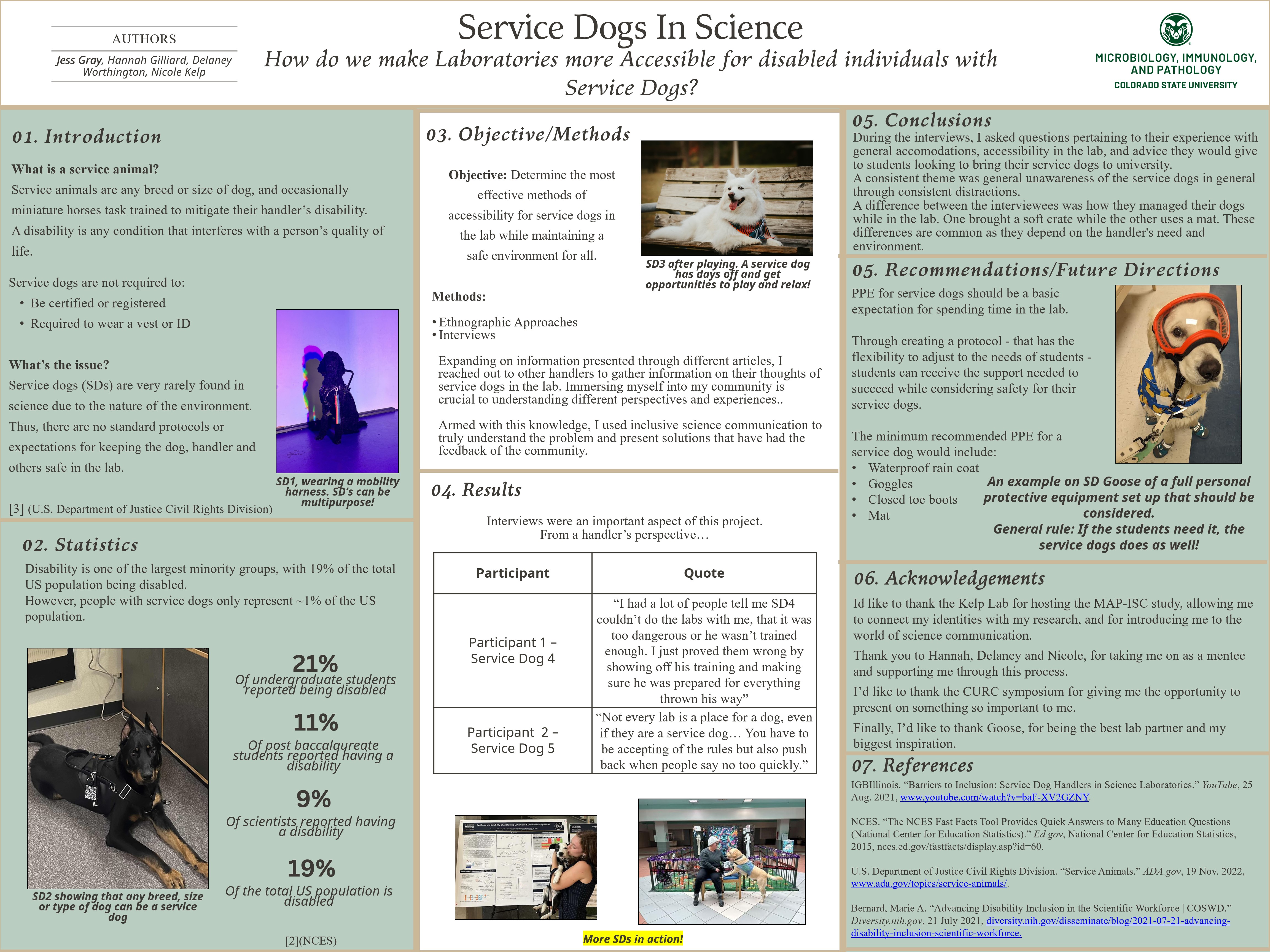
Service Dogs in Science – How do we make Laboratories more Accessible for disabled individuals with Service Dogs?
Category: Research Poster
Author(s): Jessica Gray
Presenter(s): Jessica Gray
Service dogs serve an extremely crucial role in many ways including tasks that help mitigate their handlers' disabilities. They give their handlers their freedom and independence back. Service dog handlers in STEM are like any other scientist; however, science itself has historically been underrepresenting of individuals with marginalized backgrounds, including disabilities. Science laboratories have offered their own wave of challenges for students with a variety of disabilities, but the question is - How can we shift our perspectives to make laboratories more accessible for students with service dogs? One method we can use is inclusive science communication, which can help bridge the gaps and address past marginalization. Following inclusive science communication practices, I used ethnographic approaches, including interviewing other service dog handlers and collecting research articles to effectively understand how labs can be more accessible for students with service dogs. As a result of the information I collected, I concluded that developing a protocol and more education on the topic will be crucial to making sure that disabled scientists have a seat at the bench. This protocol will outline the personal protective equipment that is necessary to keep service dogs safe. Overall, science is for everyone; and through inclusive science communication, we can make scientific spaces accessible to all.