
Observing the Distribution of Plankton in Coral Reefs v. Sandy Habitats in Baja California Sur
Category: Research Poster
Author(s): Emilee Peterson, Emma Hathaway
Presenter(s): Emilee Peterson
Mentors(s): Diane Wright
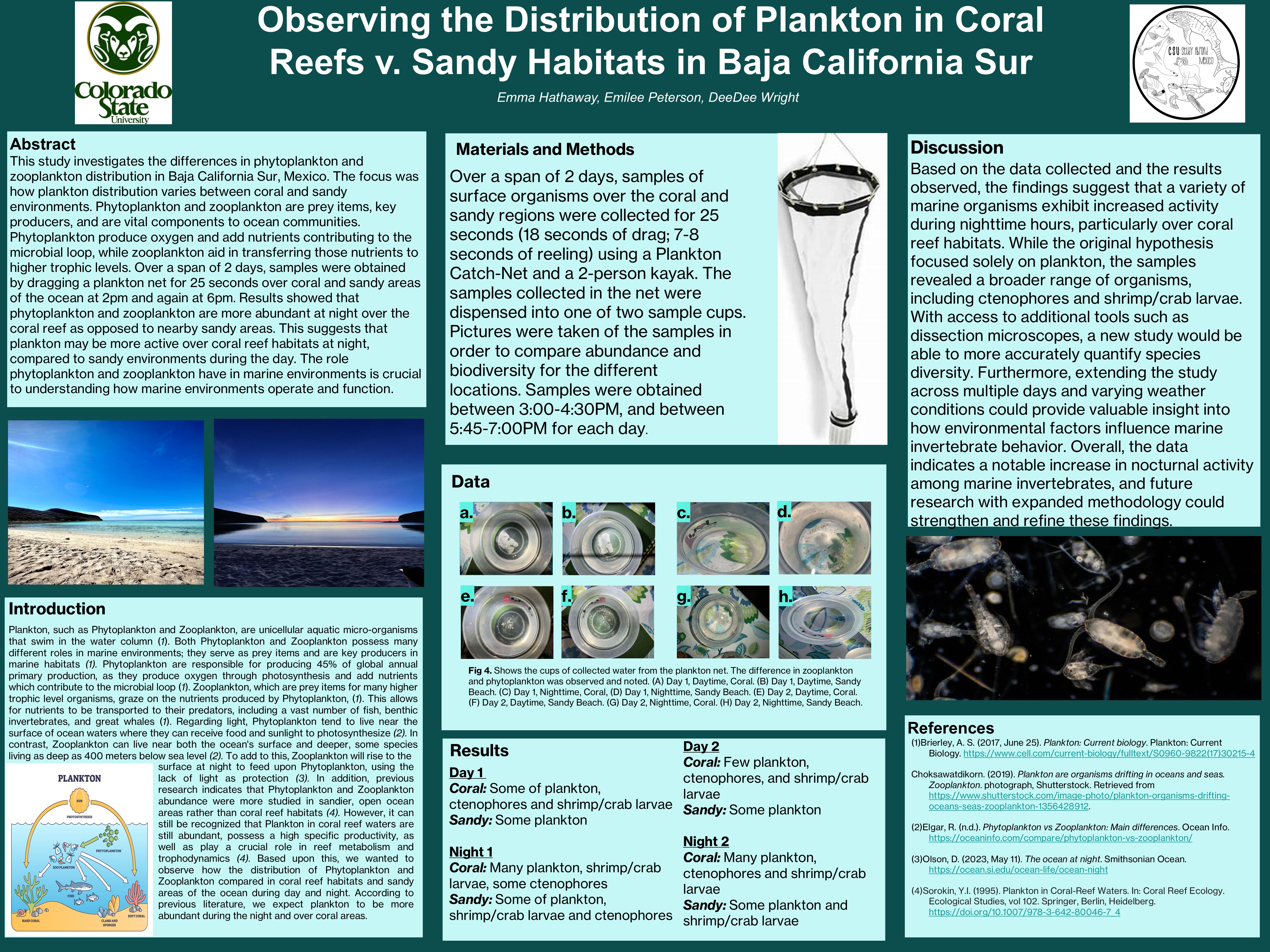
This study investigates the differences in phytoplankton and zooplankton distribution in Baja California Sur, Mexico. The main focus was how plankton distribution varies between coral and sandy environments. Phytoplankton and zooplankton are prey items, key producers, and are vital components to ocean communities. Phytoplankton produce oxygen and add nutrients contributing to the microbial loop, while zooplankton aid in transferring those nutrients to higher trophic levels. Over a span of 2 days, samples were obtained by dragging a plankton net for 25 seconds over coral and sandy areas of the ocean at 2pm and again at 6pm. Results showed that phytoplankton and zooplankton are more abundant at night over the coral reef as opposed to nearby sandy areas. This suggests that plankton may be more active over coral reef habitats at night, compared to sandy environments during the day. The role phytoplankton and zooplankton have in marine environments is crucial to understanding how marine environments operate and function.