
Glial-mediated neuronal viability in a novel in vitro model of chronic pain
Category: Research Poster
Author(s): Lydia Jenkins, Paige Gruber, Emily Perkins, Quinn Pogge, Mark Zabel, Julie Moreno
Presenter(s): Lydia Jenkins
Mentors(s): Katriana Popichak
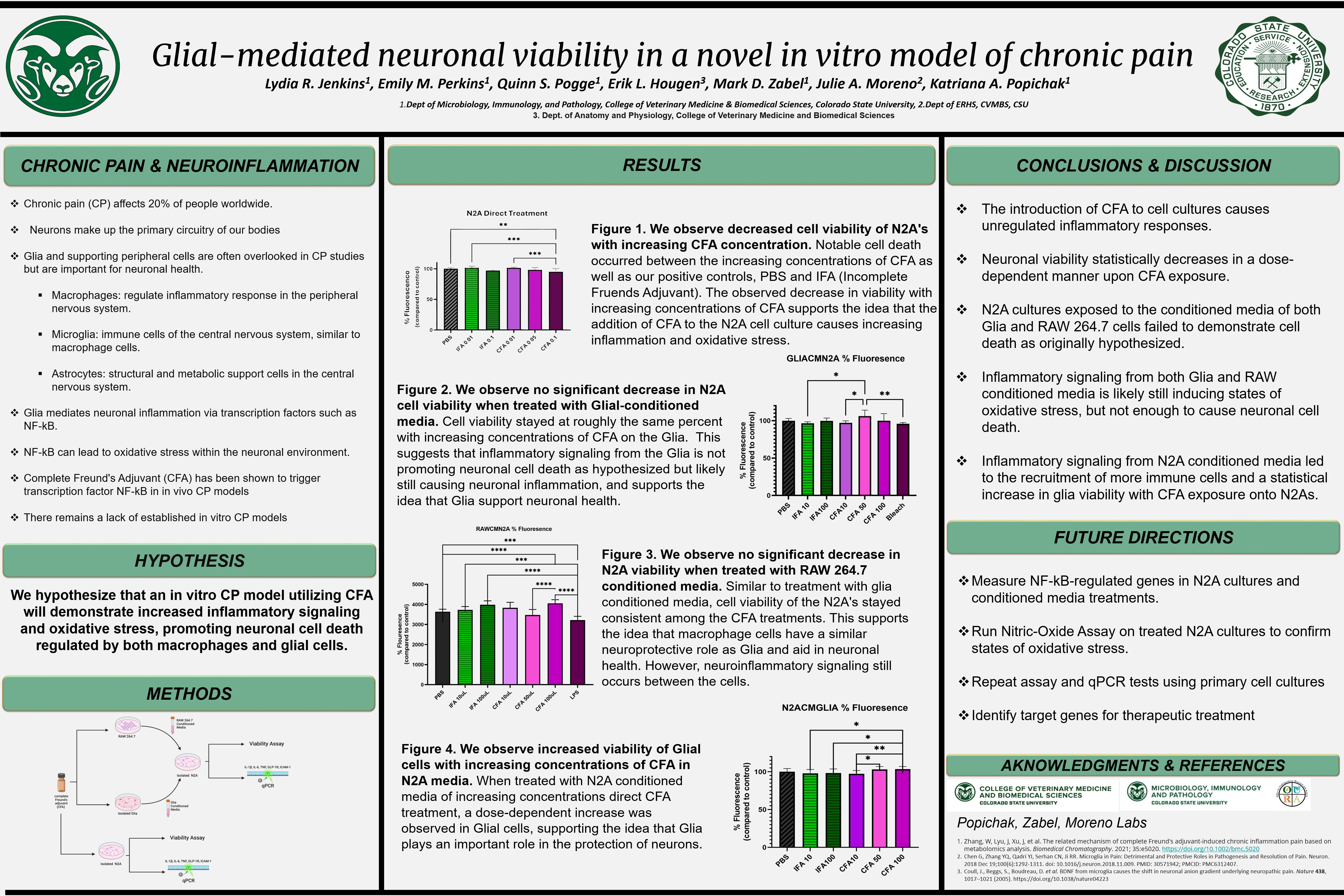
Chronic pain (CP) affects 20% of people worldwide. While current understanding of pathological pain revolves mostly around neuronal mechanisms, supporting peripheral cells are often overlooked in CP studies. Macrophages regulate inflammatory response in the peripheral immune system, while microglia, the macrophage of the central nervous system (CNS), protects neurons. Non-neuronal cells, astrocytes and microglia, and peripheral macrophages play an important role in the neuroinflammatory process, as shown in recent CP studies. Microglia and astrocytes mediate neuroinflammation regulated by the transcription factor, nuclear factor-kappa B (NF-kB), capitulated in CP and other pathological pain conditions. Current in vivo studies demonstrate Complete Freund’s Adjuvant (CFA) to be an effective model for CP, however, there are currently no established in vitro models. Thus, we hypothesize that an in vitro CP model utilizing CFA will demonstrate increased inflammatory signaling and oxidative stress, promoting neuronal cell death regulated by both macrophages and glial cells. To test this hypothesis, we measured cell viability of N2A cells, an immortalized neuronal cell line, treated with CFA and saw a dose-dependent decrease in viability upon exposure. Contrary to the above hypothesis, N2A cells exposed to glial and RAW-conditioned media failed to demonstrate cell death, suggesting a unique mechanism of neuroinflammation. Moving forward, we will measure NF-kB-regulated inflammatory gene expression of N2A cells exposed to conditioned media and direct treatment to further reveal how peripheral immune response to CP promotes neuroinflammation. Taken together, these data elucidate cellular mechanisms behind CP-associated inflammatory signaling pathways, potential targets for more effective therapeutic treatments.