
Predicting protection against tuberculosis from BCG vaccination using the guinea pig model
Category: Research Poster
Author(s): Alexandra Englert, Brendan Podell, David Ackart Jr, Faye Lanni, Lauren Hunstad, Lea Anne Maristela
Presenter(s): Alexandra Englert
Mentors(s): Brendan Podell
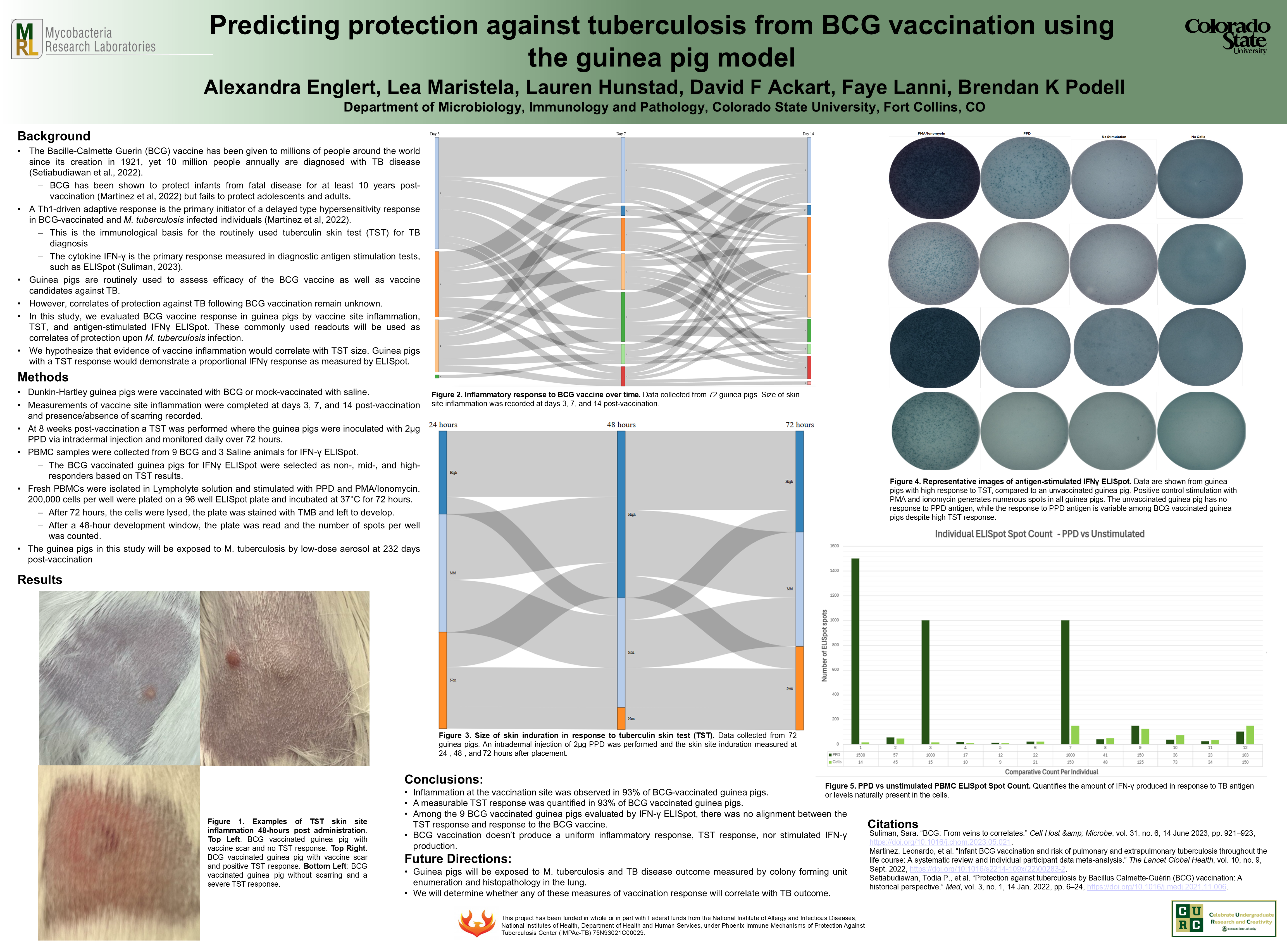
Guinea pigs, while having been used as a model animal for tuberculosis infections for over a century, modern literature about their response to the commonly used BCG vaccination is limited. In this study, we investigated whether immune responses to the BCG vaccine are variable and if these differences could predict protection after exposure to Mycobacterium tuberculosis. Using the guinea pig model, the only rodent species that reliably develops delayed-type hypersensitivity responses similar to humans, we evaluated inflammation in response to BCG vaccination, tuberculin skin test (TST) response, and capacity for antigen-specific secretion of IFNγ by ELISpot in response to M. bovis purified protein derivative (PPD). We hypothesized that the degree of inflammation incited by BCG vaccination would correlate with TST size and frequency of antigen-specific IFNγ production. Most of the animals developed an inflammatory response to TST within 24-72 hours, indicating a Th1 response was developed post-vaccination. However, 4 out of 18 individuals lacked an inflammatory response that lasted over 24 hours. To confirm this, IFNγ production will be assessed in PBMCs isolated from BCG vaccinated and unvaccinated guinea pigs. We hypothesize that IFNγ secretion will be highest in guinea pigs with the largest TST response. The results of this study demonstrate that BCG vaccination lacks reliability in developing a delayed-type hypersensitivity response. Collectively, our results will determine if this highly variable response to BCG vaccination will confer variable protection against M. tuberculosis infection, thereby identifying individuals from which correlates of protection or vaccine failure may be derived.