
Combating Alzheimer's Disease by Enhancing Tau Clearance
Category: Research Poster
Author(s): Steven Payne, Thomas LaRocca
Presenter(s): Steven Payne
Mentors(s): Daniel Lark
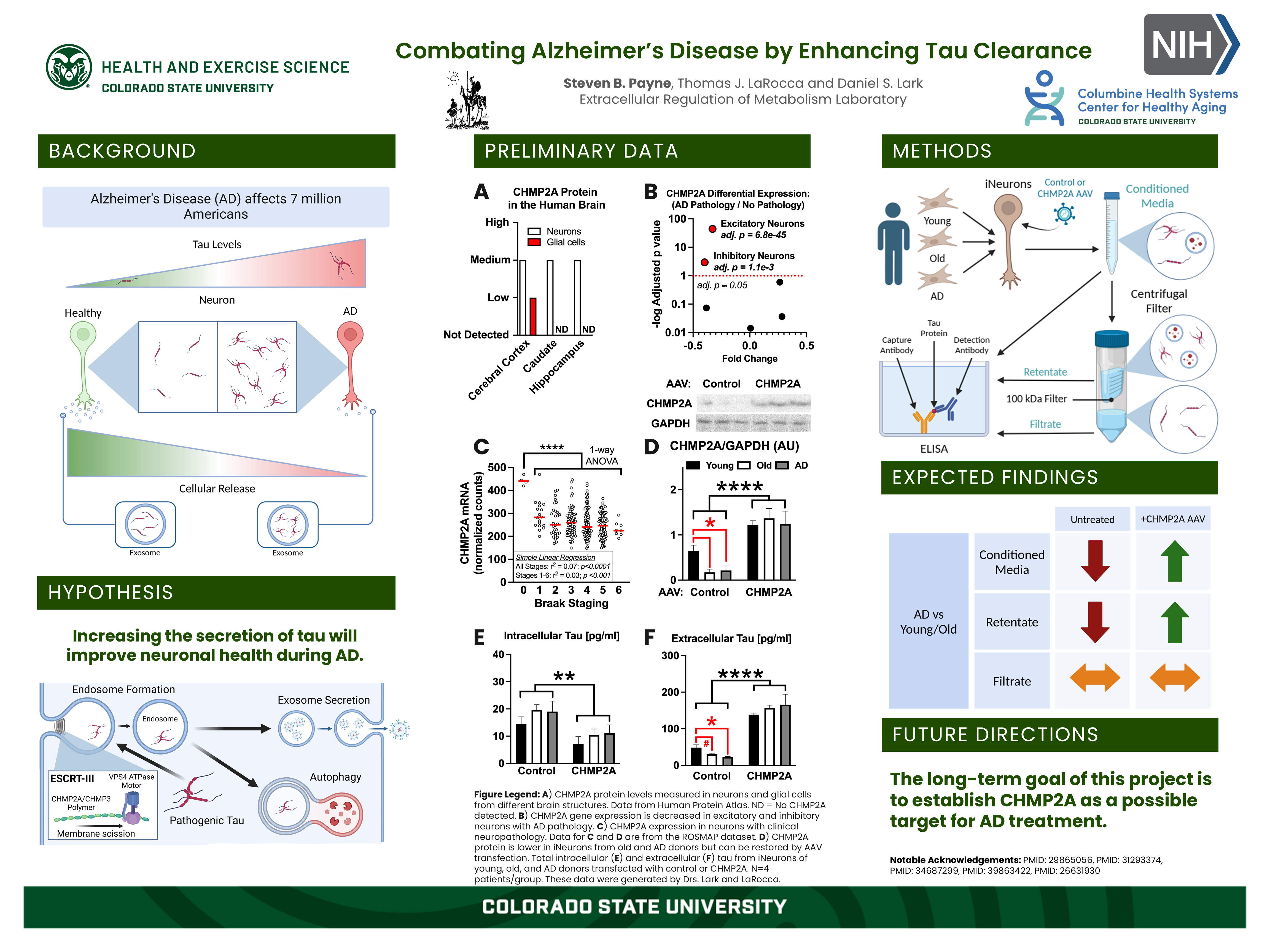
Background info: Alzheimer's Disease (AD) is a neurological illness that affects almost 7 million Americans. Tau protein accumulates in cells of the brain during AD and contributes to impaired cognitive function. Clearing pathogenic tau has been a priority of recent therapies for AD, but these treatments have failed clinical trials. We have identified a novel target that may help eliminate tau and explain why these drugs have failed. Preliminary Data: Cells can eliminate tau by creating endosomes using the protein CHMP2A but this gene/protein is decreased in neurons as they age and during AD. Restoring CHMP2A levels in directly induced patient-derived neurons (iNeurons) decreases intracellular tau by ~50% due to increased tau secretion. These findings suggest that restoring CHMP2A levels in neurons could decrease tau in the brain and preserve cognitive function during AD. My Project: I will test if restoring CHMP2A in iNeurons from humans with AD increases the secretion of tau in extracellular vesicles (EVs). I will do this by isolating the EVs using size exclusion chromatography then quantifying them using nanoparticle tracking analysis. I will also “capture” EVs using antibodies to measure tau in EVs versus tau protein aggregates. The long-term goal of this project is to establish CHMP2A as a possible target for AD treatment and determine if restoring CHMP2A enhances the benefits of tau immunotherapy.