
A Photosynthetic Powerhouse: Increasing Light Utilization of N. Oceanica
Category: Research Poster
Author(s): Innagen Roberts, Emma Post
Presenter(s): Innagen Roberts
Mentors(s): Xingfeng Huang
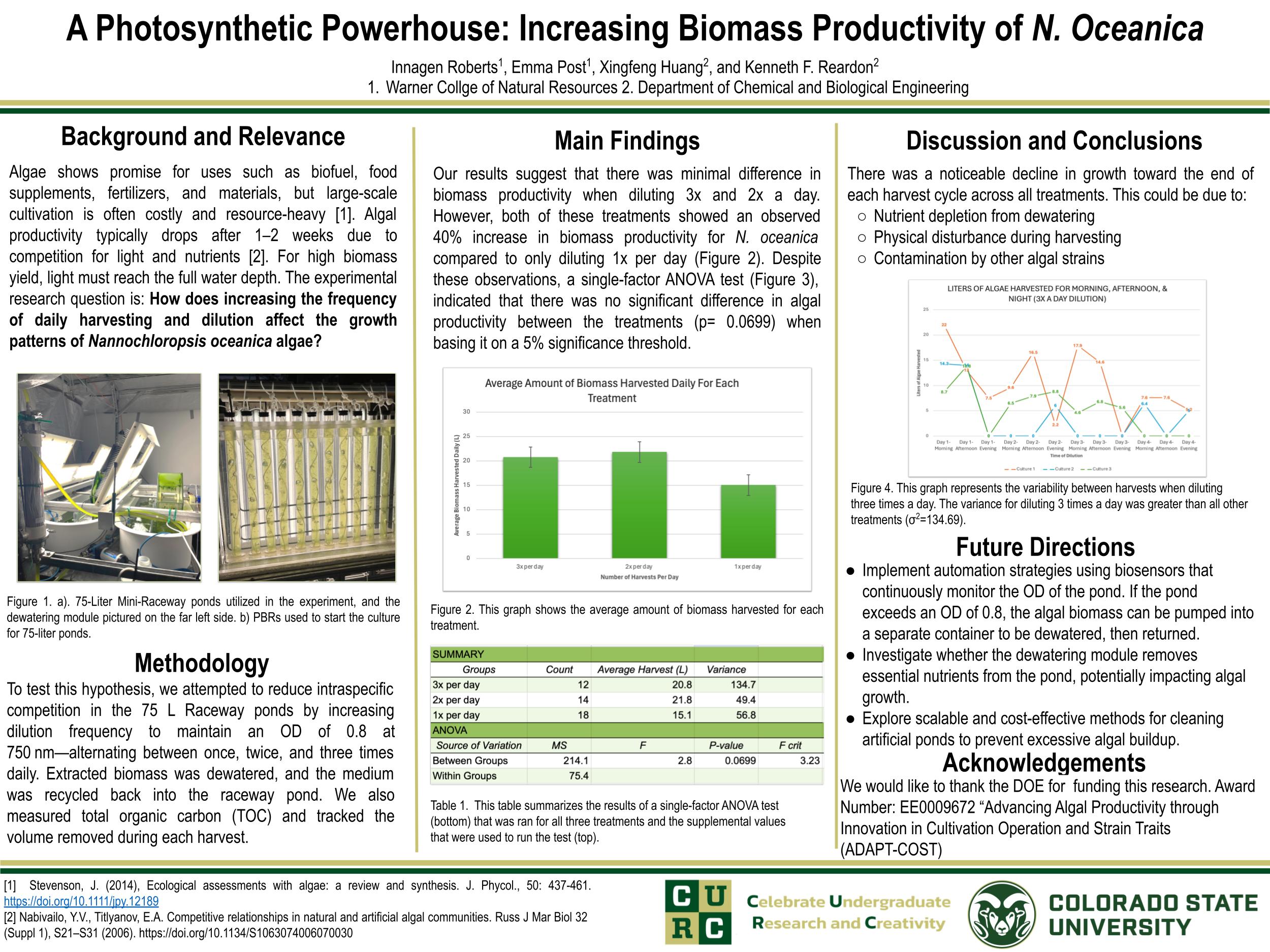
Algae has significant potential for use as biofuel, food supplements, and various other materials. However, large-scale cultivation can be costly and resource-intensive. Generally, the productivity of algae tends to decline after one to two weeks of initiating a culture due to increased competition for light and nutrients. To achieve high algal biomass productivity, light must penetrate the entire body of water in which the algae reside; in this experiment, we used 75-liter mini Raceway ponds. To test this hypothesis, we sought to reduce intraspecific competition of Nannochloropsis oceanica by increasing the frequency of pond dilutions to maintain a baseline optical density (OD) of 0.8 at 750nm, conducted once, twice, and three times daily. The liters of algal biomass extracted from the ponds were processed through a dewatering module, and the Nannochloropsis cultivation medium was recycled back into the Raceway pond. In addition to the OD measurements, we collected data on total organic carbon (TOC) and accounted for the liters removed during each harvest. Utilizing a single-factor ANOVA test, our results indicated no significant effect on algal productivity among the three treatments (p=0.0699); however, further research involving different algae strains, larger sample sizes, and an automated harvesting system could be valuable next steps.