
Hormonal Contraception Effects in Women with Multiple Sclerosis
Category: Research Poster
Author(s): Allie Arritola
Presenter(s): Allie Arritola
Mentors(s): Brett Fling, Kristin Johnson
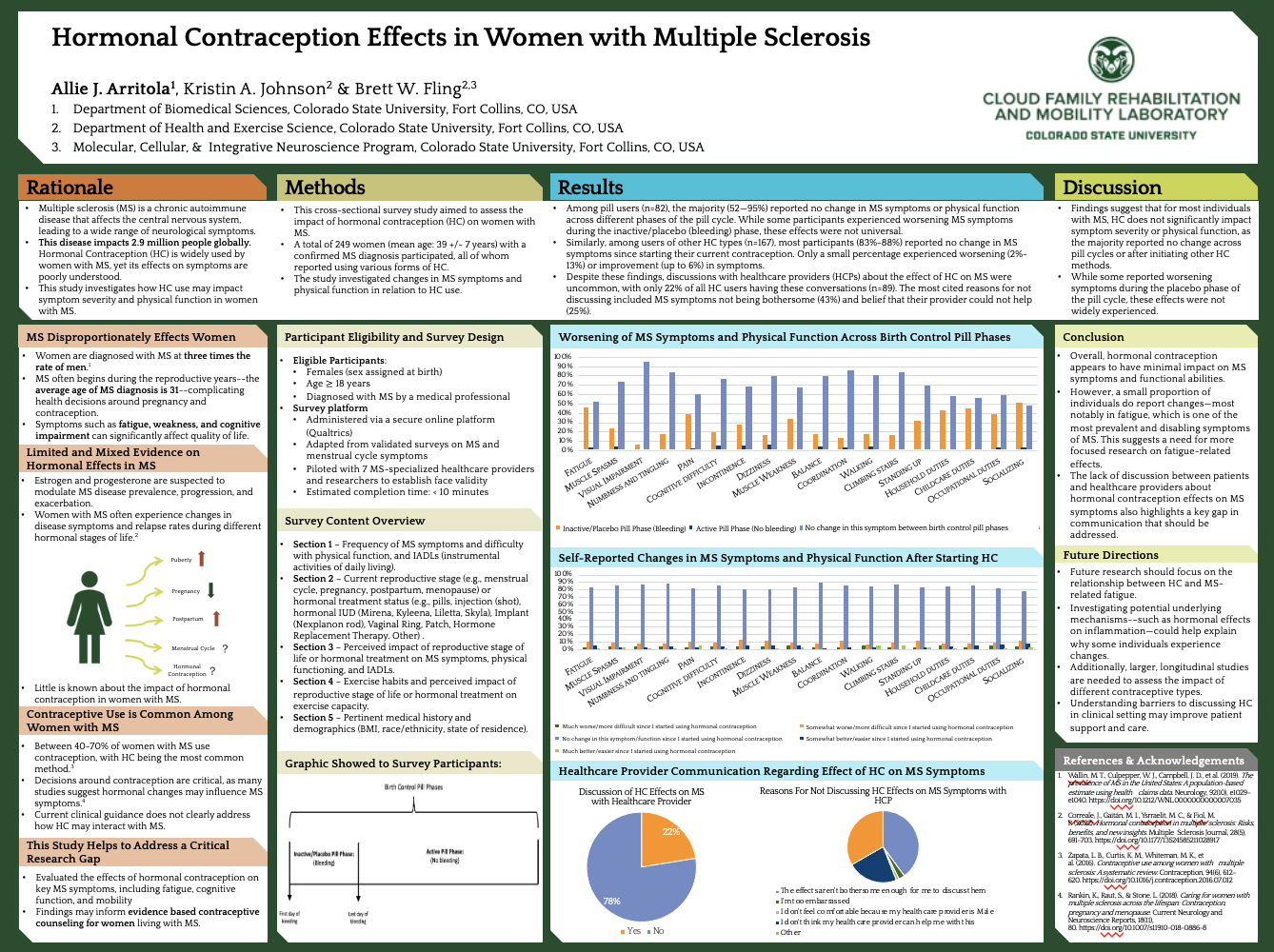
Multiple Sclerosis (MS) is a chronic autoimmune disease that disproportionately affects women, many of whom use hormonal contraception (HC). Current evidence suggests that HC may improve MS symptoms, but research findings are mixed and limited to a few studies. This survey study aimed to fill this gap in research by characterizing the impact of HC on MS symptoms and functional abilities in women with MS. A total of 249 women with MS, age 397 years, who used various forms of HC completed the survey. Participants were asked whether their MS symptoms (e.g., fatigue, muscle weakness, cognitive abilities) or physical functions (walking, balance, coordination) were changed by HC. Healthcare provider (HCP) communication was also accessed. Among participants using HC pills, 52- 95% indicated no symptom fluctuations across different phases of the pill cycle. Similarly, among those using other forms of HC, 80-89% reported no change in symptoms after starting HC. Among those who experienced adverse effects of HC, most (77.5%) had not discussed these effects with their HCP . These findings suggest that HC does not influence symptoms or physical functions in most women with MS. However, there is a need for improved patient-provider communication with women with MS who experience adverse effects from HC.