
Fueling acclimation to challenging environments in highland and lowland deer mice (Peromyscus maniculatus)
Category: Research Poster
Author(s): Jada Joseph, Kathryn Wilsterman, Daniel Sloan, Shady Kuster, Kendall Foreman
Presenter(s): Jada Joseph
Mentors(s): Shady Kuster
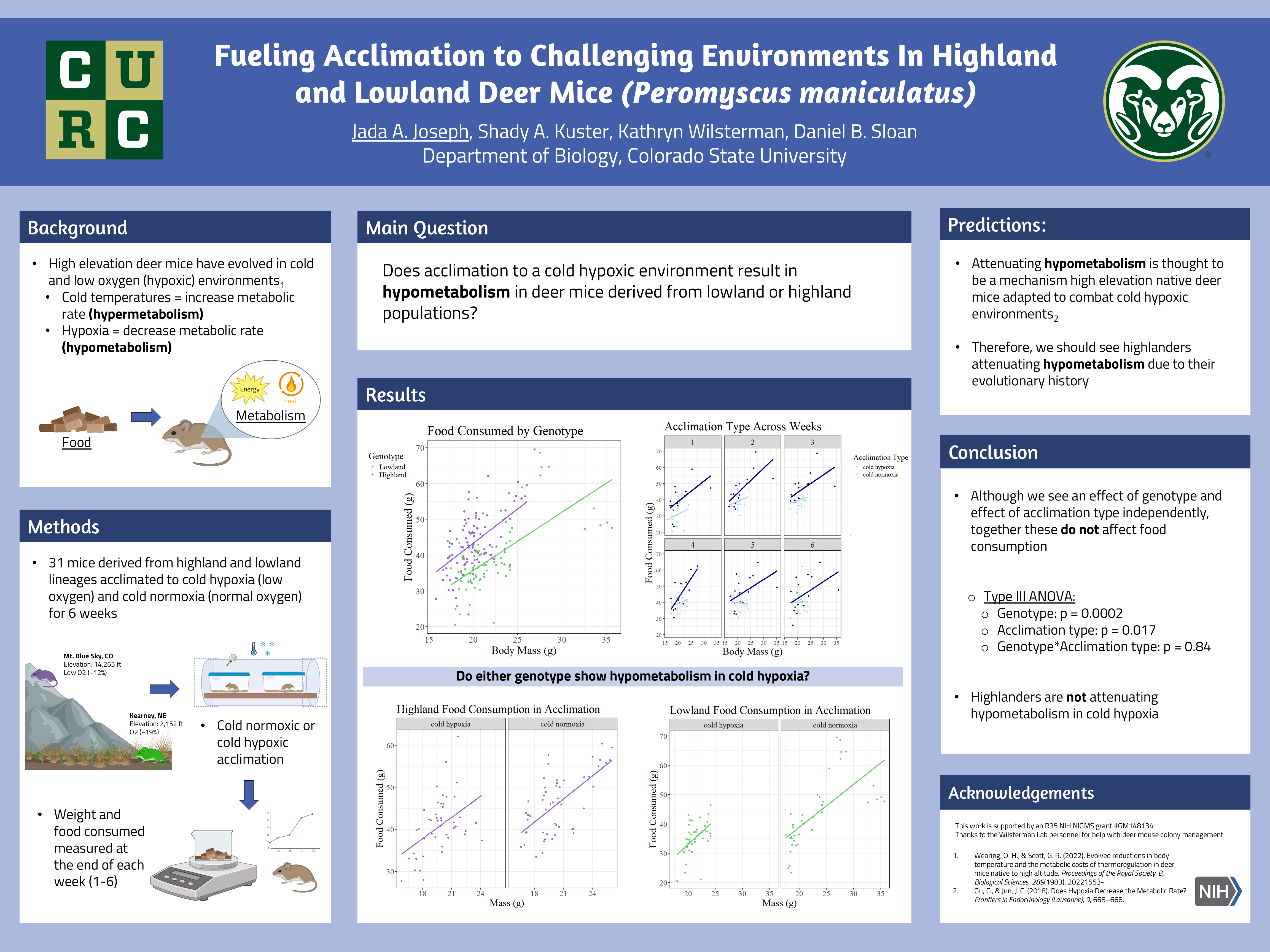
Deer mice (P. maniculatus) have the widest elevational range of any North American mammal. At high elevations, mice experience cold and low oxygen (hypoxic) environments. Small body mass and cooler environmental temperatures have been shown to contribute to a high metabolic rate in mammals. To sustain a higher metabolic rate, more food is consumed to meet that demand. However, hypoxic conditions downregulate metabolism in small mammals, resulting in hypometabolism. High altitude natives have evolved mechanisms to combat cold hypoxic conditions. Therefore, we aimed to investigate if acclimation to cold hypoxia results in hypometabolism in deer mice derived from highland (4,348m) or lowland (656m) populations. Deer mice were acclimated to either a cold hypoxic or cold normoxic environment for 6 weeks. Weight and food consumed were measured at the end of each week for each mouse. We then divided weekly food consumption by body mass, using this as a proxy for understanding changes in metabolic rate. We found that lowland deer mice appear to decrease food consumption from cold normoxia to cold hypoxia acclimation, while this pattern was not observed in the highlanders. This pattern may suggest that highlanders are attenuating hypometabolism. These findings support the idea that mice with high elevation ancestry have evolved a mechanism that maintains metabolism, ultimately reducing the negative impacts of challenging environments.