
Trail Blazing: The Effect of Habitual Cannabis Use on the Runner’s High
Category: Research Poster
Author(s): Kate Green, Aaron Falk
Presenter(s): Kate Green
Mentors(s): Christopher Bell
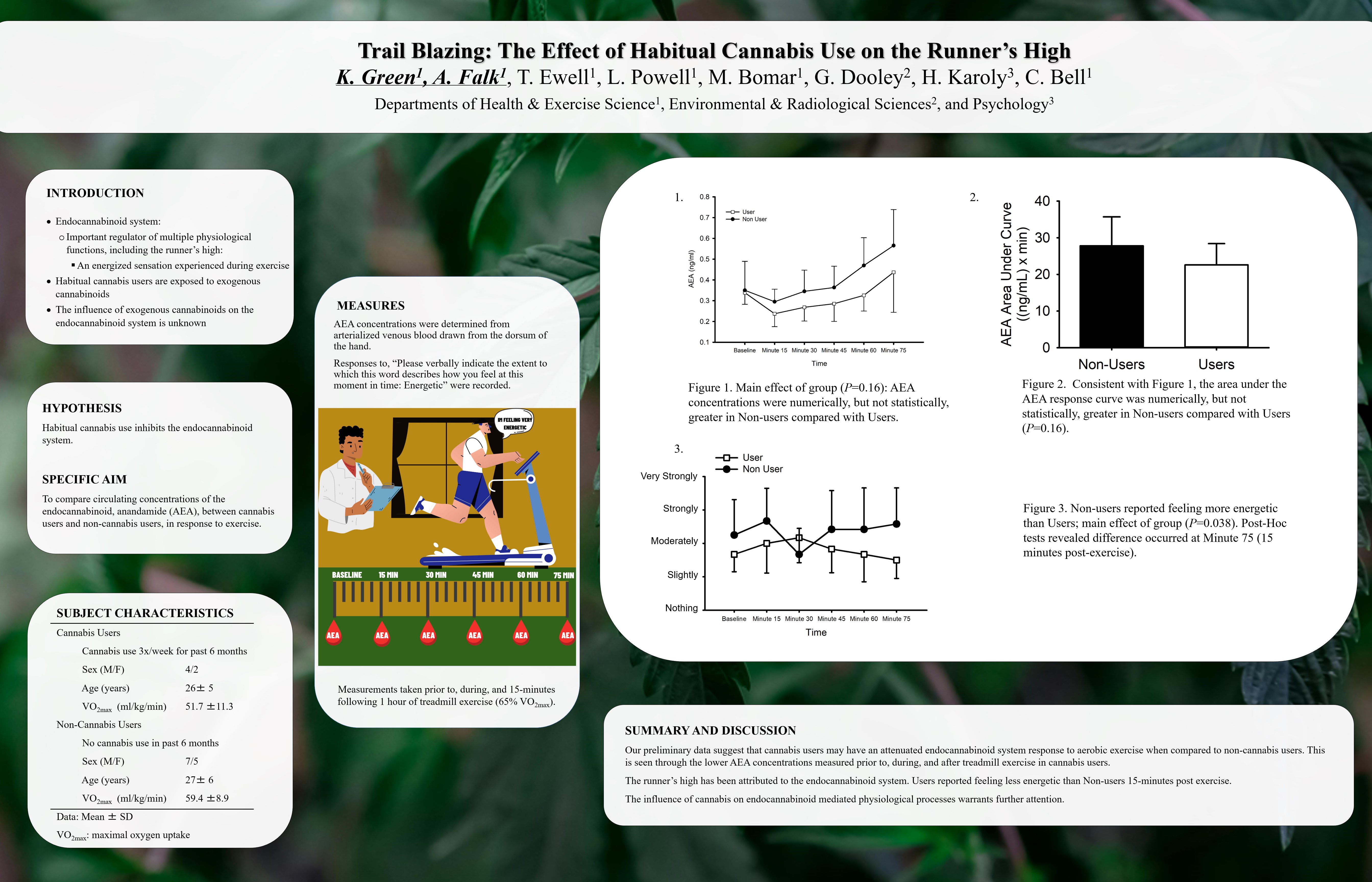
The endocannabinoid system is an important regulator of multiple physiological functions, including the runner’s high, an energized sensation experienced during exercise. Habitual users of products derived from Cannabis sativa L. are exposed to exogenous cannabinoids that utilize the endocannabinoid system. Chronic cannabis use may downregulate endocannabinoid release during aerobic exercise. We hypothesized that the endocannabinoid response to standardized exercise would be attenuated in habitual users of cannabis products compared with non-users. 18 adults, comprising 12 non-users (7M/5F, age: 27±6 years, maximal oxygen uptake (VO2max): 59.4±8.9 ml/kg/min, no cannabis use in the past 6 months) and 6 users (4M/2F, age: 26 ± 5 years, VO2max: 51.7±11.3 ml/kg/min, cannabis use minimum 3 times per week for the past 6 months) completed treadmill exercise at 65% VO2max for 60 minutes; arterialized blood was drawn from a dorsal hand vein prior to, during, and following exercise and analyzed for the endocannabinoid, anandamide (AEA), concentration. Participants were asked questions to determine their perceived energetic levels from a 0 (“do not feel”) to 4 (“feel very strongly”) scale. Preliminary data indicate that the area under the AEA response curve may be smaller (P=0.16) in users (22.6±5.8 (ng/ml) x min ) compared with non-users (27.8±7.9 (ng/ml) x min). Average perceived energetic levels were reported to be lower in cannabis users compared to non-users (NU: 2.3±0.4 arbitrary units, U: 1.8±0.2 AU). These initial observations imply that the contribution of the endocannabinoid system to physiological regulation may be attenuated in habitual users of cannabis products and requires further investigation.