
A Student's Perspective of the Engaged Learning Approach for a New Class on Community Engagement and Environmental Public Health
Category: Community Engagement Poster
Author(s): Alex Holmes
Presenter(s): Alex Holmes
Mentors(s): Maggie Clark
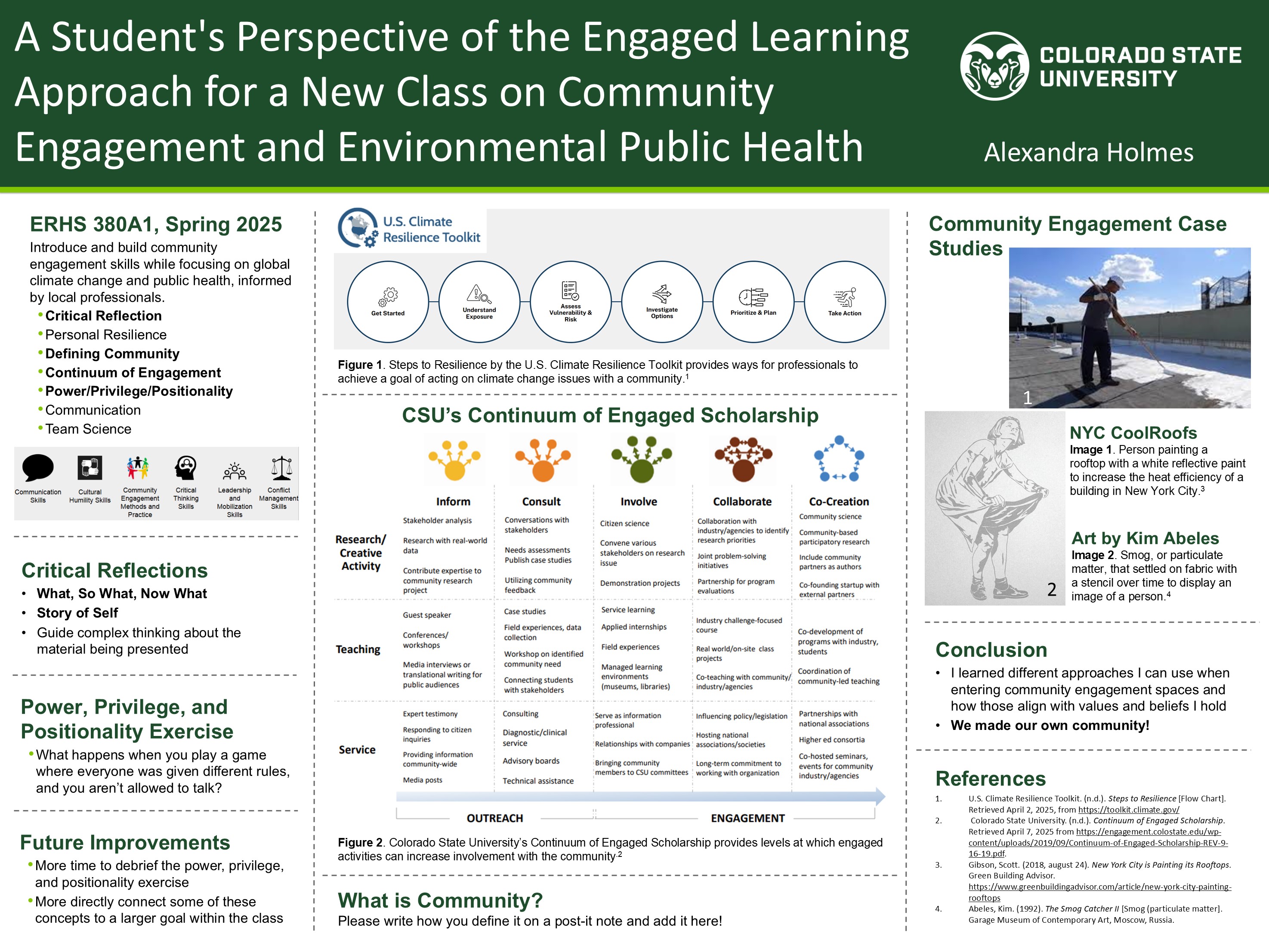
Evidence demonstrates the need for and benefits of engaged initiatives within public health to enhance community wellness and resilience to climate change related threats. However, there is an educational gap regarding engaged learning for students planning to enter the environmental public health workforce. Community engagement as a pedagogical strategy leads to students reporting higher scholastic satisfaction, demonstrating higher academic performance and critical thinking skills, presenting a greater ability to apply course learnings to real-world situations, and possessing enhanced professional skills such as leadership, teamwork, and cultural competence. As a student in an experimental course that was informed by environmental and public health professionals, I will present learning objectives and effectiveness from an undergraduate perspective. The learning objectives I will describe include: (1) appreciate how knowledge of global climate change and health translates to needs and actions in local contexts; (2) recognize a continuum of civic engagement and action and identify models of community engagement; (3) develop an understanding and practice of resilience, cultural humility and critical reflection; (4) understand and practice varying approaches to team science, science communication, civil discourse, and public deliberation. I will discuss strengths, limitations, and personal insights of a new course designed to introduce students to the inherent complexity and challenges of community engagement work and to equip them to participate and learn effectively in this context.