
Aldehyde Dehydrogenase 1 & 2 knockout protects against dieldrin-induced dopaminergic neurodegeneration.
Category: Research Poster
Author(s): Graham Kelly, Savannah Rocha, Omar Yanouri, Ronald Tjalkens, Aidan Briggs
Presenter(s): Graham Kelly
Mentors(s): Ronald Tjalkens
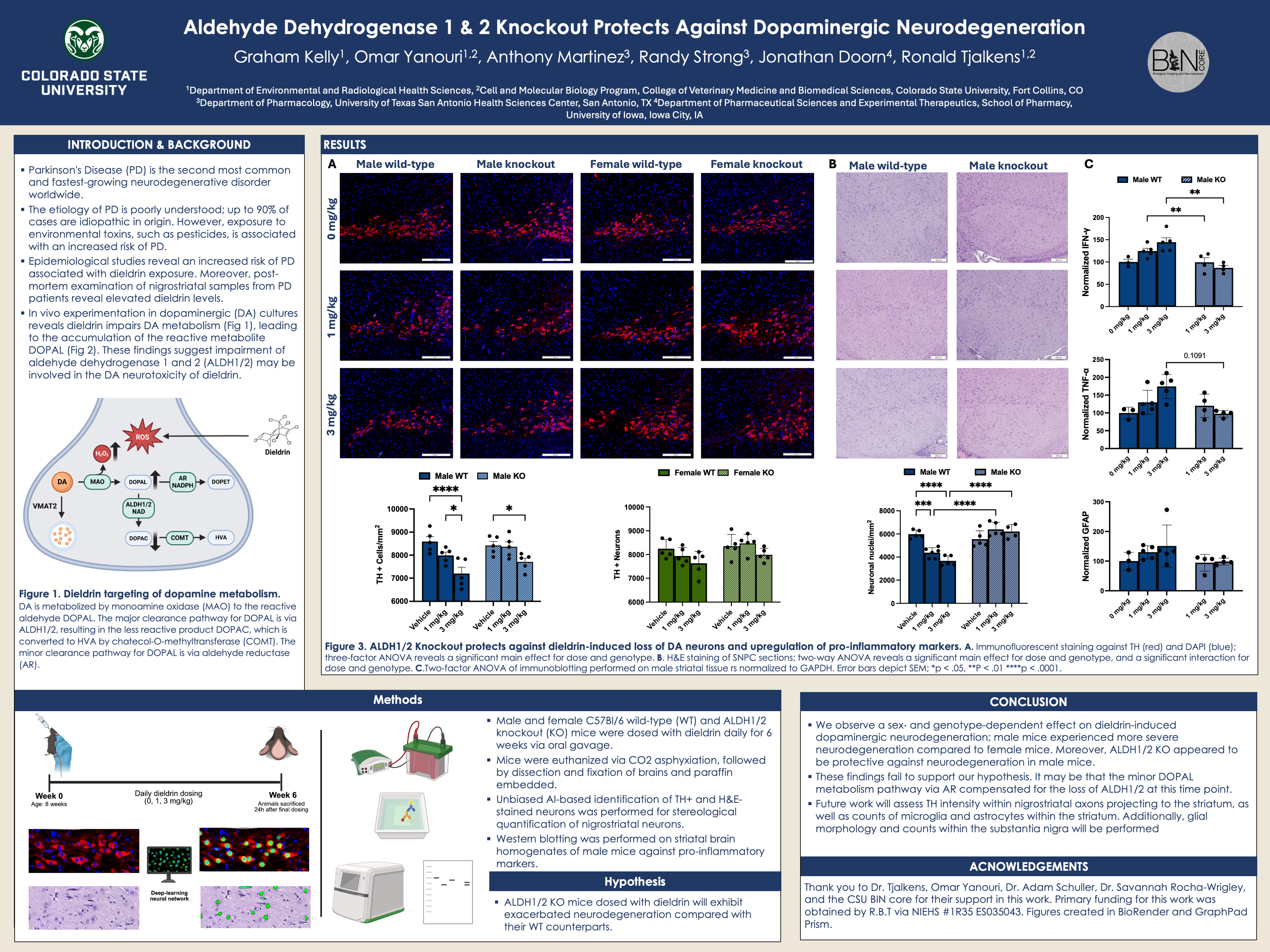
Parkinson’s disease (PD) is the fastest growing and second most prevalent neurodegenerative disease in the world. Many factors result in an increased risk of developing PD, including exposure to environmental toxins. One such exposure associated with an increased risk of developing PD is the pesticide dieldrin. The mechanism by which dieldrin induces the loss of dopaminergic (DA) neurons is unknown. In-vitro studies in DA cultures treated with dieldrin results in an increase in DOPAL, a reactive DA metabolite. DOPAL is metabolized by aldehyde dehydrogenase (ALDH), leading us to hypothesize that the neurotoxicity of dieldrin is mediated by inhibition of ALDH. To examine this hypothesis, 8-week-old ALDH 1 & 2 (ALDH1/2) knockout (KO) and wild-type (WT) mice were dosed with dieldrin (0, 1, or 3 mg/kg) daily for six weeks via oral gavage. Stereological quantification of nigrostriatal neurons was performed on immunofluorescent- and H&E-stained sections using AI-based cell identification. Our results do not support our hypothesis; male WT mice show a greater loss of DA neurons compared to with KO mice. Moreover, western blotting of striatal tissue reveals an increase in pro-inflammatory markers in male WT mice. It may be that abolition of ALDH1/2 activity in male KO mice results in the induction of alternative DOPAL-clearing pathways unaffected by dieldrin. These findings add to our understanding of how pesticides contribute to PD and the role of DA metabolism in neurodegeneration.