
Human-Moose Conflicts In Colorado: Proposed Management Plan
Category: Community Engagement Poster
Author(s): Caroline Vear
Presenter(s): Caroline Vear
Mentors(s): Veronica Yovovich
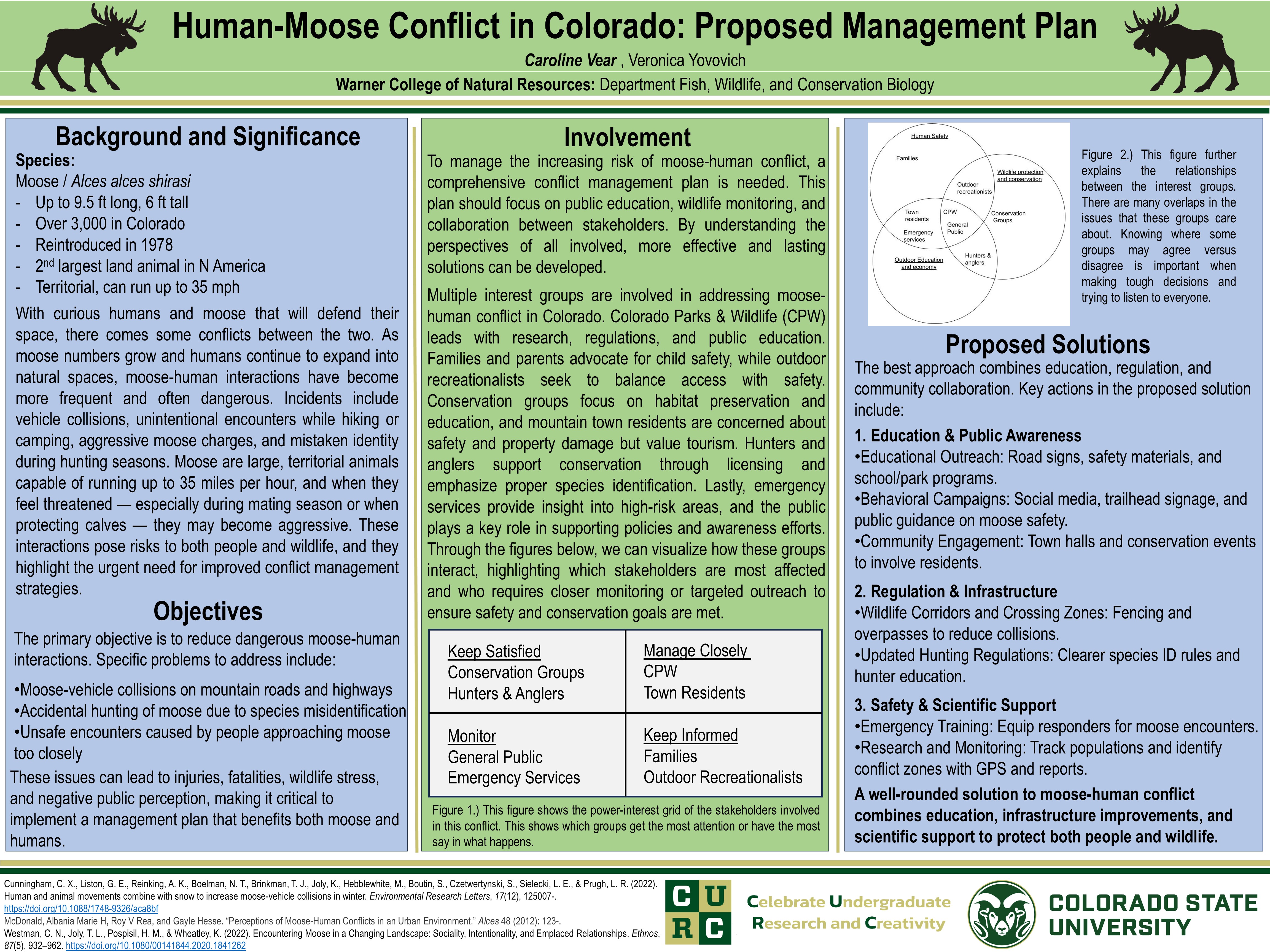
Colorado’s moose (Alces alces shirasi) population has grown rapidly since their introduction in 1978, when 24 individuals were transplanted from Utah and Wyoming. With current estimates exceeding 3,000, these large, territorial animals are increasingly coming into contact with people as human development expands into their habitat. This growth has led to a rise in moose-human conflicts, including vehicle collisions, accidental hunting, and unsafe encounters during recreation. These incidents pose serious risks to public safety, wildlife welfare, and public perception, highlighting the need for a proactive management strategy. This proposed Moose Conflict Management Plan seeks to reduce dangerous encounters through a comprehensive approach involving education, regulation, and community collaboration. Key solutions include installing wildlife crossings and road signage, launching educational campaigns on safe moose behavior, updating hunting regulations for species identification, and increasing monitoring through GPS tracking and public reporting. Involvement from Colorado Parks & Wildlife, emergency services, conservation organizations, outdoor users, hunters, and residents is essential to ensure a balanced strategy that promotes both human safety and wildlife conservation. Public engagement through school programs, town halls, and digital outreach will help foster a culture of respect and caution around moose. By addressing current conflict areas and preparing for future challenges, this plan aims to build a sustainable relationship between people and moose across Colorado’s landscapes.