
Characterization of synthetic cervid prions following passage in vitro and in vivo
Category: Research Poster
Author(s): Allison Kyutoku
Presenter(s): Allison Kyutoku
Mentors(s): Glenn Telling
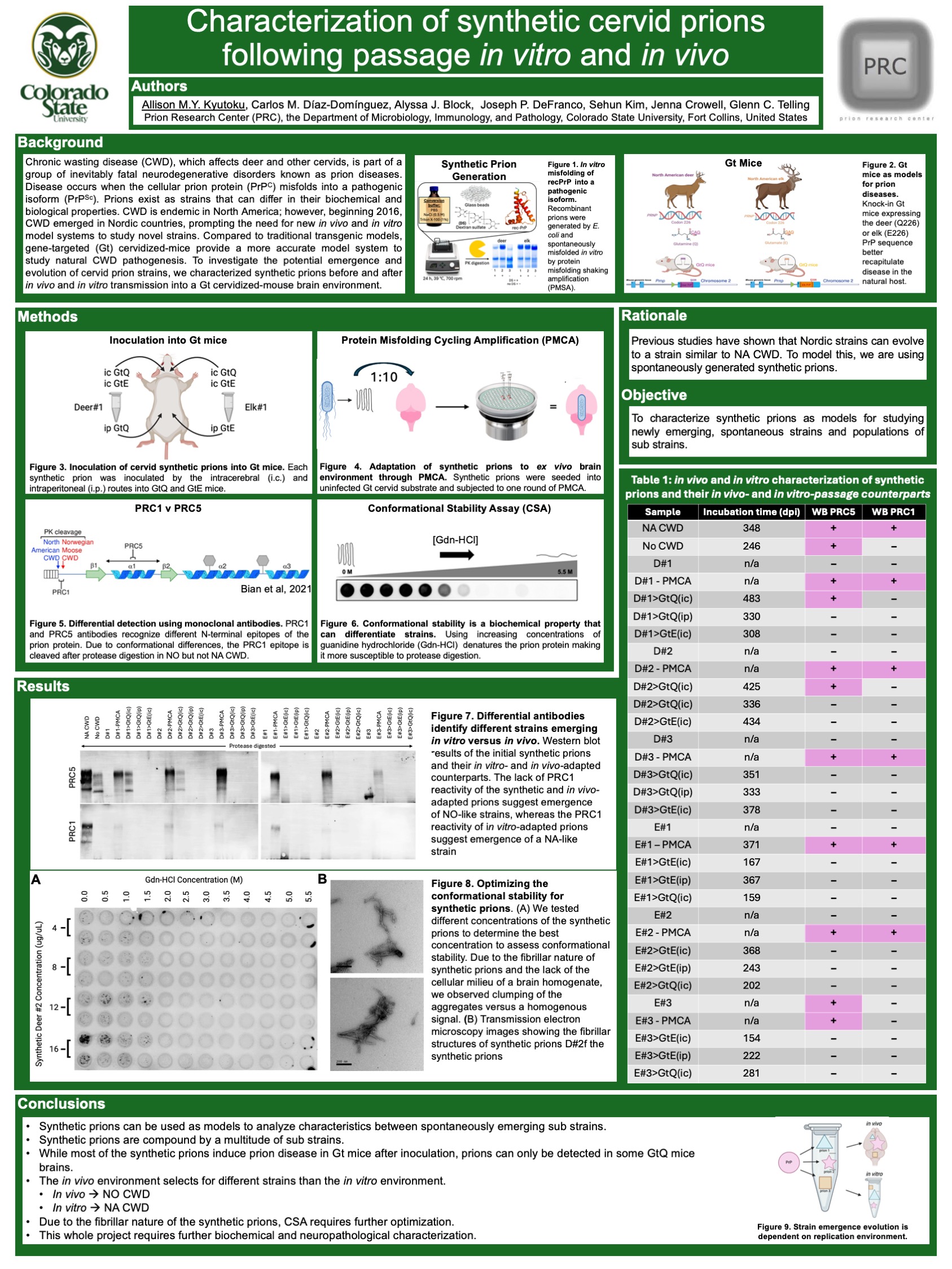
Chronic wasting disease (CWD), which affects deer and other cervids, is part of a group of inevitably fatal neurodegenerative disorders known as prion diseases. In these diseases, the cellular prion protein (PrPC) misfolds into a pathogenic isoform termed prions. Prions can exist as strains that can diIer in their biochemical and biological properties. CWD is endemic in North America; however, beginning 2016, CWD emerged in Nordic countries, prompting the need for new in vivo and in vitro models to study novel strains. Compared to traditional transgenic models, gene-targeted (Gt) cervidized-mice provide a more accurate model system to study natural CWD pathogenesis. Regarding the in vitro models, the de novo generation of synthetic prions from noninfectious sources oIers an easily manipulatable system to study strain properties. To investigate the potential emergence and evolution of cervid prion strains, we characterized synthetic prions before and after in vivo and in vitro transmission into a Gt cervidized-mouse brain environment. In vivo characterization was performed by intracerebrally and intraperitoneally inoculating cervid synthetic prions in Gt cervid mice. The in vitro counterpart involved spiking cervid synthetic prions into uninfected brain homogenate and amplifying them through cycles of sonication and incubation. To compare the end products of these processes to the original inocula and CWD field isolates, we will analyze their biochemical properties on Western blot using specific antibodies, their conformational stability, and cellular tropism. In this study, we strive to provide a comprehensive methodology to characterize de novo prions, gaining insight into strain emergence and evolution.