
Identifying intermediary forms of sterically hindered metabolizing vanadium anticancer complexes
Category: Research Poster
Author(s): Khanh Tran, Andrew Bates
Presenter(s): Khanh Tran
Mentors(s): Debbie Crans
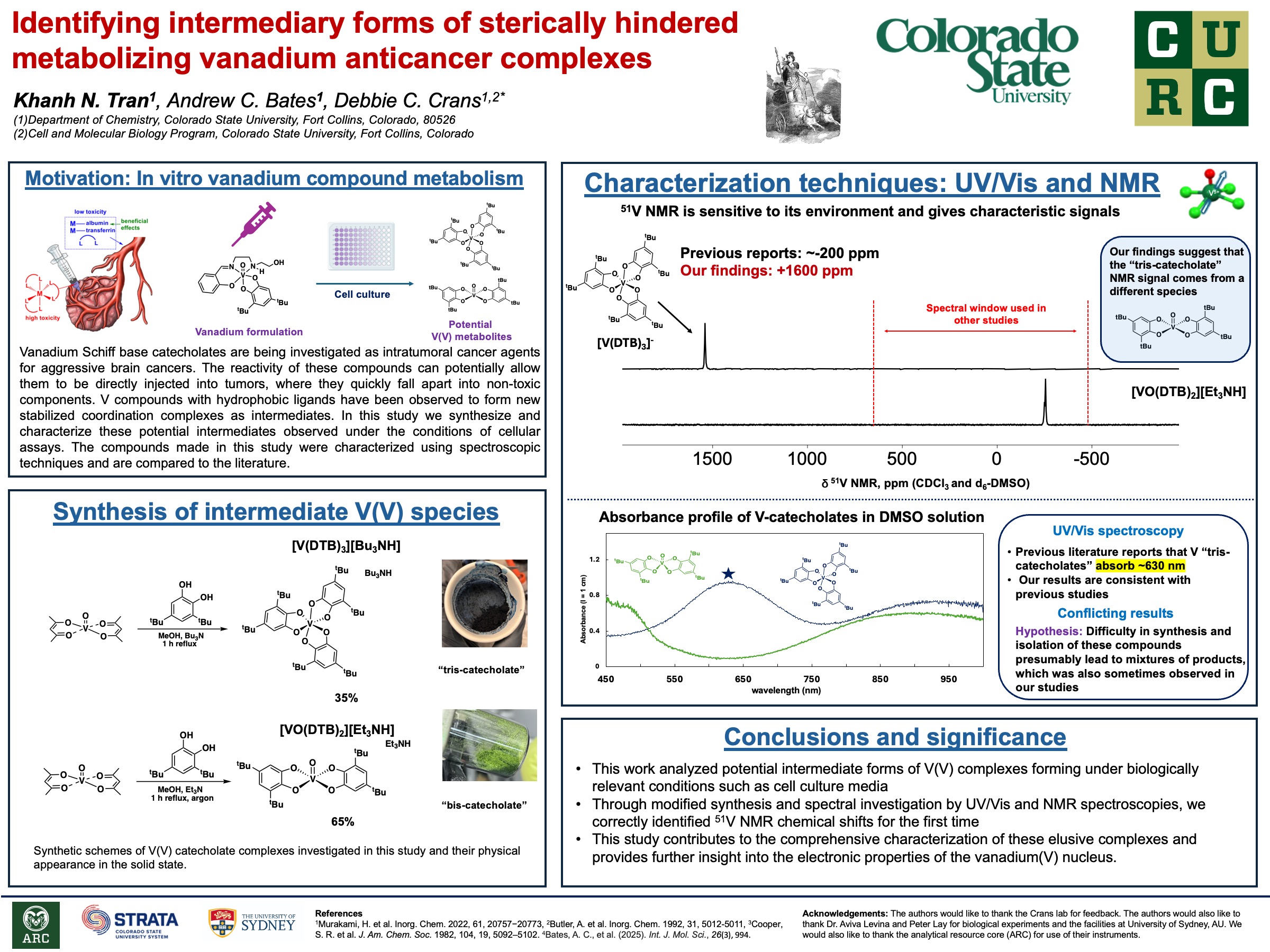
Addressing aggressive cancers remains a significant challenge, particularly when tumors are in difficult-to-access locations. Glioblastoma, the most common malignant brain tumor, currently has no cure, partly due to its deep-seated location within the brain. Localized treatment strategies, such as intratumoral injections, are gaining traction for their ability to concentrate therapeutic effects while utilizing highly cytotoxic agents. Our group recently proposed key properties for the potential intratumoral therapeutics optimized for this approach, emphasizing the use of reactive metal complexes that rapidly degrade in aqueous environments into non-toxic components. Among these, sterically hindered vanadium(V) Schiff base catecholates stand out as a promising class of compounds characterized by high cytotoxicity but limited stability. The limited stability of this class of compounds requires that all decomposition products are identified and properly characterized. In this work, we investigate the synthesis and characterization by NMR and UV/Vis spectroscopies of the suspected intermediary species and make comparisons to the literature.