
Dietary Conditions and Their Effect on miR-137 Expression in D. melanogaster
Category: Research Poster
Author(s): Nicholas Hall, Nathan Pettid
Presenter(s): Nicholas Hall
Mentors(s): Susan Tsunoda
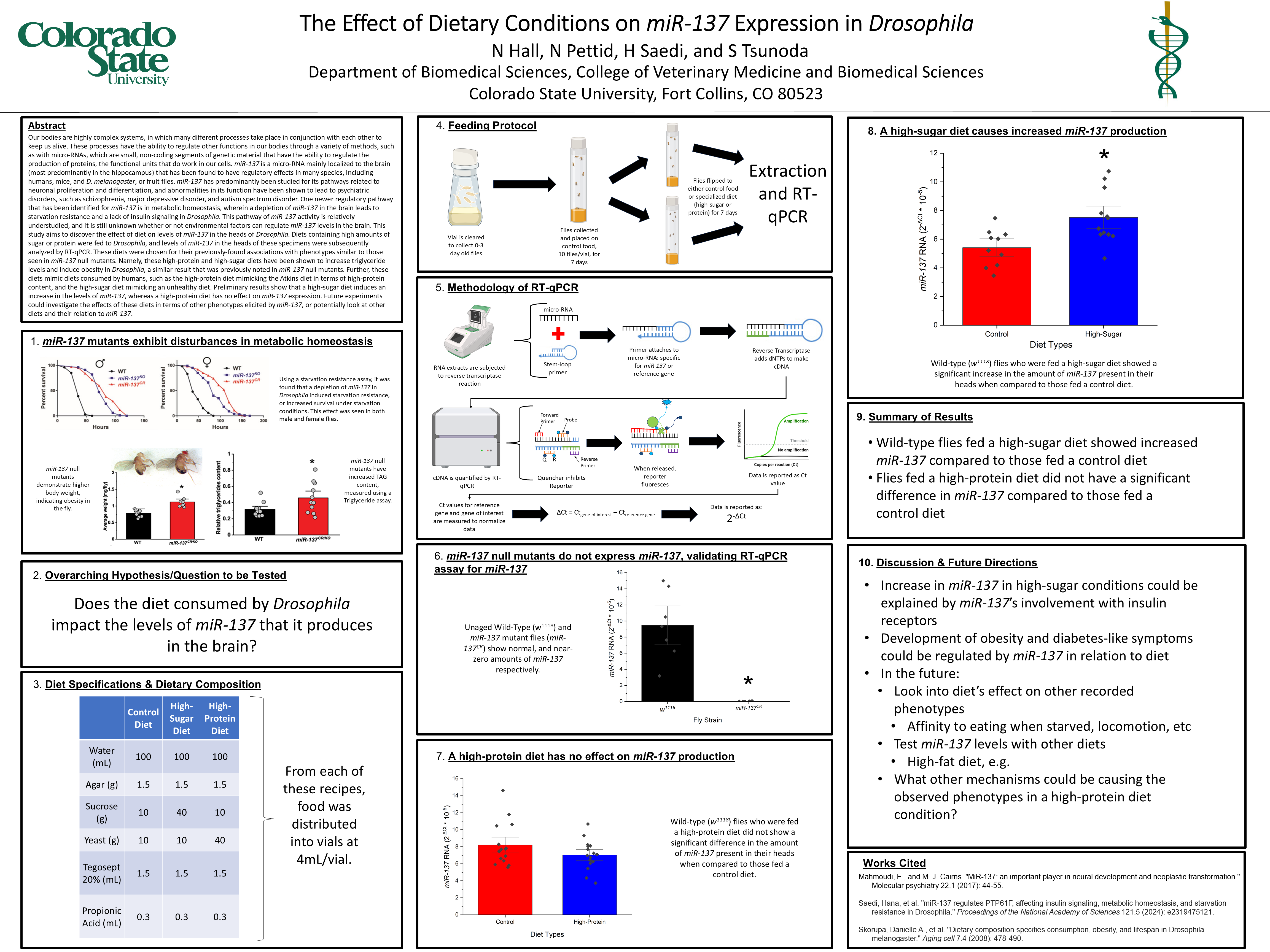
miR-137 is a microRNA (miRNA) that has been found to have regulatory effects in many species, including humans, mice, and Drosophila melanogaster. miR-137 has predominantly been studied for its pathways related to neuronal proliferation and differentiation, and abnormalities in its function have been shown to lead to psychiatric disorders, such as schizophrenia, major depressive disorder, and autism spectrum disorder. One newer regulatory pathway that has been identified for miR-137 is in metabolic homeostasis, wherein a depletion of miR-137 leads to starvation resistance and a lack of insulin signaling in D. melanogaster. This pathway of miR-137 activity is relatively understudied, and it is still unknown whether or not environmental factors can regulate miR-137 levels in the brain. This study aims to discover the effect of diet on levels of miR-137 in the heads of D. melanogaster. Diets containing high sugar, protein, and fat, were fed to D. melanogaster, and levels of miR-137 in the heads of these specimens were subsequently analyzed by RT-qPCR.