
Exploring Factors that Influence In Vitro Bumble Bee Colony Success
Category: Community Engagement Poster
Author(s): Megan Fenner
Presenter(s): Megan Fenner
Mentors(s): John Mola, Laura Lukens
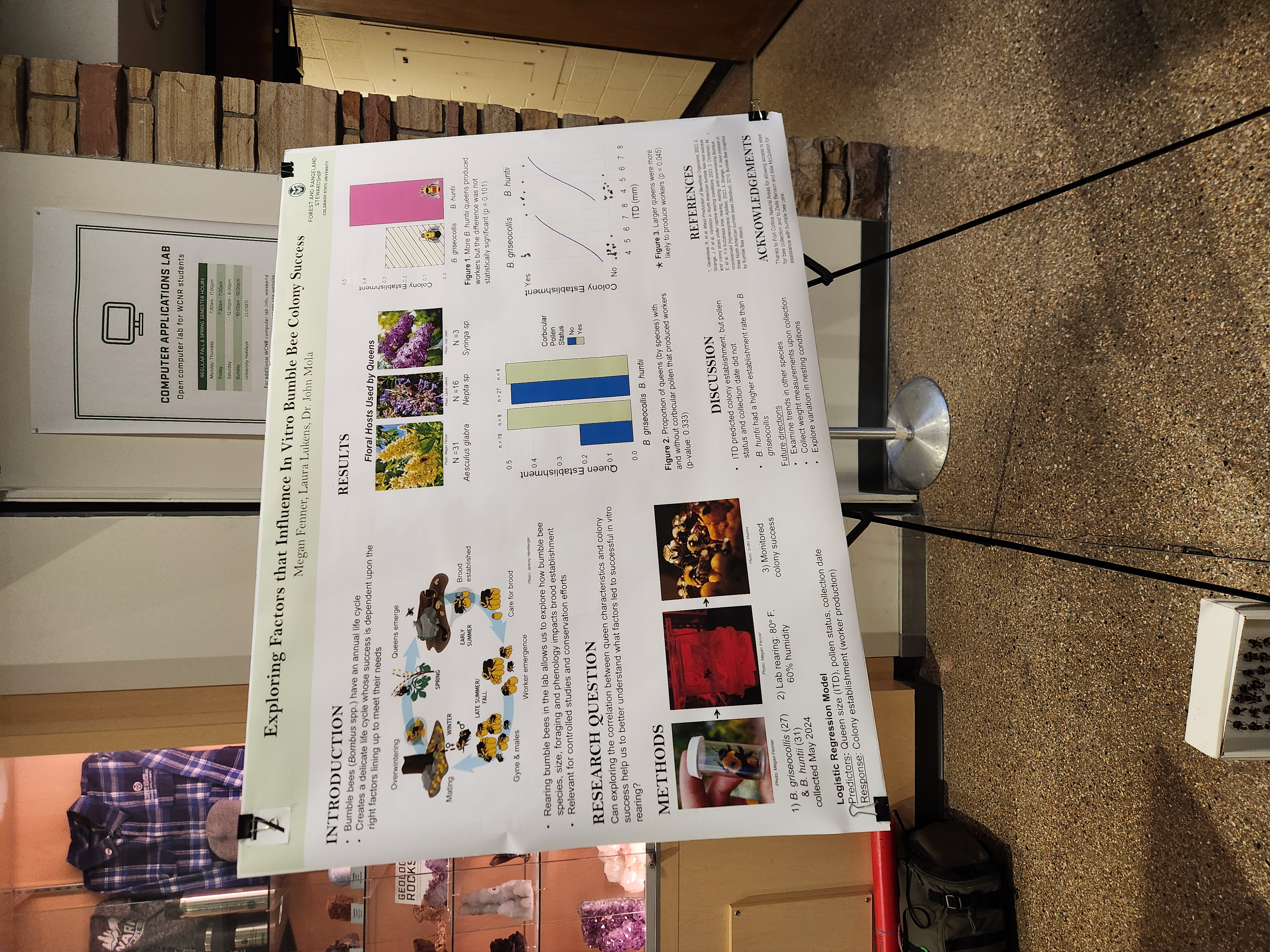
Bumble bees have an annual life cycle with discrete stages that impact the development of colonies. In vitro rearing settings must capitalize on each stage to ensure the success of bumble bee colony growth and maturation, requiring conditions similar to those found in wild colonies. However, unforeseen factors can significantly impact colony rearing success, with past studies reporting success rates below 50 percent. In May 2024, colonies of two species (Bombus huntii and Bombus griseocollis) were established from wild caught queens. Each queen received pollen and nectar, with colonies maintained under optimal heat and humidity conditions. Throughout the season the colonies were meticulously monitored and maintained, and a variety of data were logged. Not all colonies successfully reared brood, and those that did exhibited variation in success metrics. Here I use data collected throughout the season and after the season to explore correlations between colony conditions and their success to better understand what factors led to successful in vitro rearing. Success was measured by the production of offspring (workers) and time to first worker production. Factors explored are initial queen body size, pollen status of incoming queens, timing of collection, and species-specific differences. Through analyzing a qualitative measure of success through a lens of quantitative measurements will we better understand factors that can improve in vitro rearing for future rearing endeavors.