
Severe acute malnutrition treatment with and without rice bran supplementation revealed differences in dried blood spot (DBS) amino acid metabolites relevant to cognitive development of Indonesian children aged 6-59 months
Category: Research Poster
Author(s): Emma Bovaird, Annika Weber
Presenter(s): Emma Bovaird
Mentors(s): Elizabeth Ryan
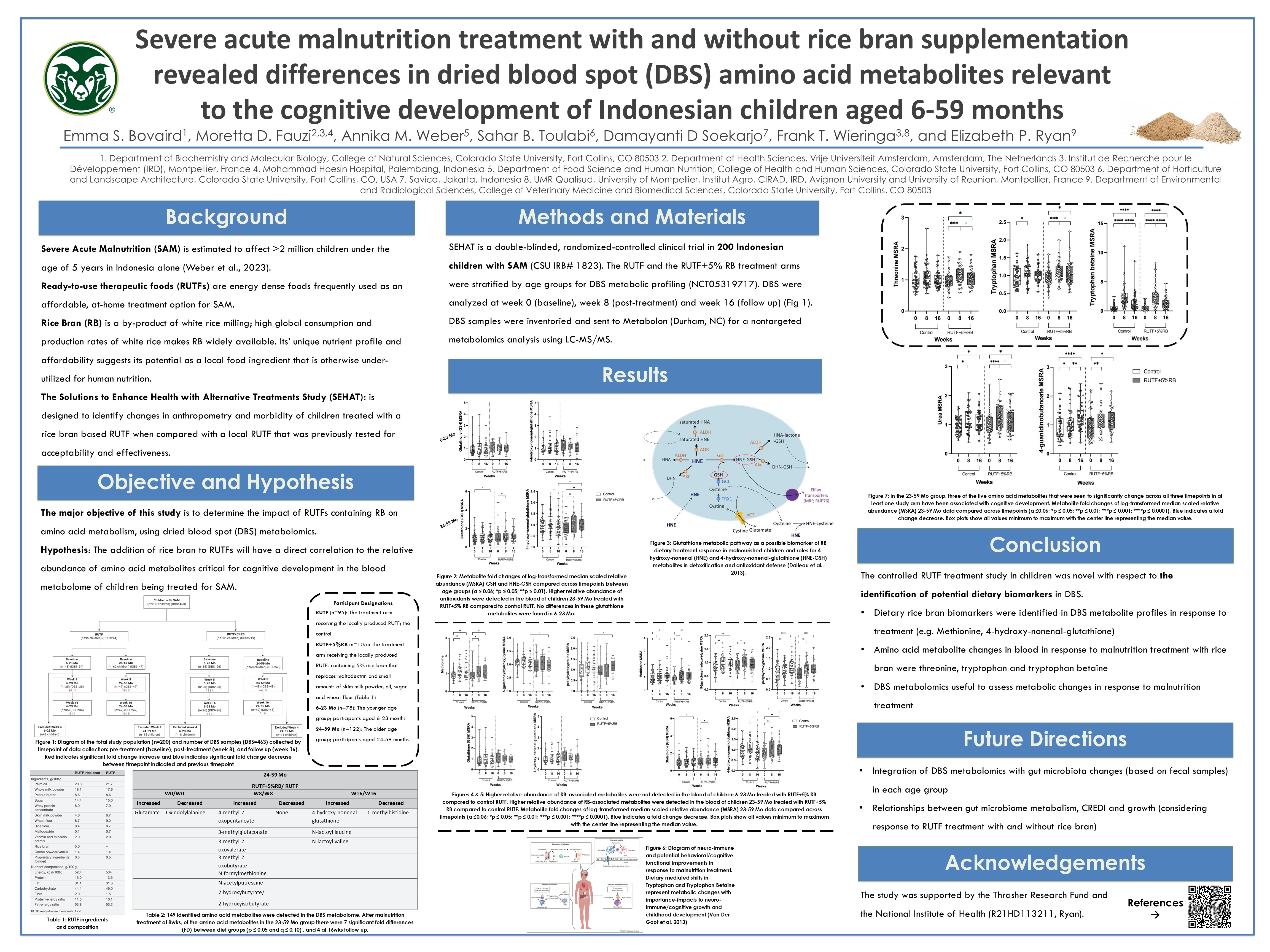
Rice bran (RB) contains unique amino acids (AA) and is an affordable, local food ingredient under-utilized for human nutrition. This study aims to determine the impact of including 5% RB in a malnutrition treatment, ready-to-use-therapeutic foods (RUTFs), on AA metabolism using dried blood spot (DBS) metabolomics. In a double-blinded, randomized controlled clinical trial 200 Indonesian children with uncomplicated acute malnutrition were stratified by age, 6-23 mo (n=78) and 24-59 mo (n=122), for DBS metabolic profiling. Participants consumed control RUTFs(n=95) or RUTFs containing 5% RB (n=105). 82 control and 75 RB participants successfully completed 8 treatment weeks and data collection to week 16. In the 6-23 mo group, metabolite profiling revealed the control arm had 21 more statistically significant AA metabolite increases over the treatment period than in the RB arm, while in the older group the RB arm saw 45 more increases than the control arm over the same period. RB had a clear modulating effect only on the 24-59 mo participants’ amino acid metabolite abundances, with tryptophan and kynurenine metabolites seen to increase with RB consumption. Overall, the 5% RB RUTF’s modulation of specific AA metabolite pathways suggests the local ingredient’s potential to support the abundance of cognitive development-associated metabolites in children aged 24-59 mo. The study was supported by the Thrasher Research Fund and The National Institute of Health (R21HD113211, Ryan).