
What’s in Your Food: Assessing Infectivity in Skeletal Muscle Following Infection of North American and Norwegian Chronic Wasting Disease
Category: Research Poster
Author(s): Mary Hall
Presenter(s): Mary Hall
Mentors(s): Joseph DeFranco
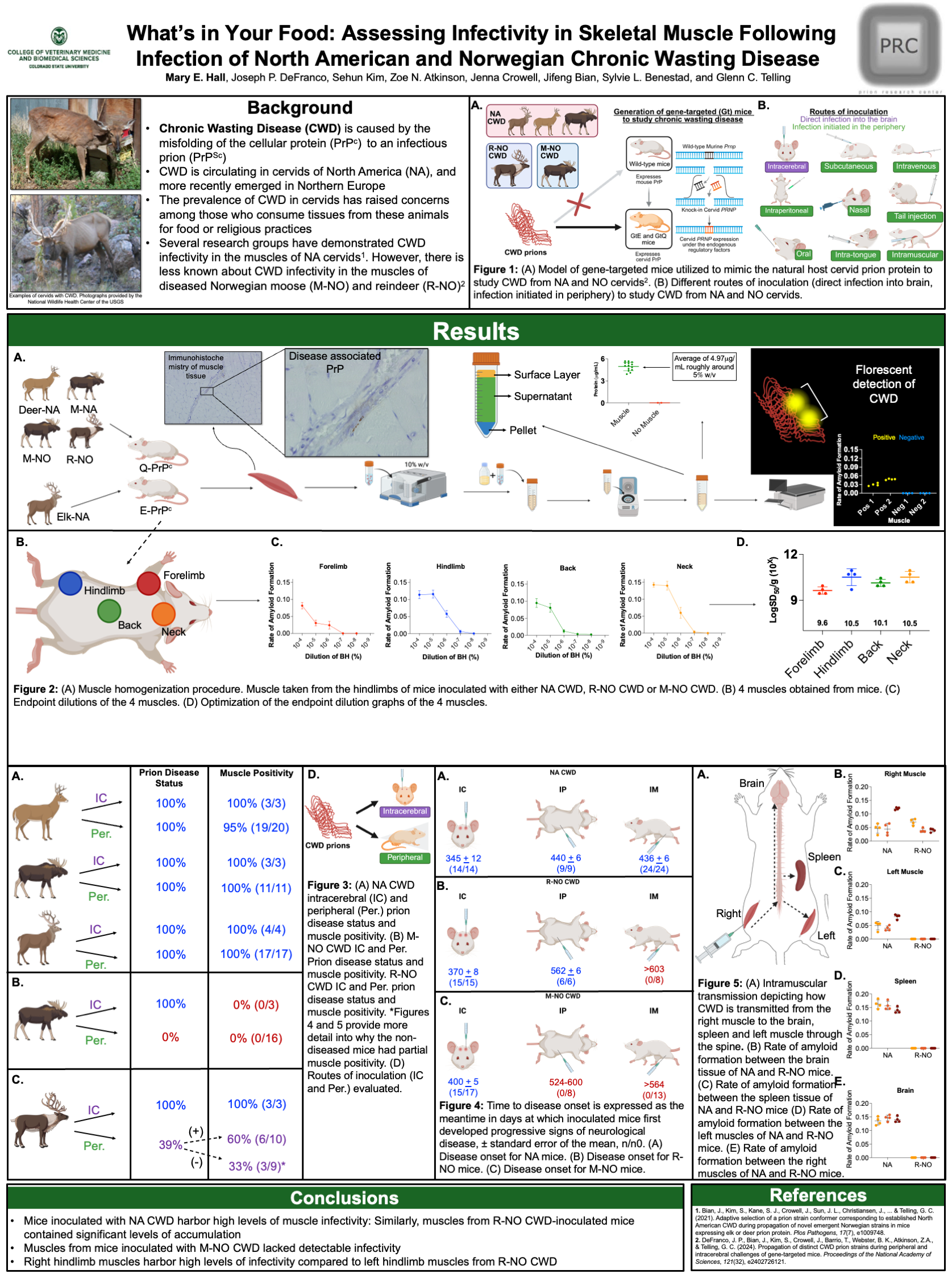
Deer, elk, moose, and reindeer (cervids) are fundamental aspects of many cultures and lifestyles – such as the consumption of game meat and reindeer husbandry. The prevalence of chronic wasting disease (CWD), a neurodegenerative disease in cervids, has raised concerns among those who consume tissues from these animals. CWD is endemic in North America (NA) and has recently emerged in several European countries, including Norway (NO). NA CWD is highly contagious, in part due to the accumulation of infectivity in peripheral tissues and subsequent shedding, which contaminates the environment. Several research groups have demonstrated CWD infectivity in the muscles of NA cervids. However, there is less known about CWD infectivity in the muscles of diseased Norwegian moose (M-NO) and reindeer (R-NO). Our lab recently developed genetically modified mice that mimic natural CWD infection in cervid hosts, and we developed a highly sensitive protocol to monitor the accumulation of CWD prions in muscle tissues following infection of NA and NO CWD. Consistent with previous findings, further validating our experimental model, we found that mice inoculated with NA CWD harbored high levels of muscle infectivity. Similarly, muscles from R-NO CWD-inoculated mice contained significant levels of accumulation. In contrast, muscles from mice inoculated with M-NO CWD lacked detectable infectivity. Because the zoonotic potential of NA and NO CWD is uncertain, these results are significant for humans consuming venison from CWD-infected Norwegian reindeer and further underscore the differences in CWD presentation between cervid species.