
Finding the Purrfect Solution: An Evaluation of Sterilization Methods in Cats
Category: Research Poster
Author(s): Madalyn Guertin
Presenter(s): Madalyn Guertin
Mentors(s): Fiona Hollinshead
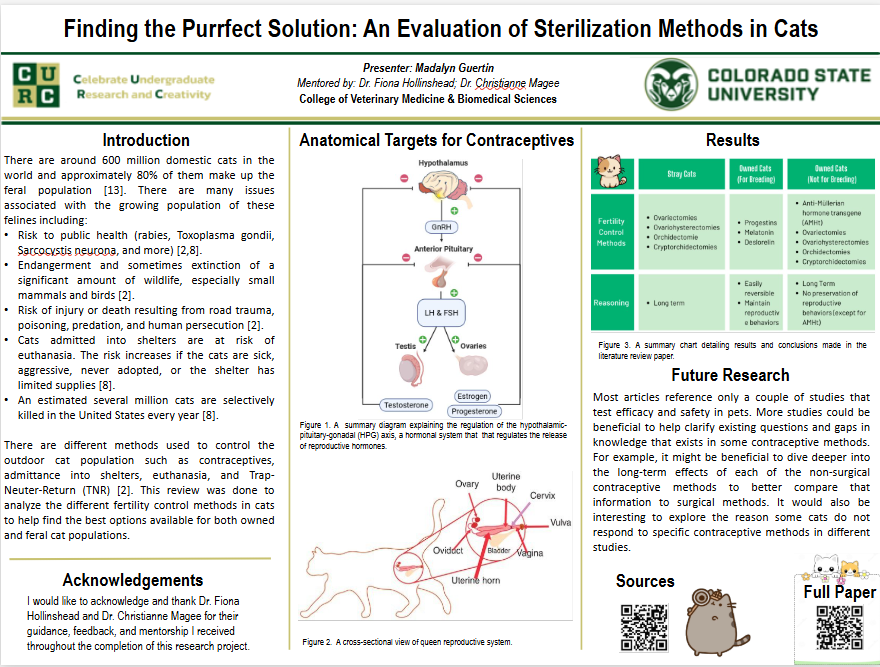
There are millions of domesticated cats in the world and most of them are strays. The growing population of stray cats poses a public health risk and contributes to the endangerment and sometimes extinction of various small wildlife species that the cats hunt. Cat overpopulation also raises ethical concerns due to poor welfare and quality of life. Furthermore, many owners seek alternative, non-surgical methods of fertility control for many reasons such as to avoid some health effects, possibility of complications, and concerns related to cost. This review analyzes different methods of fertility control available in cats to help determine the best options for both owned and feral cat populations. Based on current research, surgical procedures such as ovariectomies, ovariohysterectomies, orchidectomies, and cryptorchidectomies may be better suited for stray cat populations until other options such as immunocontraceptives or anti-Müllerian hormone transgene prove to work for much longer periods of time. Fertility control options such as progestins, melatonin, and Deslorelin may be better options for cats meant for breeding purposes because these are easily reversible and maintain behaviors associated with the hormonal cycle. For cats that clients do not intend to breed, the anti-Müllerian hormone transgene and surgical procedures such as ovariectomies, ovariohysterectomies, orchidectomies, and cryptorchidectomies may be the best options.