
Phenological Shifts in Quaking Aspen (Populus tremuloides) Across Colorado’s Differing Climates
Category: Research Poster
Author(s): Mason Whitney, Louisa Beckett
Presenter(s): Mason Whitney
Mentors(s): Sarah Hart
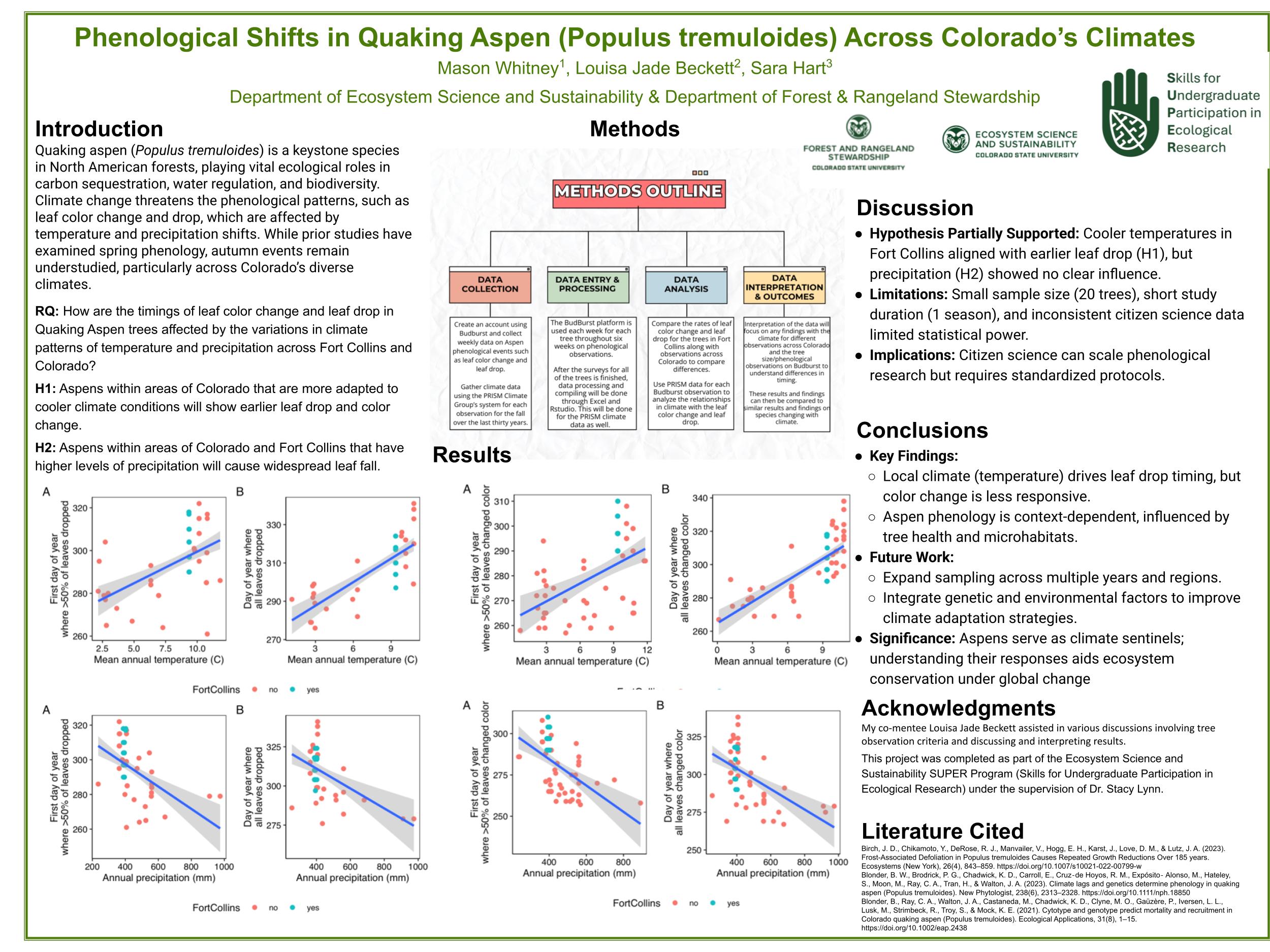
Quaking Aspen is a keystone species of forests in North America and serves as a strong indicator for climate change impacts but autumn phenological events such as leaf color change and drop are still understudied across different climates. This project looked at how climatic factors of precipitation and temperature impact these timings in Colorado and how the understanding of aspen in relation to climate can be expanded. The data collected was weekly phenological data (leaf color change, drop) across twenty aspen trees using Budburts’s citizen science platform. Tree measurements (DBH, canopy) were gathered as historical data from the PRISM climate group. These climate variables were linked to each of the tree locations through Rstudio and will asses the relationships between the phenological events and climate factors. These findings show earlier leaf senescence in colder regions and a lower variation in leaf drop when higher precipitation exists. The results will show the climate drivers of aspen autumn phenology and can provide insights into the resilience of aspens as well as future management strategies for climate change. This study shows the value of citizen science looking at ecological changes and urges expanded research on these systems.