
Food Insecurity at CSU in a Post-Covid Context
Category: Research Poster
Author(s): Ashlee Czyz, Kaya Tanios, Halee Wahl
Presenter(s): Ashlee Czyz
Mentors(s): Meagan Todd
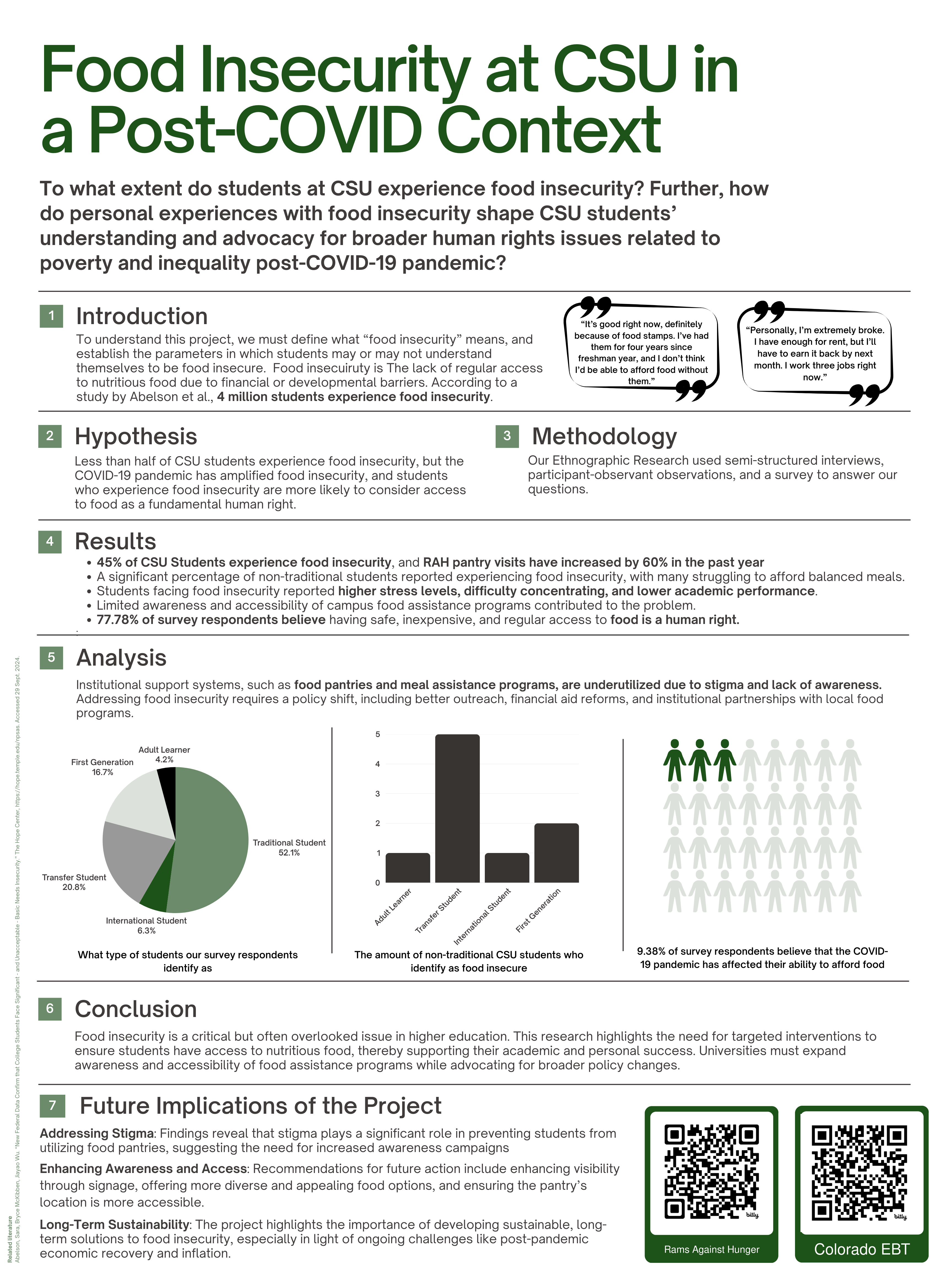
Food insecurity, which could be defined as “the lack of regular access to nutritious food due to financial or developmental barriers," is a rapidly growing concern in the United States, with an increasing number of people unable to afford enough food, which results in reducing their meal intake. While it impacts various demographics, college students are particularly vulnerable to this issue. Numerous elements can result in food insecurity among students, from financial struggles that make it difficult to afford adequate meals to limited access to affordable or nutritious food options. At Colorado State University, it is essential to focus on the students facing food insecurity, as this problem is growing worse on campus, to find effective solutions. A factor that could majorly impact food access is the COVID-19 pandemic. This global pandemic negatively influenced the economy and individuals' financial situations and reduced food availability in stores. However, a research gap remains concerning the specific impacts this study aims to address. In addition, human rights are part of the educational system. Nevertheless, it is essential to focus on how experiences impact students' stance on human rights. Hence, it is crucial to explore whether having limited access to food will lead students to consider regular access to food as a fundamental human right more strongly than those with the privilege of never experiencing food insecurity.