
A Novel Gene-targeted Model for Studying Chronic Wasting Disease
Category: Research Poster
Author(s): Sarah Goerold
Presenter(s): Sarah Goerold
Mentors(s): Joseph DeFranco
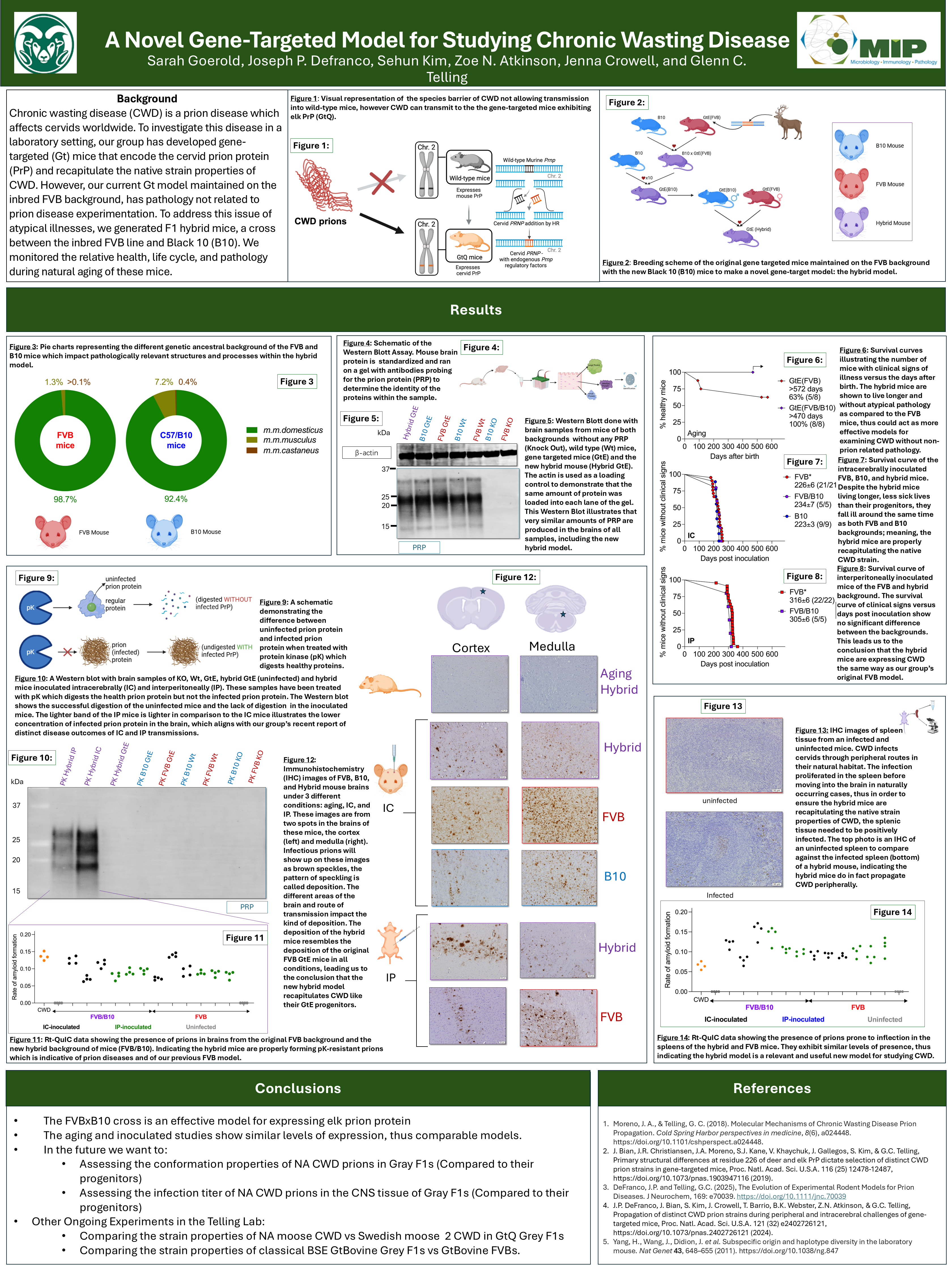
Chronic wasting disease (CWD) is a prion disease which affects cervids worldwide. To investigate this disease in a laboratory setting, our group has developed gene-targeted (Gt) mice that encode the cervid prion protein (PrP) and recapitulate the native strain properties of CWD. However, our current Gt model maintained on the inbred FVB background, has pathology not related to prion disease experimentation. To address this issue of atypical illnesses, we generated F1 hybrid mice, a cross between the inbred FVB and Black 10 (B10) lines. We monitored the relative health, life cycle, and pathology during natural aging of these mice. We observed hybrid mice live longer lives without non-prion related pathology. We were interested to see if changing the mouse line would modify prion disease outcome, so we inoculated the mice intracerebrally (ic) and intraperitoneally (ip) to compare them to their progenitors. Results showed almost identical CWD disease progression and onset of neurological signs in all three murine lines. The hybrid mice had similar accumulation of splenic tissue, levels of CWD prion in the CNS, and type of deposition as their FVB progenitors. Importantly, these findings are in agreement with our group’s recent report that disease outcomes following ic and ip transmissions are distinct, thus the peripheral inoculation into the F1 hybrids recapitulate native CWD strain properties. While further investigation is required to determine if these F1 hybrids are efficient prion disease models for other mammalian species, we’ve established that they are a robust experimental system from studying CWD.