
Influence of pre-fire beetle kill on post-fire Hairy Woodpecker (Leuconotopicus villosus) abundance in the Southern Rocky Mountains, Colorado
Category: Research Poster
Author(s): Lilly Jones
Presenter(s): Lilly Jones
Mentors(s): Leah McTigue
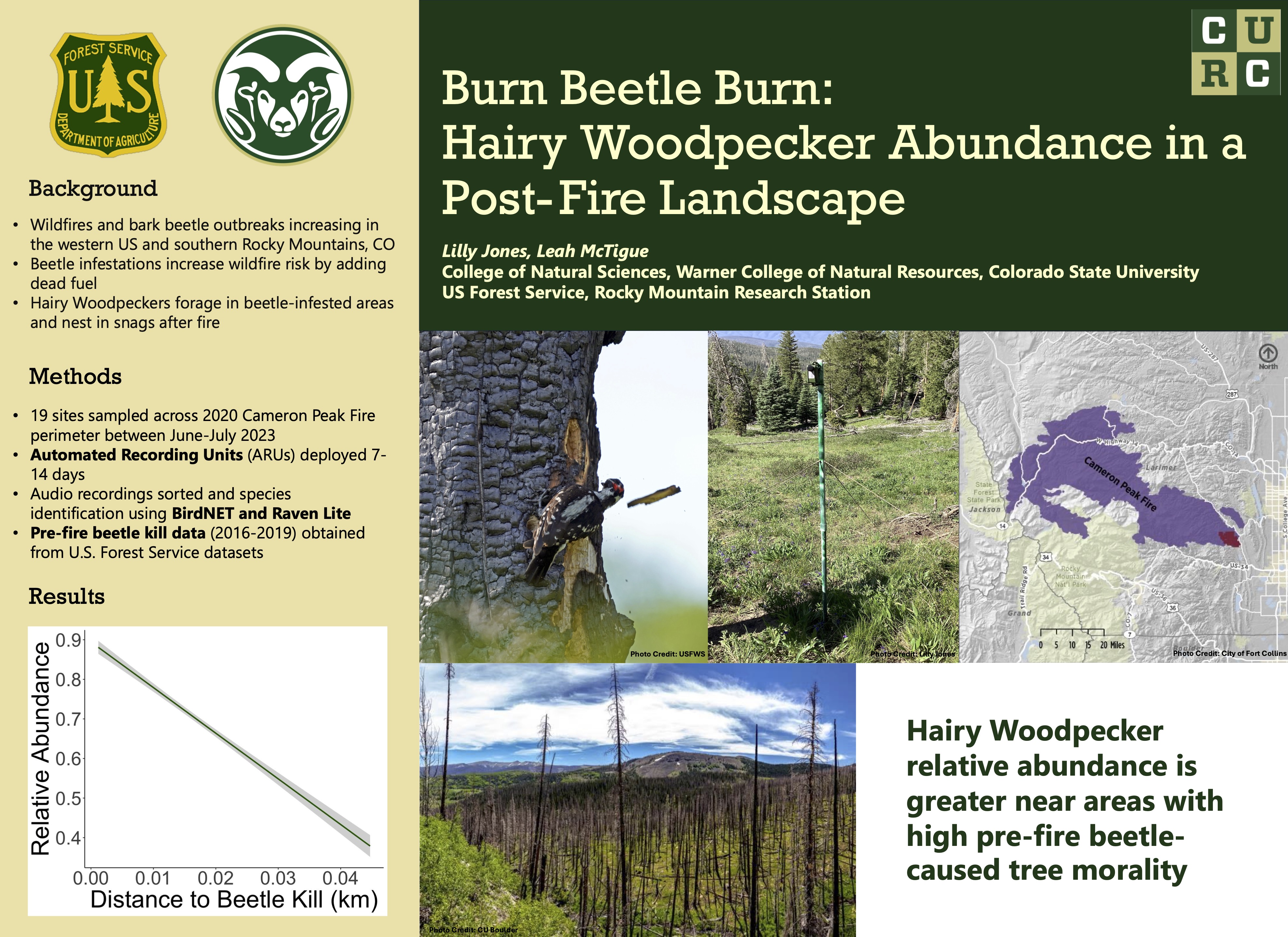
Increasing wildfire frequency and severity in the western United States, combined with widespread bark beetle outbreaks, have significantly altered forest ecosystems in the Rocky Mountains. These interacting disturbances are reshaping post-fire habitats, particularly for cavity-nesting birds such as the Hairy Woodpecker (Leuconotopicus villosus). This study aimed to assess how proximity to beetle-killed forest stands influenced Hairy Woodpecker relative abundance following the 2020 Cameron Peak Fire in northern Colorado. We deployed automated recording units (ARUs) at 19 sites within the burn perimeter during summer 2023. Bird calls were analyzed using acoustic identification software to quantify woodpecker detection. Distances to beetle-killed areas were calculated using U.S. Forest Service data and geospatial analysis. A linear regression model revealed a significant negative relationship between woodpecker abundance and distance to beetle-killed forest (p < 0.01), with closer proximity associated with higher abundance. Our findings highlight that beetle-killed forests provide important postfire foraging and nesting habitat. These results emphasize the ecological value of beetle-affected areas and suggest that preserving such habitat features can enhance post-fire biodiversity. As climate change drives more frequent and intense disturbances, it is important that forest management strategies account for the lasting impacts of compound events like beetle outbreaks and wildfire to promote wildlife resilience.